2026 Top Impact Resistant Material Types for Buyers?

Time:2026-10-16 Author:Oliver
0%

Choosing the right Impact Resistant Material in 2026 requires more than comparing hardness or advertised strength. Buyers must examine impact energy, temperature, moisture, abrasion, weight, and expected service life. A material that survives a steel strike may still crack under repeated vibration. Performance depends on the complete design.

This guide reviews major material types, including UHMWPE, aramid fiber, polycarbonate, hardened steel, ceramics, elastomers, and engineered composites. Each option serves a different purpose. UHMWPE offers low weight and strong energy absorption. Aramid performs well in flexible protective structures. Polycarbonate provides visible impact protection. Steel remains valuable where stiffness and heat resistance matter. Ceramic systems can reduce penetration risk, but they may require careful support and inspection.

Real buying decisions need verified evidence. Review technical data sheets, independent laboratory results, warranty terms, and production consistency. Ask whether testing reflects your actual thickness, temperature range, loading pattern, and mounting method. Supplier experience also matters. A polished sample does not prove reliable field performance.

There is no universal winner.

Some comparisons remain incomplete. Published test values may not predict years of outdoor exposure or repeated impacts. Cost calculations can also miss replacement labor and downtime. Strong buyers should challenge optimistic claims, request representative samples, and document acceptance criteria before purchase. This practical approach helps connect laboratory performance with safer, more dependable products in construction, transport, manufacturing, and protective equipment.
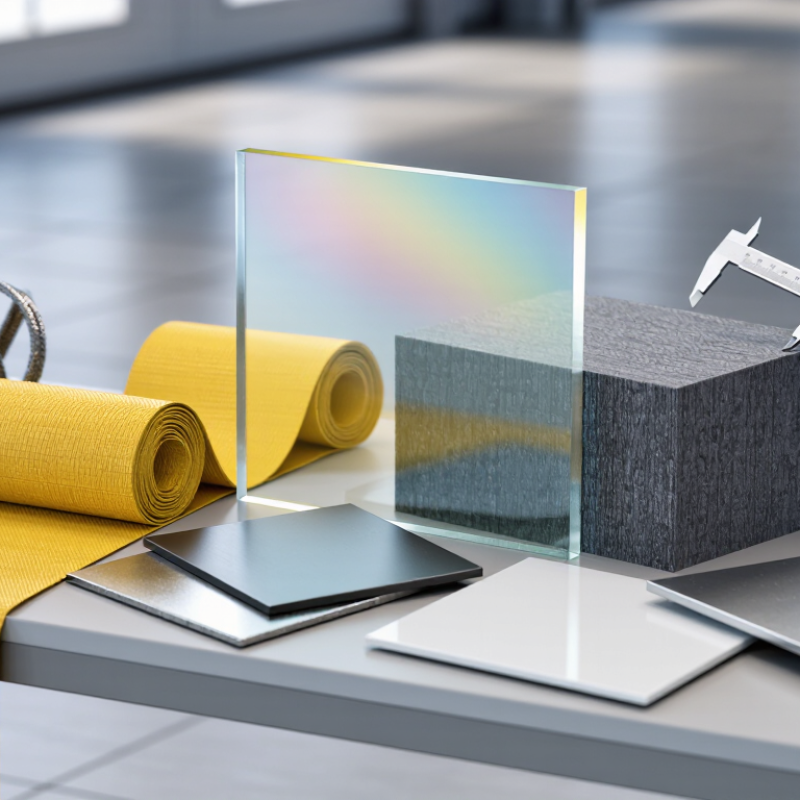
2026 Top Impact Resistant Material Types for Buyers?

What Makes a Material Impact Resistant in 2026

What makes a material impact resistant in 2026 is not hardness alone. It must absorb energy, deform safely, and resist sudden fracture. ASTM E23 Charpy testing measures absorbed impact energy, while ISO 148-1 supports consistent steel testing. These tests matter because a hard material can still shatter under a sharp, cold impact. The 2024 World Steel Association data reported 1.89 billion tonnes of crude steel production in 2023, confirming steel’s continuing industrial importance. However, strength and toughness do not always improve together.

Common impact-resistant choices include toughened steel, aluminum alloys, polycarbonate, aramid fibers, ultra-high-molecular-weight polyethylene, and layered composites. Each behaves differently. Polycarbonate may flex around a dropped tool, while ceramic layers resist penetration but can crack internally. Fiber composites spread impact energy across their weave. The 2024 International Aluminium Institute statistics also show aluminum remains widely used in transport, where lower weight can improve efficiency. Still, “lightweight” does not automatically mean safer. This is where buyers often make a costly assumption. No single laboratory number predicts every real collision.

Tips: Request results for the actual thickness, temperature, impact speed, and notch condition. Ask for failure photographs and batch traceability. Compare Charpy energy, Izod results, puncture resistance, and tensile data together. A supplier’s generic “impact resistant” claim is incomplete without test conditions. Field testing is still necessary, even when the laboratory report looks excellent.

Top Impact Resistant Material Types and Their Key Properties

2026 Top Impact Resistant Material Types for Buyers

Impact-resistant materials differ in how they absorb, spread, or deflect sudden energy. Polycarbonate is a practical choice for transparent guards, machine covers, and protective panels. It combines high impact strength with lower weight than glass. However, its surface can scratch, and prolonged ultraviolet exposure may reduce clarity without suitable protection.

Ultra-high-molecular-weight polyethylene offers very low density, strong abrasion resistance, and useful impact absorption. It works well in liners, transport components, and lightweight protective structures. Aramid fiber composites provide high tensile strength with low weight, especially where repeated impact and fatigue matter. Their performance depends heavily on fiber direction, resin quality, and panel construction.

Ceramic materials can resist concentrated impact and extreme wear, but they are brittle and may crack after a severe strike. Thermoplastic elastomers absorb shock effectively and remain flexible across many applications, although heat and chemical exposure can limit service life. Material data sheets help, but real conditions matter more. Test the finished part.

Buyers should compare impact energy, temperature range, thickness, edge design, and fastening methods. A material that performs well in a laboratory may fail around a sharp corner or poorly supported opening. I have seen selection errors caused by focusing only on hardness. That is a useful warning. No material wins every test. Cost, repairability, transparency, weight, and expected service life should be assessed together before production.

How Impact Resistant Materials Perform in Different Applications

Impact-resistant materials do not perform equally across applications. A material that bends under a dropped tool may crack under repeated vibration. Buyers should match the material to impact speed, contact shape, temperature, and exposure. The details matter.

Polycarbonate suits transparent guards and viewing panels because it combines visibility with useful toughness. It can still scratch, so surface protection may be necessary in dusty workplaces. UHMWPE and aramid fibers work well in lightweight protective panels, where low density and energy absorption matter. Their performance depends on fiber direction, layering, and fastening quality. A poorly secured panel can fail despite excellent material data.

Elastomers absorb shock effectively in bumpers, seals, and machine mounts. They may stiffen in cold conditions or degrade under oils and sunlight. Ceramics can resist severe penetration, but they are rigid and may require a backing layer to manage fragments and blunt-force energy. For transport interiors, layered composites often balance weight, noise, and impact control better than a single material.

Real use is messier. Laboratory ratings rarely capture every edge strike, mounting error, or aging effect. Buyers should request test conditions, not only headline strength values. Small prototypes, temperature cycling, and repeated-impact trials can expose weaknesses early. I would also inspect damaged samples after testing; failure patterns often reveal more than a clean pass.

2026 Top Impact-Resistant Material Types for Buyers

How representative notched impact strength varies across common engineering materials and typical applications

Representative values show the midpoint of commonly reported room-temperature notched Izod impact-strength ranges measured using ASTM D256 or comparable ISO 180 methods. Actual performance varies by grade, thickness, temperature, moisture, notch geometry, and processing. UHMW-PE is well suited to liners and wear components, polycarbonate to transparent guards and enclosures, ABS to housings, HDPE to containers and tanks, and nylon 6 to mechanical parts where toughness and wear resistance are both required.

Factors Buyers Should Compare Before Choosing a Material

Choosing an impact-resistant material starts with the expected impact, not the material’s reputation. A falling tool, road debris, and repeated machine contact create different failure patterns. Buyers should compare Charpy or Izod impact results under relevant temperatures. ISO 148-1 defines Charpy testing for metals, while ASTM D256 covers Izod testing for plastics. Test numbers are useful. They are not the whole decision.


Weight, thickness, temperature, and processing method also matter. A 2024 World Steel Association report recorded about 1.85 billion tonnes of crude steel production in 2023. That scale can support stable sourcing and consistent specifications. The International Aluminium Institute reported roughly 70.6 million tonnes of primary aluminium production in 2023. Aluminium can reduce weight, but its lower stiffness may require thicker sections. That changes cost and design space.

Compare energy absorption, tensile strength, fatigue behavior, corrosion resistance, and repairability. Ask for test conditions, not only headline values. A result at room temperature may mislead outdoor buyers facing winter impacts.

I have seen specifications favor a high impact score while ignoring fastener failure and edge cracking. That is an expensive blind spot. Consider total cost across machining, coatings, inspection, replacement, and recycling. The best material is rarely the strongest option. It is the one that keeps performance predictable after real handling, imperfect installation, and repeated service.

Material Selection Guide by Budget, Durability, and Use Case

2026 Top Impact Resistant Material Types for Buyers?

Material choice should follow the abuse, not the catalogue description. For low-cost enclosures, ABS offers useful toughness and easy molding, but sunlight and solvents can expose weaknesses. Polycarbonate costs more and resists sudden impacts better, making it suitable for machine guards, shields, and transparent panels. A 2024 PlasticsEurope industry report recorded 413.8 million tonnes of global plastics production in 2023, yet volume does not equal performance. Grade, thickness, temperature, and test method matter more than popularity.

For repeated heavy impacts, high-strength steel remains a practical choice. It tolerates sharp contact, heat, and structural loads, although its weight can raise installation costs. Aluminum reduces mass, but dents more easily under concentrated force. The International Aluminium Institute reports that recycled aluminum requires about 5% of the energy used for primary production. That advantage matters when lifecycle cost and embodied energy enter the purchase decision. UHMWPE can protect against abrasion and blunt impact, but creep under sustained loads needs checking.

Use ASTM E23 Charpy data carefully. It compares toughness under a defined test, not every real-world collision. Ask suppliers for temperature-specific results, thickness data, and failure photographs. A laboratory pass can still disappoint.

Budget is often the hidden constraint. My practical mistake was treating a higher impact rating as automatically better; unnecessary thickness added weight without improving the actual failure mode. For outdoor equipment, review UV resistance and moisture exposure. For factory floors, test dropped tools, not just polished samples. Survivability is application-specific.

2026 Top Impact Resistant Material Types for Buyers? — Material Selection Guide by Budget, Durability, and Use Case
Material Type Typical Density Impact-Resistance Profile Typical Temperature Capability Relative Budget Durability Best-Fit Use Cases Main Limitations Buyer Selection Guidance
Ultra-High-Molecular-Weight Polyethylene (UHMW-PE) 0.93–0.97 g/cm³ Very high resistance to sliding impact, abrasion, and low-temperature shock; low friction. Approximately −150°C to 80°C for many grades; confirm the supplier’s continuous-use rating. Medium–High Very High Wear liners, chute linings, guide rails, marine components, protective barriers, and material-handling equipment. Low stiffness, difficult bonding, thermal expansion, and limited performance under sustained high heat. Select when abrasion and repeated sliding impact matter more than rigidity or elevated-temperature performance.
Polycarbonate (PC) Approximately 1.20 g/cm³ Excellent resistance to sudden impact and shattering; transparent grades are available. Commonly about −40°C to 115°C, depending on grade and load conditions. Medium High Machine guards, safety glazing, protective covers, face shields, housings, and transparent panels. Can scratch, may yellow under prolonged ultraviolet exposure without stabilization, and is sensitive to some solvents. Choose for transparent protection where fracture resistance and visibility are required.
Acrylonitrile Butadiene Styrene (ABS) Approximately 1.03–1.07 g/cm³ Good everyday impact resistance with easy molding and machining; toughness decreases at low temperatures. Typically about −20°C to 80°C for general-purpose grades. Low–Medium Medium Equipment housings, instrument panels, consumer products, prototypes, and indoor protective enclosures. Lower weathering and chemical resistance than many engineering plastics; not ideal for prolonged outdoor exposure. Use when cost, manufacturability, and moderate impact resistance are more important than maximum durability.
High-Density Polyethylene (HDPE) 0.94–0.97 g/cm³ Good toughness, ductility, and resistance to repeated knocks; performs well in damp environments. Approximately −50°C to 80°C, depending on grade and mechanical loading. Low High Crates, tanks, bins, outdoor panels, pipe protection, pallets, and impact guards. Low stiffness, creep under sustained load, difficult adhesive bonding, and limited high-temperature capability. Choose for economical, lightweight parts exposed to moisture, dirt, and frequent impact.
Polyamide / Nylon (PA6 or PA66) Approximately 1.12–1.15 g/cm³ High toughness and wear resistance; generally stronger and stiffer than polyolefins. Dry-service capability can reach approximately 100°C or higher; moisture absorption must be considered. Medium High Gears, rollers, bearings, cable protection, brackets, and mechanical components. Absorbs moisture, which can change dimensions and reduce stiffness; some grades require stabilization for heat or ultraviolet exposure. Use where impact resistance must be combined with wear resistance, strength, and functional mechanical performance.
Thermoplastic Polyurethane (TPU) Approximately 1.10–1.25 g/cm³ Excellent resilience, tear resistance, and resistance to repeated impact; available from flexible to semi-rigid. Commonly about −40°C to 80–100°C, depending on hardness and formulation. Medium High Protective bumpers, shock pads, flexible guards, wheels, seals, and overmolded components. Some grades hydrolyze or degrade under heat, moisture, or ultraviolet exposure; stiffness is lower than rigid plastics. Select when energy absorption, flexibility, and repeated impact cycling are key requirements.
Aramid-Fiber Reinforced Composite Approximately 1.20–1.45 g/cm³ Very high specific energy absorption and penetration resistance when correctly designed as a laminate or composite system. Often suitable for moderate service temperatures; resin system and laminate design determine the actual limit. High Very High Protective panels, lightweight structural parts, vehicle protection, helmets, and specialized safety equipment. High material and processing cost, anisotropic properties, moisture or ultraviolet sensitivity in some resin systems, and complex repair. Choose only after defining threat level, impact energy, laminate orientation, and required certification.
Glass-Fiber Reinforced Polymer (GFRP) Approximately 1.50–2.00 g/cm³ Good stiffness-to-weight ratio and moderate impact resistance; performance depends strongly on fiber architecture and resin. Commonly about 80°C to 150°C for many systems; verify the resin’s glass-transition temperature. Medium–High High Equipment panels, transportation components, covers, enclosures, ladders, and structural shells. Can crack or delaminate after severe impact; inspection may be difficult because damage can be hidden internally. Use when stiffness, corrosion resistance, and moderate impact performance are needed at lower cost than premium fiber composites.
EPDM Rubber Approximately 1.10–1.30 g/cm³ Excellent shock damping, elasticity, weather resistance, and resistance to repeated low-to-moderate impacts. Approximately −50°C to 150°C for many formulations. Low–Medium High Bumpers, vibration isolators, seals, edge protection, dock guards, and outdoor impact pads. Low structural stiffness; poor compatibility with petroleum-based oils and fuels. Choose for energy absorption, noise reduction, weather exposure, and flexible protection rather than load-bearing structures.
Aluminum Alloy Approximately 2.65–2.80 g/cm³ Good energy absorption and dent resistance in suitable tempers; can plastically deform instead of shattering. Retains useful performance across a broad temperature range; strength varies with alloy and temper. Medium–High High Vehicle structures, equipment frames, protective housings, rails, panels, and impact-absorbing structures. Heavier than plastics and fiber composites; may dent, fatigue, or lose strength after welding depending on alloy and heat treatment. Select when structural stiffness, recyclability, corrosion resistance, and predictable metal fabrication are important.
Low-Carbon Steel Approximately 7.85 g/cm³ High toughness, ductility, and structural energy absorption; suitable for severe mechanical impact when weight is acceptable. Broad service range, but low-temperature toughness depends on grade and impact requirements. Low–Medium Very High Machine frames, barriers, guards, structural supports, industrial equipment, and heavy-duty enclosures. High weight and corrosion risk without suitable coating, galvanizing, or environmental control. Choose for maximum structural robustness and cost efficiency when mass and corrosion management are acceptable.
Buyer note: Impact-resistance values are not directly interchangeable across materials because results depend on test method, specimen geometry, temperature, thickness, loading rate, and conditioning. Confirm the applicable standard, such as ASTM D256, ISO 180, ASTM D3763, or a project-specific test, before final material approval.

FAQS

Which material suits transparent protective panels?

Polycarbonate combines low weight with strong impact resistance. It suits machine guards, shields, and clear covers. Its surface can scratch. Long ultraviolet exposure may reduce clarity.

When is ultra-high-molecular-weight polyethylene a practical choice?

It offers low density, abrasion resistance, and useful impact absorption. It works well for liners, transport parts, and lightweight structures. Check creep under continuous loads.

Why might aramid fiber composites be selected?

They provide high tensile strength with low weight. They suit repeated impacts and fatigue-sensitive structures. Performance depends on fiber direction, resin quality, and panel construction.

Are ceramic materials suitable for every impact application?

No material wins everything. Ceramics resist concentrated impacts and severe wear. However, a hard strike can create cracks. Inspect the material after serious impacts.

What should buyers compare before choosing a material?

Compare impact energy, temperature, thickness, edge design, and fastening methods. Review fatigue, corrosion resistance, repairability, and weight. Ask for test conditions, not headline values.

Why can a laboratory result mislead buyers?

Laboratory tests use controlled temperatures, shapes, and support conditions. Real parts may have sharp corners or poorly supported openings. Test the finished part.

How should budget influence material selection?

Tough molded plastics can suit low-cost enclosures. Strong steel handles heavy impacts but adds installation weight. Aluminum reduces mass but may dent under concentrated force.

What common selection mistake should buyers avoid?

Do not focus only on hardness or the highest impact rating. I once treated a higher rating as automatically better. Extra thickness added weight without solving the real failure mode.

Conclusion

Choosing the right Impact Resistant Material in 2026 requires more than focusing on strength alone. Impact resistance depends on how well a material absorbs, disperses, or withstands sudden force without cracking, deforming excessively, or losing performance. Common options include reinforced polymers, engineered composites, specialty metals, laminated structures, and advanced ceramics, each offering different balances of toughness, weight, hardness, flexibility, and environmental resistance. Their performance can vary significantly across applications such as protective equipment, transportation, construction, industrial machinery, and electronic enclosures.

Buyers should compare impact performance, operating temperature, moisture and chemical resistance, service life, processing requirements, maintenance needs, and total cost. A budget-focused project may benefit from durable polymers, while demanding environments may justify composites or metal-based solutions. The best selection depends on the required level of protection, expected impact frequency, weight limitations, installation conditions, and long-term value. By matching material properties with the actual use case, buyers can achieve reliable protection without paying for unnecessary performance.


Oliver

Oliver

Oliver is a seasoned marketing professional with a wealth of expertise in driving brand awareness and engagement. With a deep understanding of our company's product offerings, he consistently delivers high-quality content that enriches our professional blog. His insights not only shed light on......