Direct sourcing pathways for advanced Long Fiber Thermoplastics (LFT) custom-tailored to global manufacturing tolerances.
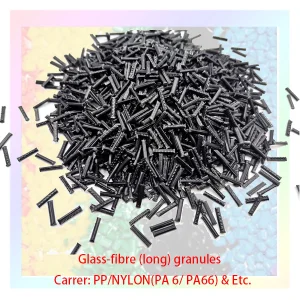
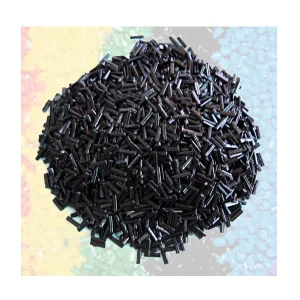
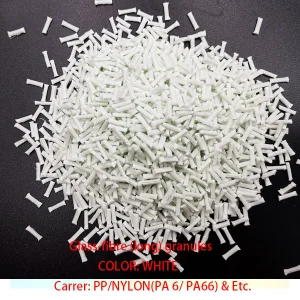
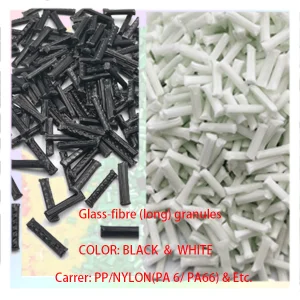
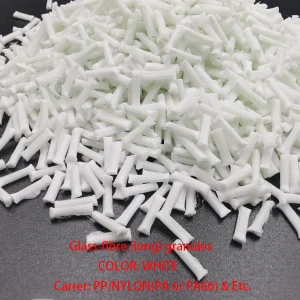
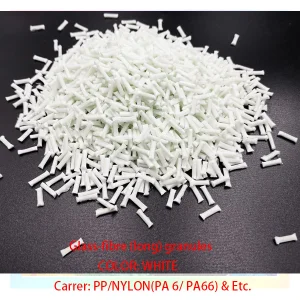
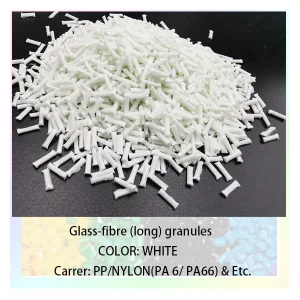
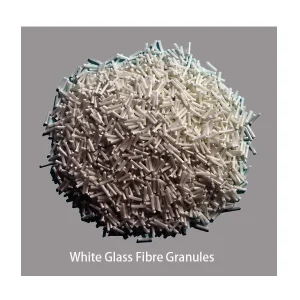
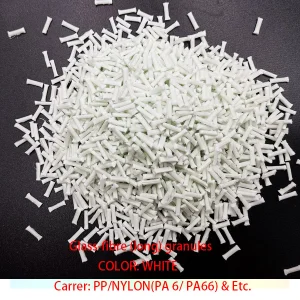
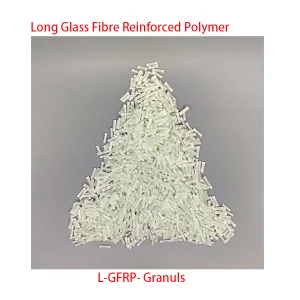
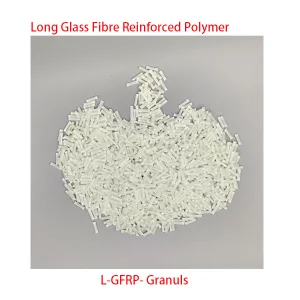
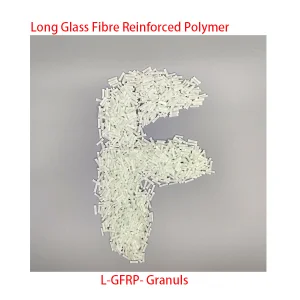
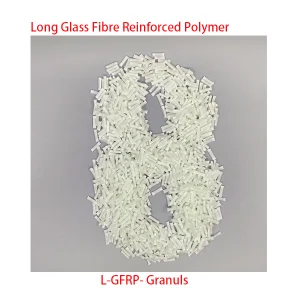
Long Glass Fiber Reinforced Polyethylene (LGF-PE) stands at the pinnacle of modern structural thermoplastic composite design. By utilizing a pultrusion manufacturing process, the internal fibers are maintained at their full pellet length—typically 10mm to 25mm—which provides an exceptionally high aspect ratio when compared directly to short glass fiber (SGF) components.
During standard compound extrusion processes, intensive shear forces chop the incorporated fiberglass into microscopic fragments (often measuring less than 1mm). While SGF increases flexural modulus, it dramatically degrades impact resistance and structural resilience under dynamic loads.
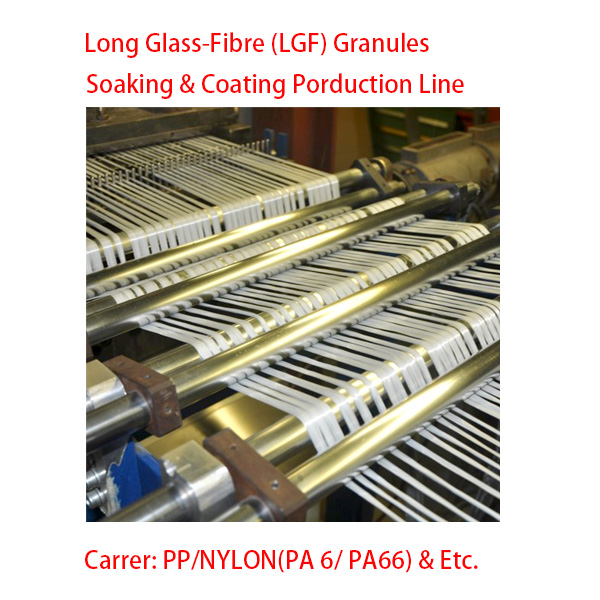
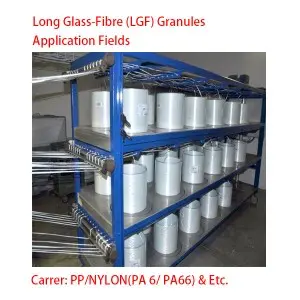
In contrast, Jurong Best Composite Materials Co., Ltd. implements a state-of-the-art melt impregnation pultrusion process. Every single fiber bundle is continuously pulled through a specialized crosshead die, where the high-viscosity polyethylene melt completely wets and wraps the continuous filaments. When diced, the fiber remains exactly parallel to the length of the pellet, preserving maximum mechanical potential.
In structural calculations, the reinforcement efficiency of glass fibers relies strictly on the length-to-diameter ratio (L/D). Short glass fibers suffer from fiber pull-out under minor shear stress because they fall below the critical transfer length. Long Glass Fiber Granules act as a dense, interlocking micro-skeleton inside the molded part, absorbing impacts and resisting long-term creep under high mechanical stresses.
The global trade flow of Long Glass Fiber Polyethylene is driven by rigorous regulatory requirements for carbon footprint reductions and structural component weight minimization. From Western Europe's automotive tier-1 suppliers to North American industrial packaging manufacturers, purchasing departments are searching for cost-effective alternatives to heavy sheet metals and high-cost engineering nylons (PA).
Polyethylene is inherently cost-stable, chemically inert, and highly hydrophobic. However, it lacks high-temperature performance and stiffness on its own. Re-engineering Polyethylene with long glass fibers bridges this gap perfectly, allowing logistics, agricultural, and automotive sectors to replace complex assemblies with single-injection molded parts.
Through "User Intent Mining," global purchasing agencies search for phrases such as "Wholesale Long Glass Fibre Reinforced Granules-Polyethylene-PE Exporters" to bypass middlemen, establish robust supply lines with ISO 9001:2015 factories, and request tailored material specification sheets (TDS/MSDS).
Procurement managers focus on critical factors to ensure quality control, regulatory compliance, and consistent material property parameters.
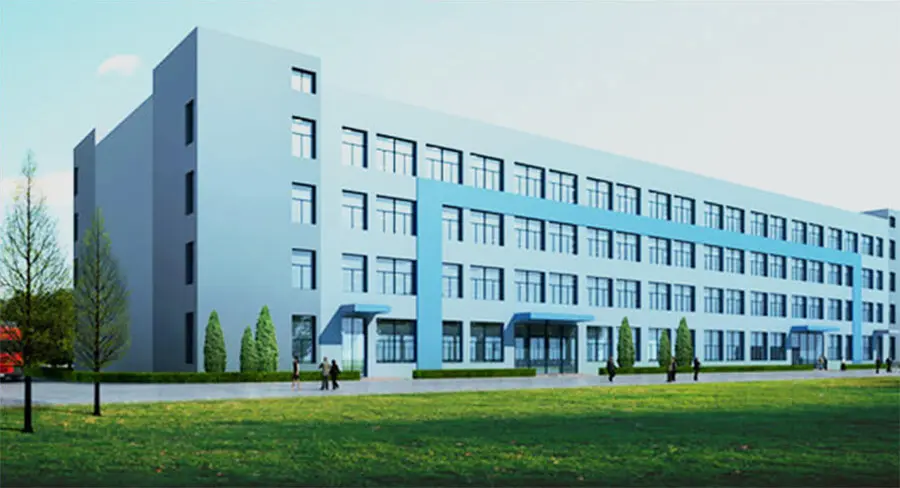
Jurong Best Composite Materials Co., Ltd. is located in the ancient town of Maoshan, which has a history of over a thousand years. The town is part of Jurong City, Zhenjiang, Jiangsu Province. It is situated on the lower reaches of the Yangtze River, adjacent to Nanjing, and is close to Nanjing Lukou International Airport.
The Jianning-Taicang Expressway (from Nanjing to Taicang) passes through the area, and the Jurong exit of the Shanghai-Nanjing Expressway connects to Zhenjiang Port and Nanjing Port. Benefiting from the radiation of the Yangtze River Delta Economic Zone, the transportation is highly efficient, enabling streamlined international sea freight and air express routes.
Our facility leverages high-speed, state-of-the-art pultrusion manufacturing lines, integrated raw polymer compounding systems, and dedicated technical testing labs. This infrastructure minimizes shipping preparation times while ensuring top-tier mechanical standards for our global customer base.
Long Glass Fiber Polyethylene (LGF-PE) granules find structural and dynamic applications across diverse global industries. Their exceptional performance-to-weight ratios make them valuable replacements for die-cast zinc, aluminum, and heavier polymer alloys.
In modern automotive design, under-hood structural parts, door modules, front-end structural carriers, and battery containment enclosures require components that resist impact damage, chemical exposure, and mechanical load stresses.
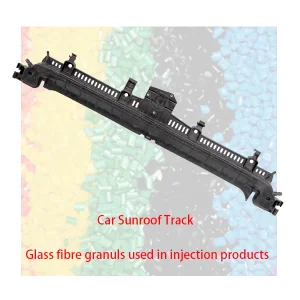
GFRP (Glass-Fiber-Reinforced-Polymer) injection items, including car sunroof tracks made of PA6/PA66/PE matrix structures, maintain excellent dimensional stability under high temperatures. By replacing heavy sheet-metal assemblies, automotive manufacturers achieve up to a 40% weight reduction, lowering carbon footprints and increasing fuel economy or EV battery range.
Large consumer appliances such as washing machine tubs, dryer drums, fan blades, and pump housings operate in high-humidity environments. Short-fiber alternatives often fail due to moisture-induced degradation and dimensional swelling.
LGF-PE granules are hydroscopic-resistant and deliver excellent chemical resistance to acidic cleansers, bleach, and dynamic cyclic loading. Additionally, heavy-duty shipping pallets and material handling boxes benefit from the material's impact resistance at low temperatures, minimizing fractures in cold-chain logistics environments.
Our GFRP granules are formulated for demanding injection molding operations, producing high-strength components such as automotive brackets, washing machine parts, and chemical-resistant industrial fluid handling housings.
The high-performance composites industry is transitioning toward customized formulations, bio-based carriers, and circular economy lifecycles. Material selectors are prioritizing long-term environmental sustainability without sacrificing structural integrity.
Polyethylene is non-polar, which naturally limits its adhesion to polar glass fiber surfaces. Leading manufacturers, including Jurong Best Composite Materials Co., Ltd., utilize maleic anhydride grafted polyethylene (MAH-g-PE) as a coupling agent. This chemical bridge links the inorganic glass to the organic polymer matrix, maximizing interfacial shear strength.
For interior automotive components, raw materials must satisfy strict VOC limits. Our advanced vacuum devolatilization and optimized extrusion processes minimize residual volatile components, meeting automotive interior air-quality specifications.
A classic challenge of long-fiber polymers is "fiber-blooming" on molded surfaces. Our proprietary resin lubrication systems improve melt flow during injection, allowing fibers to remain embedded within the core while leaving a smooth, resin-rich finish on outer surfaces.
When requesting quotes from Jurong Best Composite Materials Co., Ltd., we suggest specifying your target structural performance metrics: glass fiber weight percentages (typically 20% to 60%), required tensile values (MPa), Charpy impact energy levels (kJ/m²), and your specific processing equipment parameters.
Get direct, engineering-focused answers to critical questions about processing and purchasing Long Glass Fiber Polyethylene.
Track the latest news, technological developments, and quality control audits from our manufacturing facility.
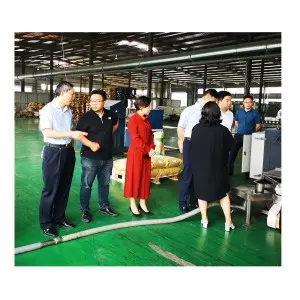
A delegation of international clients visited our facility to complete a technical quality and compliance audit on our PA6 and PA66 long GFRP (Glass-Fiber-Reinforced-Polymer) production lines. The audit confirmed full compliance with target specifications, and the team approved our incoming raw material inspections and shipment packaging protocols. (Reported by Lu)
Our engineering team successfully completed installation and testing on our new, high-speed GFRP pultrusion manufacturing line. The new line is fully operational, increasing our monthly production capacity for high-performance long glass fiber granules by 40% and helping us meet rising demand from our international B2B partners.
Direct sourcing pathways for advanced Long Fiber Thermoplastics (LFT) custom-tailored to global manufacturing tolerances.
 Best Composite