China has become a major sourcing base for industrial flooring, platforms, walkways, and drainage covers. Among its many manufacturers, Molded Fiberglass Grating suppliers differ greatly in materials, testing, production control, and export experience. A polished catalogue does not always reveal factory capability.
This guide introduces ten notable Chinese manufacturers through practical selection criteria. It considers resin systems, fiberglass content, surface finishes, panel dimensions, load ratings, and corrosion resistance. It also examines whether suppliers provide technical drawings, samples, inspection reports, and installation guidance. These details matter on a wet plant floor, where a loose panel or poor surface texture can create serious operational problems. Small details matter.
The evaluation also considers manufacturing equipment, quality-management practices, customization services, lead times, packaging, and communication with overseas buyers. Reliable suppliers should explain their testing methods clearly and connect product claims with verifiable documents. Certifications can support trust, but they should be checked against the specific product and production site. Some manufacturers may excel in chemical resistance, while others offer stronger customization or faster delivery. No single ranking can represent every project or market requirement. Information can change, too, so buyers should confirm current specifications before placing an order. This overview is a practical starting point, not a substitute for factory audits, sample testing, or professional engineering review. Our comparisons may also leave gaps, especially where public data is limited. That limitation deserves attention.
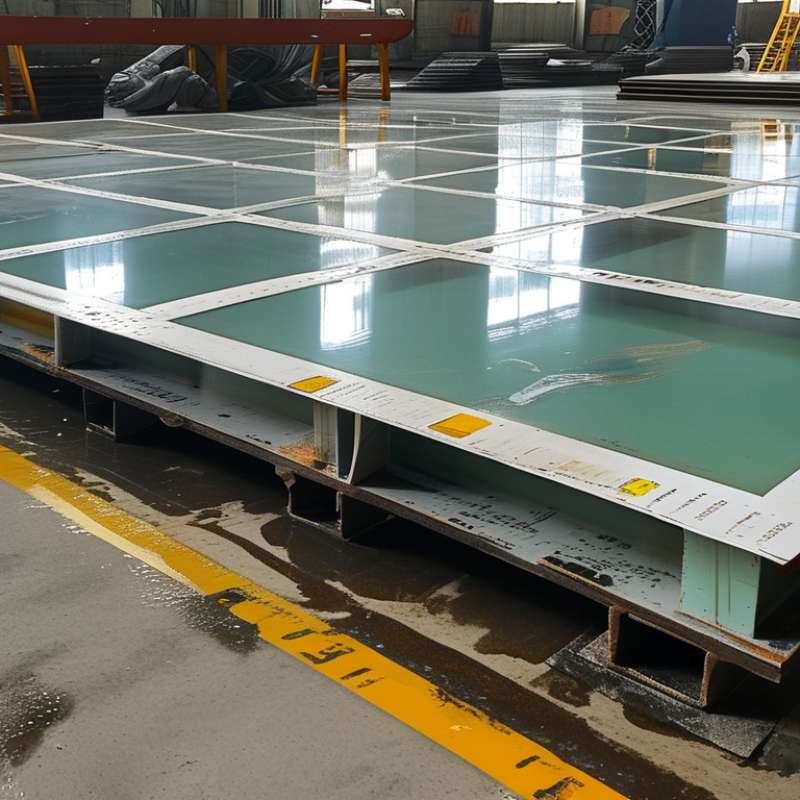
Molded Fiberglass Grating: Definition, Structure, and Core Benefits
Molded fiberglass grating is a one-piece, corrosion-resistant floor panel made from continuous glass fibers and thermoset resin. The fibers provide strength, while the resin protects against moisture, chemicals, and salt spray. During molding, resin surrounds the fiber bundles and forms square or rectangular openings. This structure spreads loads across the panel instead of relying on a single metal bar.
Its main benefits are low maintenance, electrical nonconductivity, slip resistance, and easy handling. Grand View Research’s 2023 FRP composites assessment valued the global market at more than USD 100 billion and projected continued growth through 2030. MarketsandMarkets also identified corrosion resistance and lightweight construction as major FRP demand drivers. These findings support broader use in wastewater plants, coastal platforms, walkways, and industrial areas. However, not every grating suits every load. Span length, resin type, surface finish, and support spacing must be checked carefully. A small design mistake can create noticeable deflection.
Tips: Ask for load-test data, resin specifications, and fire-performance information. Compare the panel’s open area with drainage needs. For frequent foot traffic, a grit surface usually improves grip. Installation experience matters, too. In practice, cutting panels without sealing exposed fibers can weaken long-term durability. That detail is often overlooked. Project engineers should verify calculations against applicable local codes and recognized testing methods, rather than trusting a catalog value alone.
Key Criteria for Ranking China’s Molded Fiberglass Grating Manufacturers
Ranking China’s top molded fiberglass grating manufacturers requires more than comparing prices. A credible review should examine production experience, technical control, and documented project results. Inspectors should check resin quality, glass-fiber content, mold accuracy, and panel thickness. These details affect stiffness, slip resistance, and service life. Factory audits can reveal cleaner workshops, stable curing areas, and better batch control. Verified load-test reports are essential, especially for platforms supporting workers or equipment.
Reliability also depends on consistency. Reviewers should compare sample panels with delivered batches, not judge one attractive sample. Useful evidence includes third-party testing, traceable raw materials, clear tolerances, and responsive technical support. Manufacturers should explain drainage openings, surface grit, UV resistance, and chemical exposure limits. Export experience matters, but shipping speed alone should not decide the ranking. A low quote may hide weaker resin or inconsistent dimensions. No scorecard is perfect. Weighting every criterion equally may also produce a misleading result.
Tips: Request two production samples and a recent test report. Measure panel depth, mesh size, flatness, and surface texture. Ask how rejected panels are recorded and handled. Speak with a recent buyer, if possible. Photos help, but they cannot replace an on-site inspection. A practical ranking should reward evidence, repeatability, and honest limitations, even when the final comparison feels less impressive.
China Top 10 Molded Fiberglass Grating Manufacturers
Key Criteria for Ranking China’s Molded Fiberglass Grating Manufacturers
The chart presents an editorial weighting model for evaluating molded fiberglass grating manufacturers.
The criteria reflect commonly reviewed procurement factors, including structural performance, corrosion resistance,
slip resistance, fire performance, dimensional consistency, quality control, customization capability, delivery reliability,
technical documentation, and compliance with applicable industrial standards. The percentages represent evaluation weights,
not individual company scores.
China’s Top 10 Molded Fiberglass Grating Manufacturers
China’s Top 10 Molded Fiberglass Grating Manufacturers
China’s top 10 molded fiberglass grating manufacturers are often judged by more than production capacity. Practical buyers examine resin systems, fiberglass content, mold precision, and surface finish. These details affect corrosion resistance, slip safety, and service life in demanding environments.
Experienced manufacturers usually provide clear technical data for load ratings, deflection, fire performance, and chemical resistance. Factory visits can reveal useful details, including clean molding areas, controlled curing zones, and traceable batch records. A reliable supplier should also offer sample panels for cutting, fastening, and surface inspection. Small defects matter. Uneven grit or weak edges may create installation problems later.
Independent testing and consistent quality control strengthen a manufacturer’s credibility. Buyers should compare certificates with actual test reports, not rely on attractive brochures. The strongest companies support custom panel sizes, stair treads, color options, and replacement planning. They also explain limitations honestly. No ranking is perfect. Some manufacturers perform well on heavy-duty flooring but respond slowly to export documentation or after-sales questions. This weakness deserves attention. Project teams should request recent references, inspect packaging, and confirm whether quoted performance matches site conditions. A careful comparison helps identify suppliers that combine engineering knowledge, production experience, and dependable communication.
China Top 10 Molded Fiberglass Grating Manufacturers - China’s Top 10 Molded Fiberglass Grating Manufacturers
| Rank |
Anonymous Manufacturer Profile |
Primary Product Focus |
Typical Resin Options |
Common Panel Thickness |
Surface Options |
Corrosion Resistance |
Typical Applications |
Export Readiness |
| 1 |
Profile A — high-volume molded grating producer |
Standard industrial flooring and walkways |
Orthophthalic polyester |
25–50 mm |
Concave or grit top |
High |
Chemical plants, platforms |
High |
| 2 |
Profile B — corrosion-resistant process equipment supplier |
Vinyl ester molded grating |
Vinyl ester |
25–38 mm |
Grit top |
Very high |
Wastewater, desalination |
High |
| 3 |
Profile C — infrastructure and utility grating specialist |
Heavy-duty molded panels |
Polyester and vinyl ester |
38–50 mm |
Grit or smooth |
High |
Bridges, utility corridors |
Medium–High |
| 4 |
Profile D — customized architectural grating producer |
Colored and shaped molded grating |
Polyester |
25–38 mm |
Smooth, concave, grit |
High |
Walkways, public facilities |
Medium |
| 5 |
Profile E — pultrusion and molded-product integrated supplier |
Molded grating with structural accessories |
Polyester and vinyl ester |
25–50 mm |
Grit top |
High |
Factories, offshore access |
High |
| 6 |
Profile F — municipal water-treatment supplier |
Lightweight drainage and access panels |
Polyester |
25–38 mm |
Concave or grit top |
High |
Water treatment, pump rooms |
Medium–High |
| 7 |
Profile G — electrical and telecom infrastructure supplier |
Electrically non-conductive molded grating |
Polyester |
25–50 mm |
Grit top |
High |
Substations, cable trenches |
High |
| 8 |
Profile H — marine and coastal application supplier |
UV- and saltwater-resistant grating |
Vinyl ester |
38–50 mm |
Grit top |
Very high |
Docks, marine platforms |
High |
| 9 |
Profile I — OEM and project-order manufacturer |
Made-to-order sizes and cut panels |
Polyester and vinyl ester |
25–50 mm |
Smooth or grit top |
High |
OEM equipment, machinery |
Medium |
| 10 |
Profile J — cost-focused standard grating supplier |
General-purpose molded grating |
Orthophthalic polyester |
25–38 mm |
Concave top |
High |
Factories, maintenance areas |
Medium |
Data note: Company identities and brand information are intentionally omitted. Product characteristics shown represent commonly specified molded fiberglass grating configurations used in industrial, water-treatment, infrastructure, electrical, and marine applications.
Product Ranges, Manufacturing Processes, and Quality Standards
China’s top molded fiberglass grating manufacturers serve industrial plants, walkways, platforms, stairways, and drainage areas. Their product ranges usually include standard panels, stair treads, trench covers, and custom-cut sections. Common options include different mesh openings, load ratings, surface textures, and resin systems. Vinyl ester suits harsher chemical environments, while polyester remains practical for general applications.
Manufacturing typically begins with continuous glass roving placed inside a heated mold. Resin fills the structure and bonds the fibers during curing. After demolding, workers trim edges, inspect dimensions, and apply abrasive particles to improve slip resistance. Color consistency matters, especially on large platforms. It sounds minor, but uneven grit can affect worker confidence and maintenance.
Reliable factories document resin ratios, glass content, bar thickness, and curing temperatures. They may test load capacity, deflection, flame behavior, slip resistance, water absorption, and corrosion performance. Quality systems aligned with ISO practices can support traceability, but a certificate alone proves little. Buyers should request recent laboratory reports, production samples, and inspection records. Standards such as ASTM or EN may apply, depending on the destination and project specification. No factory is flawless. A missed dimension or poorly sealed cut edge can become a costly problem, so independent checks remain worthwhile.
How to Select the Right Chinese Manufacturer for Your Project
Selecting the right Chinese molded fiberglass grating manufacturer requires more than comparing prices. Start with your project conditions: platform span, load rating, chemical exposure, sunlight, drainage, and slip resistance. A reliable supplier should explain resin options, fiber content, panel thickness, and tolerance limits clearly. Ask for recent test reports, production photos, and references from similar industrial sites. Practical evidence matters.
Inspect the factory process when possible. Check mold cleaning, resin mixing, curing control, cutting accuracy, and packaging protection. Request a sample with your required surface finish and color. Measure its thickness and panel dimensions after delivery.
Confirm whether the manufacturer can provide drawings, installation guidance, inspection records, and stable replacement batches. Communication speed is useful, but technical accuracy matters more. Some suppliers respond quickly yet avoid difficult questions. That is a warning sign.
Tips: Compare at least three quotations using the same specifications. Review loading data, not only product weight. Confirm Incoterms, lead time, spare panels, and export documents in writing. A pre-shipment inspection can reveal warped panels, rough edges, or incorrect openings. Do not accept vague claims such as “best quality.” Ask how quality is controlled at each stage. I have found that small details, such as pallet strength and label accuracy, can affect installation. One weakness remains: remote audits cannot show every production risk. Keep a trial order before committing to a large project.
FAQS
: It is a one-piece floor panel made from continuous glass fibers and thermoset resin. The resin protects against moisture, chemicals, and salt spray. Square or rectangular openings reduce weight and support drainage.
Typical locations include wastewater plants, coastal platforms, walkways, stairways, and industrial floors. It suits areas exposed to moisture, chemicals, or salty air. The application still matters.
Molded fiberglass grating resists corrosion and requires limited maintenance. It is lightweight, electrically nonconductive, and easier to handle than many metal alternatives. A grit surface can improve grip under wet conditions.
Check span length, support spacing, panel depth, mesh size, and expected load. Review the resin type and surface finish for the working environment. A small design error can cause noticeable deflection.
Polyester resin suits many general industrial applications. Vinyl ester resin is often selected for harsher chemical exposure. The best choice depends on chemicals, temperature, moisture, and service duration.
Continuous glass roving is placed inside a heated mold. Resin surrounds the fibers and cures into a rigid structure. Workers then trim edges, inspect dimensions, and apply abrasive particles.
Request recent load-test reports, production samples, resin specifications, and inspection records. Check glass-fiber content, bar thickness, flatness, grit consistency, and curing controls. Photos help, but they cannot replace inspection.
Compare technical evidence, batch consistency, factory controls, and documented project performance. Do not judge only one attractive sample or the lowest quotation. A low price may hide weaker resin or inconsistent dimensions.
Cut edges should be sealed after panels are cut. Unsealed fibers may absorb moisture and reduce long-term durability. Measure twice.
Conclusion
This article provides a practical overview of Molded Fiberglass Grating, explaining its definition, structural design, and core benefits such as corrosion resistance, electrical insulation, lightweight construction, slip resistance, and low maintenance requirements. It also introduces the key criteria used to evaluate China’s top ten manufacturers, including production capacity, material quality, process consistency, customization capabilities, testing procedures, certifications, delivery reliability, and customer support.
The article compares manufacturers by examining their product ranges, resin and fiberglass options, molding processes, load-bearing performance, surface treatments, and quality standards. It further explains how buyers can select the right Chinese supplier according to project conditions, including operating environment, required dimensions, safety expectations, budget, order volume, and delivery schedule. The goal is to help international purchasers make a clear, efficient, and well-informed sourcing decision.

 Best Composite