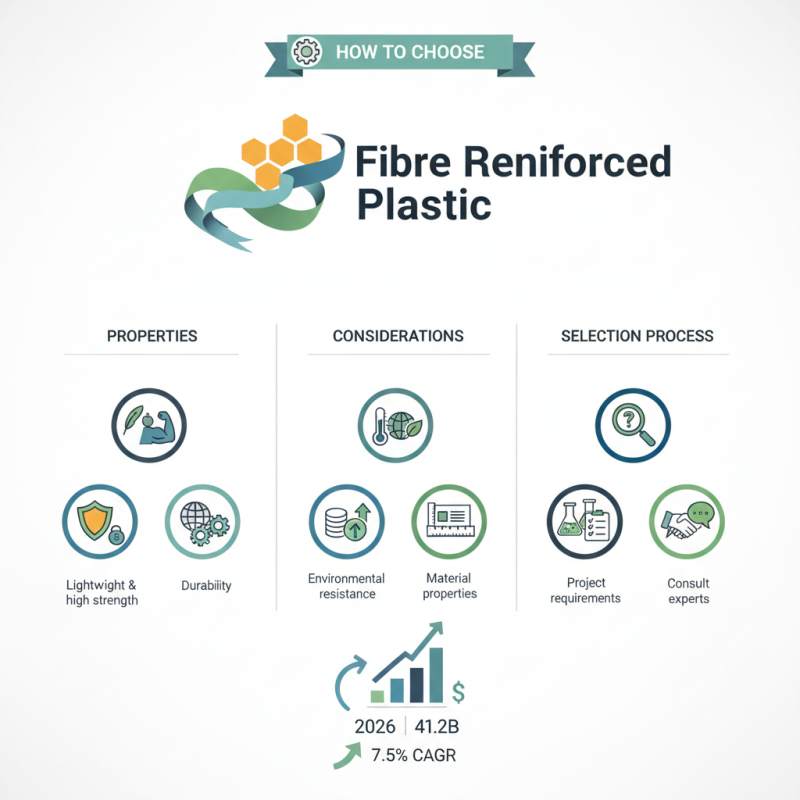
Fibre Reinforced Plastic (FRP) has gained popularity in various industries due to its unique properties. According to a recent report by Research and Markets, the global FRP market is projected to reach USD 41.2 billion by 2026, with a CAGR of 7.5%. This indicates a strong demand for materials that combine lightweight characteristics with high strength and durability.
Choosing the right FRP for your projects is essential. The versatility of these composites is evident in applications ranging from aerospace to construction. However, navigating the variety of options can be challenging. Factors such as material properties, environmental resistance, and cost-effectiveness must be considered.
Many engineers and designers still overlook the importance of thorough testing when selecting FRP. This can lead to inadequate performance and potential project delays. It is crucial to understand the specific requirements of your project and to consult with experts in the field. Engaging with industry professionals can enhance your understanding and provide insights based on real-world applications.
Understanding the Basics of Fibre Reinforced Plastics and Their Types
Fibre reinforced plastics (FRP) are versatile materials widely used in various industries. Understanding their basics is crucial for making informed decisions.
FRP consists of a polymer matrix reinforced with fibers, enhancing strength and durability.
Common fiber types include glass, carbon, and aramid, each offering unique properties and benefits.
Glass fiber is cost-effective and provides good tensile strength. It is often used in construction and automotive applications.
Carbon fiber is lightweight and exhibits excellent stiffness, making it ideal for aerospace and high-performance products.
Aramid fibers, famous for their toughness, find applications in protective gear and military equipment.
Knowing these distinctions helps tailor your choice to specific project requirements. Consider your project's purpose and environment to select the most suitable option.
However, navigating the range of choices can be daunting; many factors like weight, cost, and availability complicate this decision.
Don't overlook the importance of assessing your project’s needs. For instance, a high-strength requirement may favor carbon fiber, despite its higher cost.
Evaluating the intended application, such as whether the product will be exposed to harsh conditions, impacts material selection.
Practicing caution and conducting thorough research can lead to better outcomes in your FRP projects.
Taking time to reflect on each option is essential, as the wrong choice can result in significant setbacks.
Key Performance Metrics for Selecting Fibre Reinforced Plastics
When selecting fibre reinforced plastics (FRP) for projects, understanding key performance metrics is crucial. These materials offer unique advantages, but not all FRPs are created equal. Begin by examining strength-to-weight ratios. A lightweight option can significantly enhance performance without adding bulk to your project. Often, a higher ratio indicates a more efficient material that meets engineering standards.
Next, assess durability and environmental resistance. FRPs can outperform traditional materials in harsh conditions. They resist corrosion and fatigue, making them suitable for outdoor applications. However, some composites may still degrade over time. Testing under specific conditions can provide insight into long-term performance. Don't overlook impact resistance, especially in high-stress situations.
Cost considerations also play a vital role. While high-performance FRPs may come with a higher upfront cost, they can lead to long-term savings. Frequent replacements of inferior materials add to expenses. Reflect on your project's requirements deeply. Choosing the right fibre reinforced plastic is a balance of performance, durability, and cost efficiency. Make informed choices based on thorough research and experimentation.
Applications of Fibre Reinforced Plastics Across Different Industries
Fibre reinforced plastics (FRP) have gained traction across various industries due to their unique properties. In the automotive sector, for example, FRP components enhance vehicle performance while reducing weight. Using FRP in car manufacturing can lead to better fuel efficiency. However, the challenge remains in achieving the right balance between strength and flexibility.
The construction industry also greatly benefits from FRP. These materials are durable and resistant to corrosion, making them ideal for infrastructure projects. Bridges and buildings can utilize FRP for both structural support and aesthetic elements. Yet, integrating FRP into existing designs can pose challenges. Engineers must carefully consider load-bearing requirements and local environmental conditions.
In the aerospace sector, FRP plays a crucial role in creating lightweight yet robust aircraft components. These materials can withstand extreme conditions, contributing to safety and efficiency. However, potential issues with manufacturing consistency can arise, leading to costly delays and reworks. Ensuring quality control is vital for successful application in this high-stakes industry.
How to Choose Fibre Reinforced Plastic for Your Projects? - Applications of Fibre Reinforced Plastics Across Different Industries
| Industry |
Applications |
Typical Materials |
Advantages |
| Aerospace |
Aircraft components, Overhead storage bins |
Carbon Fiber Reinforced Plastic (CFRP) |
Lightweight, High strength-to-weight ratio |
| Automotive |
Body panels, Interior parts |
Glass Fiber Reinforced Plastic (GFRP) |
Cost-effective, Corrosion-resistant |
| Construction |
Structural components, Reinforcements |
Polyester and Vinyl Ester Reinforced Plastics |
Durable, Lightweight, Weather-resistant |
| Marine |
Boat hulls, Decks |
Epoxy Reinforced Plastics |
Water-resistant, High strength |
| Electronics |
Enclosures, Insulating components |
Phenolic Reinforced Plastics |
Electrical insulation, Fire-resistant |
Evaluating Cost-Effectiveness of Fibre Reinforced Plastics for Projects
Choosing fibre reinforced plastics (FRP) requires careful analysis of cost-effectiveness for your projects. It is essential to evaluate not only the initial costs but also the long-term benefits these materials can offer. FRP often presents a higher upfront investment compared to traditional materials. However, the savings in maintenance and longevity can justify the expense.
When considering FRP, think about its performance under real-world conditions. It resists corrosion and is lighter than metal alternatives. These characteristics can lead to reduced transportation costs and easier installation. Yet, potential downsides exist. If not correctly formulated, some FRP products may lack the necessary strength or flexibility for specific applications. Thorough testing and validation against project requirements are crucial.
Another aspect to ponder is the skill level required for working with FRP. Not all builders or contractors have extensive experience with these materials. This can potentially increase labor costs during project execution. Weighing these factors helps in establishing a true picture of cost-effectiveness in the context of your specific projects. It’s wise to reflect on these nuances before making a decision.
Future Trends in Fibre Reinforced Plastic Technology and Sustainability
Fibre Reinforced Plastics (FRP) are evolving rapidly. Future trends focus on sustainability and advanced technologies. Companies seek eco-friendly materials that provide strength and durability. The integration of bio-based fibers is gaining traction. This shift reduces reliance on fossil fuels and enhances recyclability. Engineers and designers need to consider these options for future projects.
Tips: When selecting materials, assess their environmental impact. Look for certifications that indicate sustainability. Collaborate with suppliers to learn about innovative materials. This approach fosters a more responsible decision-making process.
Recycling FRP remains a challenge. The complexity of the materials often limits reprocessing options. Nonetheless, emerging technologies aim to address this. New methods are being developed to recycle or repurpose FRP efficiently. Continuous research is necessary to resolve these issues and improve sustainability in the industry.
Building a reliable network of partners can provide valuable insights. Engaging with specialists can enhance your project's sustainability profile. Stay updated on research and innovations in FRP technology. This knowledge is crucial for making informed choices.
Trends in Fibre Reinforced Plastic Technology
This chart illustrates the importance levels of various trends in Fibre Reinforced Plastic technology. As sustainability emerges as a crucial factor, it demonstrates the focus on lightweight materials, cost-effectiveness, and durability as significant considerations for future projects.
Conclusion
Fibre Reinforced Plastic (FRP) is a versatile material used in various applications due to its advantageous properties. Understanding the different types of FRP and their fundamental characteristics is crucial for making informed decisions in project selection. Key performance metrics, such as tensile strength, durability, and weight, are essential factors to consider when evaluating FRP for specific applications across industries ranging from construction to automotive.
Cost-effectiveness is another critical aspect, as the initial investment in FRP can lead to long-term savings through lower maintenance and enhanced lifespan. With ongoing advancements in technology and a growing emphasis on sustainability, the future of Fibre Reinforced Plastic looks promising, potentially leading to even more innovative and eco-friendly applications in diverse fields.

 Best Composite