China’s Composite Fiber Materials sector serves industries that demand light weight, strength, and reliable production. Suppliers may offer carbon or glass fiber, fabrics, prepregs, and related reinforcement materials. Their catalogs can look similar. The details matter. Fiber grade, sizing, weave, resin compatibility, and batch consistency can change how a finished part performs.
This guide examines leading suppliers in China through practical buyer considerations. It looks at product range, manufacturing capability, quality documentation, customization, and export support. A sample roll, a technical data sheet, and a clear traceability record can reveal more than a polished brochure. Buyers should also confirm testing methods and application fit directly with each supplier. No supplier is automatically right for every project.
A useful expert lens comes from Lawrence C. Bank, a researcher in composite structures. His work points to a practical principle: reinforcement and matrix must be assessed as a system, not in isolation. This is a paraphrase, not a verified direct quotation; no source text was provided to authenticate exact wording. That distinction matters. Supplier comparisons should rely on documented specifications and direct evaluation, rather than unsupported claims. The market is broad, and this overview cannot replace technical qualification. It can, however, help readers ask sharper questions before requesting samples or beginning supplier discussions.
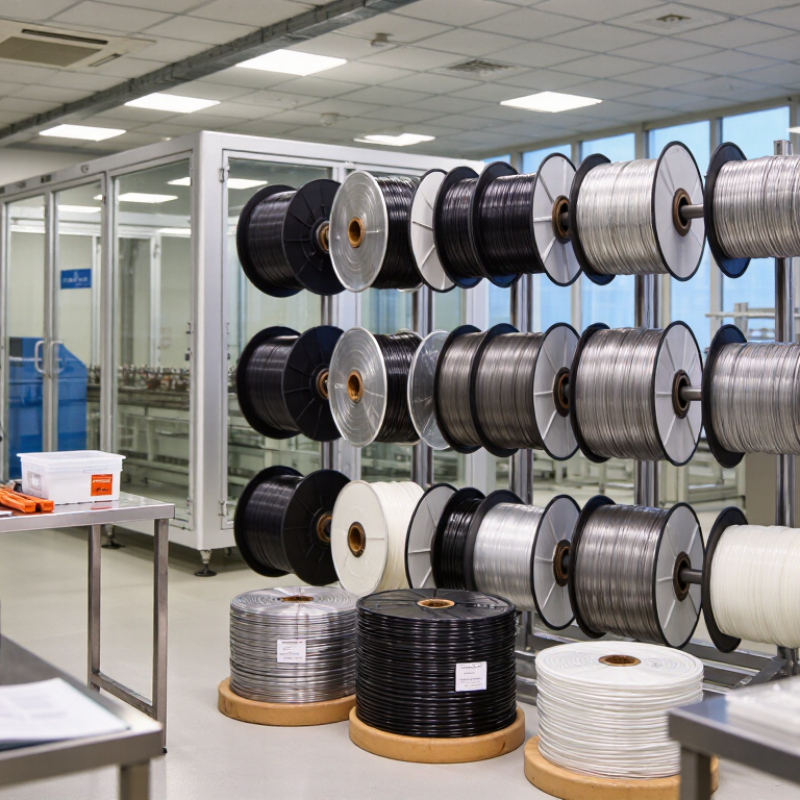
In China, composite fiber materials generally combine reinforcing fibers with a polymer matrix. Common reinforcements include glass, carbon, and basalt fibers; matrices are often thermoset or thermoplastic resins. Products range from woven fabrics and prepregs to molded structural parts. Not a neat boundary. Some suppliers make fiber alone, while others deliver finished components.
The scope spans wind energy, transport, construction, and industrial equipment. The Global Wind Energy Council’s Global Wind Report 2024 puts China’s new wind capacity in 2023 at 75.9 gigawatts. Wind blades commonly use glass-fiber composites, with carbon fiber used in selected designs. That distinction matters: installed capacity is not a direct measure of composite purchases. Blade size, repair cycles, and factory inventory affect demand. When assessing suppliers, compare fiber type, resin compatibility, processing capability, and test documentation—not just stated capacity. A remaining challenge is inconsistent disclosure across the supply chain; public figures may describe fiber output, rather than usable, finished material.
Composite fiber materials combine reinforcing fibers with a matrix to create lightweight, strong components. The chart compares representative tensile-strength ranges for major fiber types relevant to the supply chain; it is not a ranking of Chinese suppliers.
Tensile strength is shown as a range in gigapascals (GPa). Values are representative ranges for commercial fiber grades; actual properties vary with grade, fiber form, and test method. Hover over a bar for the range.
China’s composite-material suppliers offer several fiber types, each suited to different performance needs. Carbon fiber is valued for high stiffness and low weight, making it common in sporting goods, vehicle parts, and industrial panels. Glass fiber is generally more cost-effective and resists corrosion; it appears in pipes, tanks, and molded housings. Aramid fiber handles impact well, though cutting and machining it can be less straightforward.
Basalt fiber is made from melted basalt rock and can suit applications needing heat resistance and durable reinforcement. Natural fibers, such as flax, provide a lower-density option for some interior panels, but moisture control matters. These materials arrive as woven cloth, unidirectional tape, chopped strands, or prepreg. Check fiber direction, weave consistency, and resin compatibility before comparing quotes. A material name alone says little about finished-part performance.
China’s composite fiber supply chain is best understood as a sequence of specialized stages, not a single factory category. Upstream producers make reinforcing fibers, while processors apply sizing, cut tow, or convert continuous filaments into usable formats. These may include woven cloth, stitched fabrics, or prepreg rolls. Small details matter. A roll’s width, fiber orientation, and storage history can affect how reliably it feeds into a customer’s process.
Downstream converters supply molded parts and semi-finished components for transport, energy, construction, and sporting goods. Between these stages, distributors and technical service teams may coordinate sampling, documentation, packaging, and delivery schedules. In practice, buyers compare more than quoted price. They may review batch traceability, test methods, lot consistency, and whether technical staff can explain process limits. Clear specifications help prevent costly misunderstandings.
The chain is not perfectly linear. Some suppliers integrate fiber treatment and fabric making; others rely on partner mills or outside testing laboratories. That can improve flexibility, but responsibility may become less clear when a shipment varies. Ask who owns each quality checkpoint, from incoming fiber inspection to final roll labeling. One point deserves scrutiny. Sample performance does not always predict full-scale production, so verify repeatability with production-representative lots and written acceptance criteria.
A supplier-neutral overview of common supply-chain stages and material flows. It describes typical industry functions rather than ranking individual suppliers; capabilities and sourcing arrangements vary by product and application.
| Supply-chain stage | Typical materials or outputs | Role in the chain | Common downstream users | Key purchasing or qualification considerations |
|---|---|---|---|---|
| 1. Fiber precursors and upstream feedstocks | Polyacrylonitrile (PAN) precursor for many carbon fibers; pitch-based precursor for some carbon fibers; glass-forming mineral inputs for glass fiber; polymer feedstocks for aramid and other synthetic fibers. | Provide the chemical or mineral inputs that are converted into reinforcing fibers. | Fiber producers and intermediate material processors. | Precursor consistency, chemical composition, traceability, supply continuity, and compatibility with the intended fiber process. |
| 2. Reinforcing-fiber production | Carbon fiber, glass fiber, aramid fiber, and other high-performance reinforcing fibers. | Convert precursor or raw inputs into fibers with controlled properties for reinforcement. | Textile converters, prepreg producers, compounders, and composite part manufacturers. | Fiber type and grade, tensile properties, filament count, surface treatment, sizing compatibility, and lot-to-lot consistency. |
| 3. Fiber conversion and textile processing | Tows, rovings, yarns, woven fabrics, stitched fabrics, nonwovens, and unidirectional reinforcement formats. | Convert fibers into forms that can be handled and oriented for a particular component design. | Prepreg producers, molding shops, and structural component manufacturers. | Fabric areal weight, weave or architecture, fiber orientation, width, edge quality, and handling requirements. |
| 4. Matrix and resin materials | Thermoset resin systems such as epoxy, polyester, and vinyl ester; thermoplastic matrices such as polypropylene, polyamide, and other engineering polymers. | Bind the reinforcement, transfer loads between fibers, and help determine processing and service characteristics. | Prepreg producers, compounders, resin-transfer molding operations, and composite molders. | Resin chemistry, viscosity, cure or melt-processing window, storage conditions, compatibility, and relevant safety documentation. |
| 5. Intermediate material production | Prepreg, sheet molding compound, bulk molding compound, thermoplastic composite tape, and fiber-reinforced pellets. | Combine reinforcement and matrix, or prepare them in a controlled format for downstream forming. | Press molders, autoclave processors, automated layup operations, and injection molders. | Resin content, fiber content, tack or drape, storage life, material format, and process-specific certificates or test data. |
| 6. Component forming and assembly | Molded, laminated, pultruded, wound, or assembled composite parts and structures. | Shape intermediate materials into finished or semi-finished components using processes suited to the design and material system. | Industrial equipment, transportation, energy, construction, electronics, and other end-use sectors. | Process capability, dimensional control, defect inspection, joining method, production volume, and application-specific qualification. |
| 7. Testing, inspection, and quality support | Material test results, inspection records, process monitoring, and component verification. | Check whether materials and parts meet agreed specifications and application requirements. | Material buyers, processors, component integrators, and end users. | Test method, sample preparation, acceptance criteria, measurement traceability, and documentation requirements. |
| 8. Distribution and supply-chain coordination | Stocked materials, cut-to-size formats, technical documentation, and logistics services. | Connect producers and converters with customers; manage order quantities, delivery schedules, and material handling. | Small and large manufacturers, distributors, research organizations, and project-based buyers. | Storage and transport conditions, batch identification, delivery lead time, minimum order quantity, and change-notification practices. |
| 9. Scrap management and recycling | Production offcuts, cured composite scrap, recovered fibers, and reclaimed thermoplastic composite materials. | Handle manufacturing waste and, where technically and economically feasible, recover materials for reuse or recycling. | Recyclers, compounders, and manufacturers using recovered materials. | Scrap composition, contamination, fiber condition, recovery route, and whether reclaimed material meets the intended application’s requirements. |
Top Composite Fiber Materials Suppliers in China
Key Suppliers and Their Product Specializations
China’s composite-fiber suppliers tend to specialize by material, process, and end use. Some focus on carbon-fiber fabrics and prepregs for lightweight structures. Others supply glass-fiber roving, woven cloth, or chopped strands for panels and molded parts. Basalt and aramid options are also available through specialist producers. The right fit depends on the required strength, temperature tolerance, surface finish, and production method.
Look beyond a catalog. Ask for fiber orientation, resin compatibility, roll width, and batch traceability. For example, a fabric intended for hand lay-up may not suit automated placement without adjustment. Samples can reveal handling issues that a data sheet will miss. Small details matter.
Some suppliers emphasize standard grades and steady output; others offer custom weave patterns or resin systems. Capacity and testing practices can vary, so request recent test records and clarify whether values describe the fiber or finished laminate. A careful review helps, but it is not foolproof. Specification sheets may leave out practical limits, such as storage conditions or acceptable variation between batches. I would verify those points before committing to a production run.
Composite fiber materials are used in wind-turbine blades, vehicle panels, pipes, and sporting goods. Carbon-fiber laminates can offer high stiffness at low weight, while glass-fiber fabrics are common in larger structures where cost and impact resistance matter. Aramid fibers may suit parts needing improved toughness. The right choice depends on the load, temperature, moisture, and production method.
When assessing suppliers in China, request technical data for the exact grade and form you plan to buy. Check fiber type, fabric weight, resin compatibility, tolerances, and batch traceability. Ask for test reports and clarify which test methods were used. A capable supplier should explain how material properties relate to your application, not just send a polished catalog. Details matter.
Review sample consistency, packaging, lead times, and the process for handling defects. A small trial order can reveal uneven weave, resin wet-out problems, or labels that do not match the paperwork. A low quote may exclude testing or careful packing, so compare the full specification. Some details get missed. I would also verify whether the supplier can maintain the same grade across repeat orders; a good sample alone is not enough. Keep written records of agreed specifications and inspection results.
They combine reinforcing fibers with a polymer resin matrix. Common fibers include glass, carbon, and basalt. Some suppliers sell fibers; others deliver finished parts. Not a neat boundary.
Carbon fiber offers stiffness at low weight. Glass fiber is often more cost-effective and resists corrosion. Aramid can improve impact toughness, while basalt suits some heat-resistant uses. Flax is lighter, but moisture control matters.
Typical uses include wind-turbine blades, vehicle panels, pipes, tanks, and sporting goods. Glass fiber is common in large structures. Carbon fiber appears in selected blade designs and lightweight parts.
Materials may arrive as woven cloth, unidirectional tape, chopped strands, or prepreg. Check fiber direction, weave consistency, roll width, and resin compatibility. The material name alone is not enough.
Ask for technical data for the exact grade and form. Check fiber content, fabric weight, tolerances, batch traceability, and test methods. Details matter.
A trial can reveal uneven weave, poor resin wet-out, or mismatched labels. Test the material with your own resin and process. Supplier results may differ.
Not necessarily. Some figures describe fiber output, not finished material ready for production. Public disclosures can be inconsistent. I would check what each figure actually measures.
Check storage humidity, packaging, lead times, and defect handling. Keep written specifications and inspection records. A good sample does not guarantee repeat consistency. Needs checking.
Composite Fiber Materials are engineered reinforcements and material systems that combine fibers with a supporting matrix to deliver properties such as strength, stiffness, low weight, or corrosion resistance. In China, the industry spans fiber production, resin and matrix supply, intermediate products, composite processing, and distribution. Common offerings include carbon-fiber, glass-fiber, aramid-fiber, and other specialty-fiber composites, supplied in forms such as fabrics, prepregs, sheets, and molded components.
Suppliers may focus on particular fiber types, product formats, performance requirements, or manufacturing services. Their products serve industries including transportation, construction, energy, sports equipment, and industrial manufacturing. When evaluating a supplier, buyers can consider material specifications, consistency, production capacity, processing capabilities, technical support, delivery reliability, and quality-control practices. Understanding these factors helps match a supplier’s specialization with an application’s performance, budget, and production needs.

Best Composite