Industry-grade engineered resins engineered for demanding physical reinforcement applications
In modern civil engineering, transportation infrastructure, and marine environments, Glass Fiber Reinforced Polymer (GFRP) rebars have emerged as the primary alternative to traditional carbon steel reinforcements. The primary driver for this shift is structural preservation: steel corrodes under chloride exposure, leading to concrete spalling and catastrophic failure. GFRP, being inherently non-corrosive, non-conductive, and highly resistant to chemical attack, ensures service lifetimes exceeding 100 years.
However, the anisotropy and mechanical complexity of composite materials mean their structural performance parameters cannot be estimated using steel-testing methodologies. This creates a critical global requirement for dedicated GFRP Rebar Stretching Testing Equipment. Manufacturers, national testing agencies, and site engineers require high-precision universal testing machines (UTMs) equipped with specialized anchorage mechanisms to accurately assess tensile strength, modulus of elasticity, and ultimate elongation without crushing the composite matrix during load application.
According to infrastructure whitepapers and standardizing associations like ASTM International and the American Concrete Institute (ACI), the testing of GFRP rebars must follow strict rules—principally ASTM D7205 / D7205M—to guarantee the structural safety of major infrastructure investments worldwide.
Understanding the standard demands and operational parameters across testing laboratories globally.
Preventing premature failure at the grip interface to ensure true material properties are measured
Unlike steel, GFRP rebars are highly sensitive to lateral compressive forces. Traditional serrated wedge grips will crush the resin matrix, leading to premature jaw breaks. Modern stretching equipment utilizes specialized grout-filled or expansive resin-filled steel sleeves to distribute clamping pressures evenly.
Composites display a linear elastic stress-strain behavior up to failure. Precision clip-on or non-contact optical extensometers are critical because energy release at structural rupture is explosive, which can damage contact-based strain gauges.
B2B procurement agents seek testing frames that integrate with environmental chambers to evaluate rebars under sustained loads while exposed to elevated temperatures, saline mist, and alkaline solutions, mimicking concrete chemistry.
Located in the ancient town of Maoshan, which boasts a rich heritage spanning over a thousand years, Jurong Best Composite Materials Co., Ltd. is a leading manufacturer in Jurong City, Zhenjiang, Jiangsu Province. Positioned in the lower reaches of the Yangtze River, adjacent to the transport hub of Nanjing and close to Nanjing Lukou International Airport, our facility benefits from excellent transport networks. The Jianning-Taicang Expressway passes through, and the Jurong exit of the Shanghai-Nanjing Expressway links us directly to Zhenjiang Port and Nanjing Port. Leveraging the strategic advantages of the Yangtze River Delta Economic Zone, we deliver composite solutions worldwide.
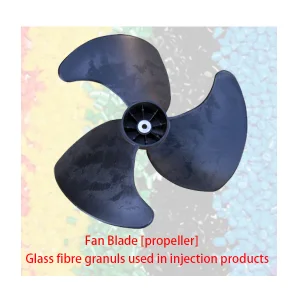
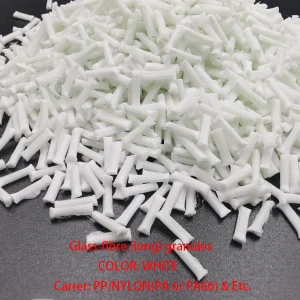
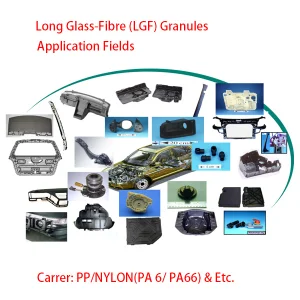
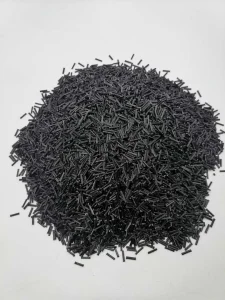
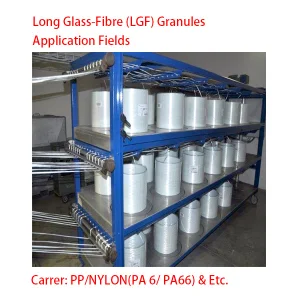
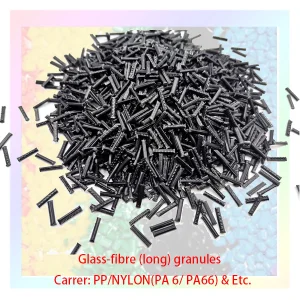
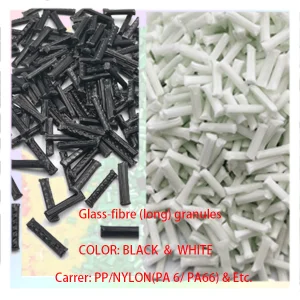
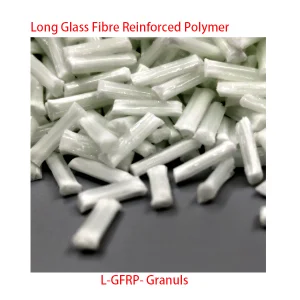
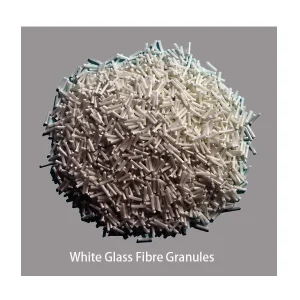
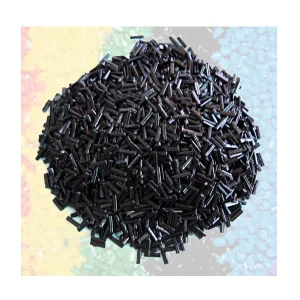
We specialize in the research and production of Long GFRP (Glass-Fiber-Reinforced-Polymer) Granules based on PA6, PA66, PP, PPA, and PBT matrices. These long-fiber granules are used to manufacture high-performance injection molded parts, including automotive structural components, washing machine components, and small kitchen electrical appliances.
Our commitment to material performance means every batch of raw material and molded component is subjected to strict mechanical evaluations. Understanding the stretch, elongation, and tensile performance of glass-fiber structures allows us to supply quality-controlled polymer granules that meet the high-strength demands of our global partners.
Evolutionary milestones in mechanical assessment systems for advanced polymer matrix composites
Use of steel pipes filled with high-strength cementitious or resinous grout to anchor the rebar ends. Standard practice for eliminating stress concentration, though requiring specimen preparation times of 24–48 hours.
Integration of computer-controlled lateral pressure regulators that adjust wedge pressure dynamically as the axial tensile force increases. This minimizes manual casting preparations and allows high-throughput industrial testing.
Transition from contact extensometers to advanced DIC systems. High-speed optical tracking measures real-time 3D strain mapping across the rebar profile, highlighting internal fiber shear failures before ultimate break.
Machine learning models integrated into universal testing software analyze load-deflection patterns to categorize failures (e.g., fiber pull-out, matrix splitting, interfacial shear failure) automatically, providing feedback for granule manufacturers.
Ensuring compliance and structural safety across multiple engineering sectors
Industrial testing requirements vary significantly depending on localized environmental exposures and structural designs. Universal stretching test machinery must adapt to these specific conditions to ensure structural integrity:
Marine seawalls, ports, and bridge piers are exposed to high concentrations of sodium chloride. Steel rebar structures in these areas deteriorate rapidly, demanding frequent maintenance. Rebar manufacturers producing GFRP for marine applications must verify tensile strength under alkaline immersion. Testing laboratories utilize temperature-controlled water bath chambers integrated into the stretching frame to test rebars under combined environmental and mechanical stress.
In subway tunnel excavations, Tunnel Boring Machines (TBMs) must cut through temporary shaft walls. Reinforced concrete walls constructed using traditional steel rebar damage TBM cutter heads. By substituting steel with GFRP rebars in the "soft-eye" zones of the shaft, TBMs can easily excavate through the composite reinforcement. Testing laboratories support these projects by verifying the shear and tensile performance of GFRP rods using double-shear and axial stretching configurations on universal test frames.
Electrical substations and medical diagnostic imaging facilities require environments free of electromagnetic interference. Because GFRP contains no metallic components, it is transparent to magnetic fields and does not conduct stray currents. Stretching equipment suppliers design systems to verify that composite rebars retain their high tensile properties while remaining non-conductive, protecting delicate electronic sensors and high-frequency medical equipment.
Answers to crucial engineering questions regarding composite rebar evaluation and compliance
Committed to rigorous quality control processes and global client satisfaction
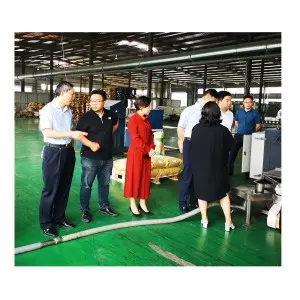
The clients visited our factory today, and conducted a professional and rigorous inspection of the PA6 and PA66 long GFRP (Glass-Fiber-Reinforced-Polymer) granules. They verified our quality control processes and mechanical testing standards, confirming compliance with high-load industrial specifications. Reported by Lu.
VIEW MOREOur company has commissioned a new machine line in the production workshop today. Operating parameters are stable, and the daily production capacity meets the increased volume demands of our global partner network.
VIEW MOREExplore our complete catalog of certified polymer solutions & composite blends
Stay informed about advances in composite material testing, industry standards compliance, and new polymer compounding releases. We will reply to your inquiries within 24 hours.
Subscribe Now Best Composite