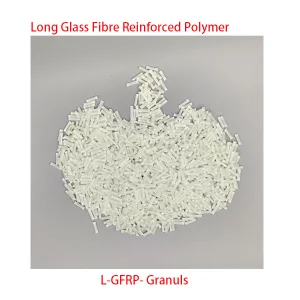
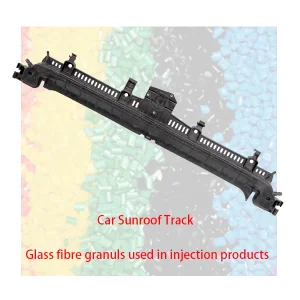
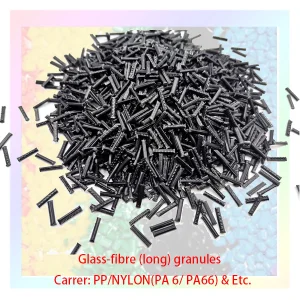
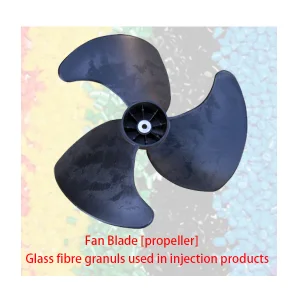
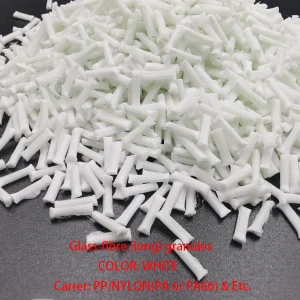
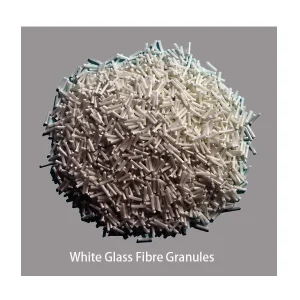
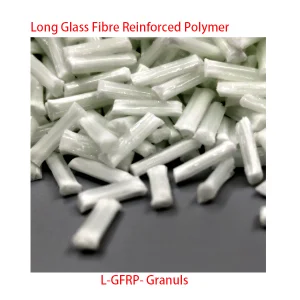
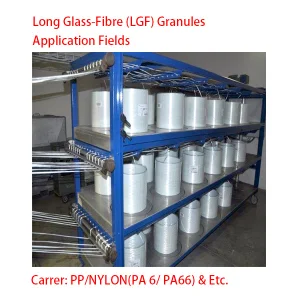
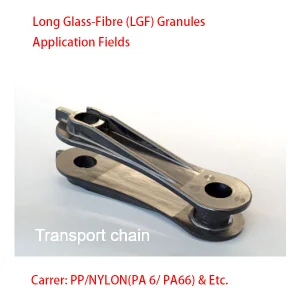
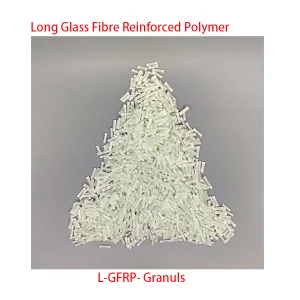
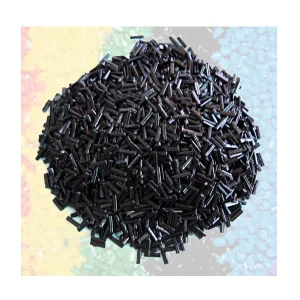
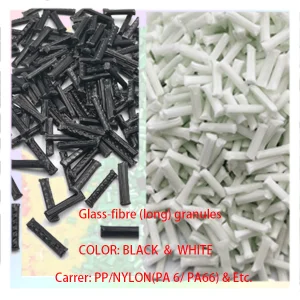
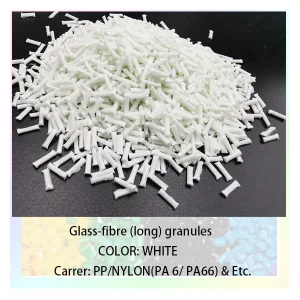
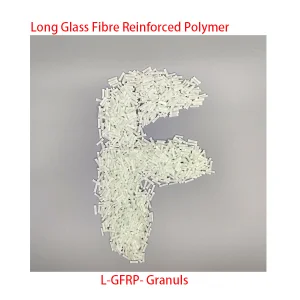
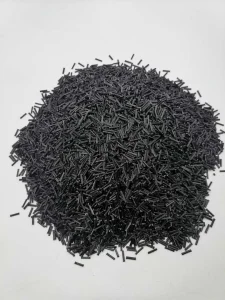
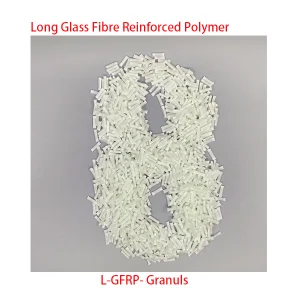
In the modern manufacturing era, the demand for materials that provide both weight reduction and extreme thermal resistance has led to a paradigm shift. Copolymer PPA (Polyphthalamide) reinforced with Long Glass Fibers (LGF) stands at the forefront of this industrial revolution. As automotive manufacturers transition toward Electric Vehicles (EVs) and industrial machinery pushes for higher efficiency, standard plastics are no longer sufficient. Our specialized PPA formulations offer superior dimensional stability, low moisture absorption, and excellent mechanical strength even under harsh environments.
The synergy between Copolymer PPA and Long Glass Fiber is a feat of material science engineering. Unlike short-fiber reinforcement, Long Glass Fiber creates an internal "skeletal" structure within the polymer matrix. This creates a more robust network that dissipates energy during impact and prevents material creep at high temperatures.
Situated in the heart of the Yangtze River Delta, our facility leverages logistical advantages to provide global export capabilities. We adhere to stringent international quality standards, ensuring that every batch of GFRP (Glass-Fiber-Reinforced-Polymer) complies with REACH, RoHS, and UL94 flame-retardant certifications. Our localized technical support teams assist clients from initial prototyping to mass production, ensuring that material selection aligns perfectly with end-use application requirements.
Our R&D roadmap focuses on sustainable innovation. We are currently integrating recycled-content LGF and bio-based PPA alternatives to assist our partners in achieving their carbon neutrality goals without compromising structural integrity. By leveraging data-driven molding simulation (CAE), we provide our clients with digital twin solutions to optimize part design before production begins.
A: Copolymer PPA provides superior thermal stability and moisture resistance compared to PA66. The addition of Long Glass Fiber (LGF) significantly improves impact strength, creep resistance, and dimensional stability, making it ideal for engine components and high-stress industrial applications.
A: Yes, as a direct factory and manufacturer, we offer customized fiber loading percentages (typically ranging from 20% to 50% LGF) to balance stiffness and flowability for your specific injection molding requirements.
A: We employ a multi-stage quality control process, including rigorous testing of fiber dispersion, melt flow index (MFI), and tensile strength testing in our on-site lab, ensuring compliance with both local and international industrial standards.
 Best Composite