Structural Polymer Engineering & Industrial Material Integration for High-Stress Applications Across the Kathmandu Valley & Broader South Asian Markets
Send Inquiry NowAn authoritative engineering analysis of three-dimensional skeletal fiber networks in structural thermoplastic compounding.
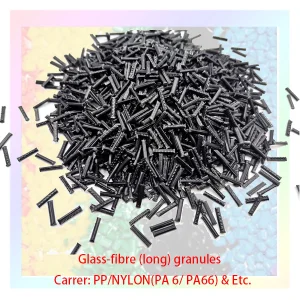
In the evolving paradigm of structural materials science, Long Glass-Fibre Reinforced Granules (LGF-TP) represent a transformative leap beyond conventional short-glass fiber composites (SGF). Engineered via advanced pultrusion melt-impregnation technology, LGF granules retain continuous fiber length (typically 10mm to 25mm) within the pellet matrix. During injection molding, this internal structural length yields an interconnected, self-reinforcing 3D internal skeleton within the molded part, dramatically elevating mechanical energy absorption, impact resistance, and dimensional stability under severe mechanical and thermal loads.
For industrial enterprises and engineering procurement entities operating in Kathmandu, Nepal, as well as the broader Himalayan economic corridor, transitioning to LGF technology resolves historic failure modes associated with metal corrosion, thermal expansion mismatch, and catastrophic brittle fracture under high-stress operating environments. By optimizing polymer rheology and fiber-to-matrix interfacial shear strength, LGF thermoplastics allow engineers to achieve up to 40% mass reduction compared to traditional aluminum, brass, and ductile iron cast components without compromising structural rigidity or creep endurance.
Premium structural polymer formulations engineered for high mechanical load and severe environmental exposure.
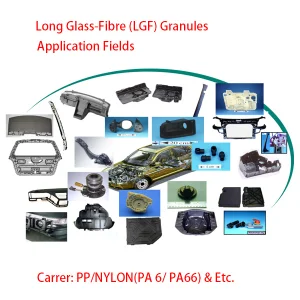
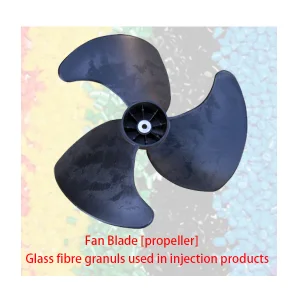
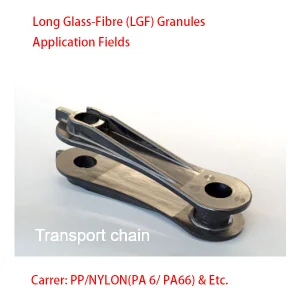
Custom engineering solutions tailored to the environmental, infrastructural, and manufacturing realities of Nepal.
Kathmandu serves as the engineering procurement hub for hydroelectric projects across the Bagmati Province and northern river basins. LGF-PA66 and LGF-PPS granules provide exceptional resistance to sand silt abrasion, cavitation erosion, and hydraulic pressure in impellers, valve bodies, and structural manifold housings.
With Kathmandu’s aggressive adoption of electric two-wheelers, three-wheelers, and public transit EVs, local original equipment manufacturers (OEMs) demand lightweight LGF-PP materials for battery enclosures, structural cross-members, floor pan modules, and high-load bracket systems to extend battery range.
Components deployed across the seismic zones and high UV radiation altitudes surrounding the Kathmandu Valley require intense climatic stability. UV-stabilized LGF granules prevent photo-degradation, micro-cracking, and structural fatigue in mountain telecom tower mounting brackets and electrical enclosures.
Empirical test parameters evaluated according to ASTM & ISO standards under ambient and elevated operational thermal profiles.
| Polymer Base Grade | Glass Fiber Ratio (wt%) | Tensile Strength (MPa) | Flexural Modulus (GPa) | Notched Izod Impact (kJ/m²) | HDT @ 1.8 MPa (°C) | Primary Industrial Sector |
|---|---|---|---|---|---|---|
| LGF-PP (Polypropylene) | 30% - 60% | 110 - 155 | 6.5 - 14.0 | 22 - 32 | 155 - 162 | Automotive Panels, Appliances, EV Trays |
| LGF-PA6 (Polyamide 6) | 30% - 50% | 175 - 230 | 8.5 - 16.5 | 28 - 38 | 210 - 225 | Power Tools, Pump Housings, Machinery Brackets |
| LGF-PA66 (Nylon 66) | 40% - 60% | 200 - 265 | 11.0 - 19.5 | 30 - 42 | 245 - 260 | Under-hood Automotive, Industrial Valves, Gears |
| LGF-PPS (Polyphenylene Sulfide) | 40% - 50% | 180 - 220 | 14.0 - 21.0 | 18 - 25 | 265 - 275 | Chemical Processing, High-Temp Electrical, HVAC |
| LGF-PA12 (Polyamide 12) | 30% - 50% | 130 - 180 | 7.0 - 13.5 | 25 - 35 | 170 - 185 | Precision Pneumatic Lines, Sports Tech, Metering |
Pioneering Long Glass-Fiber Reinforced Polymer Synthesis & Global Supply Networks
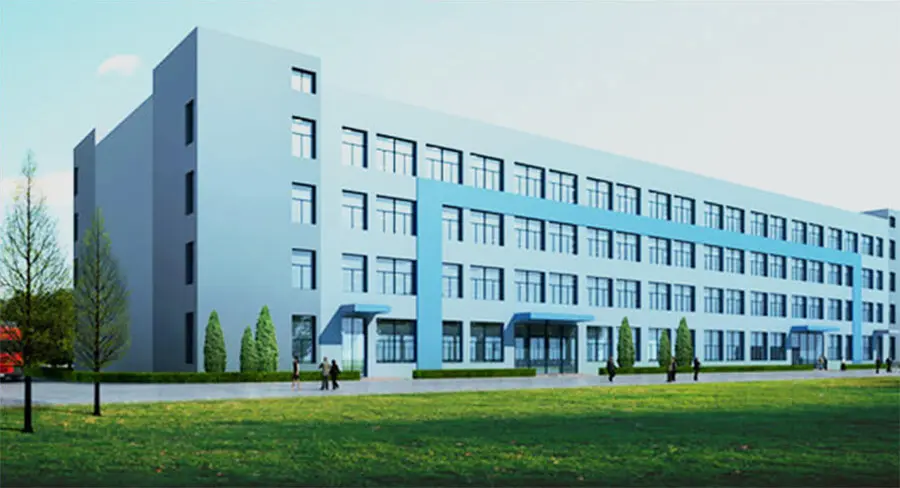
Jurong Best Composite Materials Co., Ltd. is strategically located in the ancient town of Maoshan, a historic hub with over a thousand years of heritage in Jurong City, Zhenjiang, Jiangsu Province. Nestled within the lower reaches of the Yangtze River, our state-of-the-art facility sits adjacent to Nanjing, benefiting directly from the rapid economic and technological radiation of the Yangtze River Delta Economic Zone.
Our global logistics architecture is backed by premier transport connectivity: proximity to Nanjing Lukou International Airport, seamless access via the Jianning-Taicang Expressway, and direct arterial connections via the Jurong exit of the Shanghai-Nanjing Expressway leading to Zhenjiang Port and Nanjing Port. This geographical advantage enables accelerated dispatch timelines for international sea freight and overland multi-modal transport destined for South Asian trade corridors serving Kathmandu and regional industrial hubs.
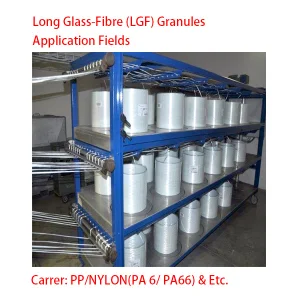
Operating dedicated pultrusion line series, automated gravimetric feeding equipment, and stringent inline laser-pellet inspection technology, Jurong Best Composite Materials Co., Ltd. guarantees continuous fiber alignment and defect-free melt impregnation in every batch shipped to our global partners.
Streamlined multi-modal shipping, custom clearance, and international quality certifications for Nepalese manufacturers.
We provide optimized logistics routing to Kathmandu via Shanghai/Nanjing Ports through maritime shipping to Kolkata/Haldia Port, seamlessly transitioning to ICD Birgunj dry port via rail/road transport. Direct overland trans-Himalayan freight via Tatopani/Rasuwagadhi border crossings is also supported for urgent manufacturing batches.
All LGF granules comply strictly with REACH, RoHS, and ISO 9001:2015 quality management standards. Full Certificate of Analysis (CoA), material batch safety data sheets (MSDS), and UL94 flammability ratings are issued with every shipment to simplify Nepalese import customs verification.
Direct procurement from our Jiangsu manufacturing base bypasses intermediary trading markups. Combined with low injection molding cycle times and superior regrind re-usability (up to 20% blend ratio without critical fiber length drop), Nepalese buyers achieve substantial cost efficiency.
Explore our full line of specialized composite granules for high-rigidity structural molding.
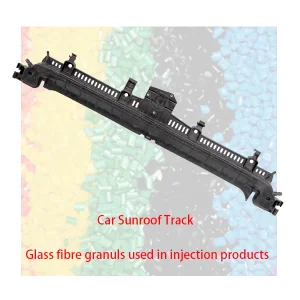
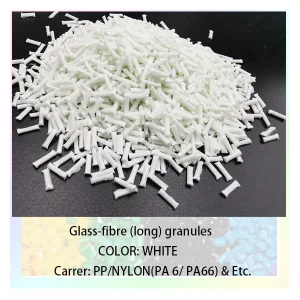
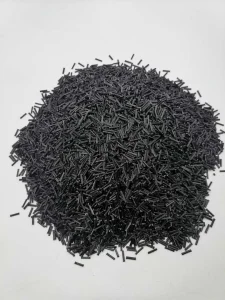
Rigorous factory acceptance testing (FAT) and continuous production line capacity expansion.
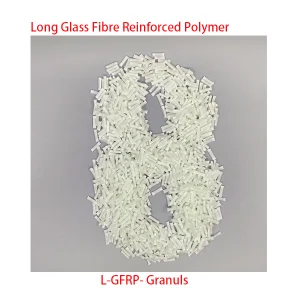
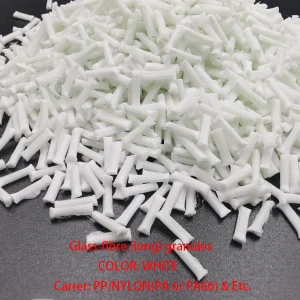
International engineering representatives conducted a comprehensive audit at our Jurong production facility, evaluating our PA6 and PA66 long GFRP (Glass-Fiber-Reinforced-Polymer) granule production lines. The audit verified mechanical tensile consistency, melt-flow index stability, and automated fiber length distribution. The client expressed complete confidence in our quality control protocols and signed long-term supply agreements.
To meet soaring global export demand, our workshop successfully commissioned a new high-speed GFRP pultrusion line. Operating at target capacity, the line features enhanced twin-screw compounding extruders and continuous temperature-controlled water baths, ensuring superior strand impregnation and pellet size uniformity for export clients in South Asia and beyond.
Expert responses to critical questions regarding LGF processing, material properties, and Kathmandu delivery logistics.
Short glass fiber (SGF) materials generally contain fibers under 1mm in length, which act primarily as localized particulate fillers. In contrast, Long Glass Fiber (LGF) granules (typically 10-25mm in initial pellet length) retain a structural fiber length exceeding 3mm after proper injection molding. This forms a continuous 3D internal mesh matrix that provides significantly higher energy dissipation under impact, lower creep deformation at elevated temperatures, and superior dimensional stability.
To preserve fiber length during processing, molders should use low screw back-pressure (typically 0.3-0.5 MPa), low to medium screw rotation speeds (30-50 RPM), and enlarged injection nozzles, runners, and gates (minimum gate thickness of 3mm recommended). High shear forces must be avoided to prevent excessive fiber breakage before the cavity is filled.
We offer comprehensive CIF and CIP shipping options to Kathmandu. Orders are typically shipped via container vessels from Shanghai/Nanjing Port to Kolkata/Haldia Port in India, then transported by bonded rail or truck through ICD Birgunj into Nepal. Transit times average 25-35 days from factory dispatch to Kathmandu warehouse delivery.
LGF composites offer equivalent or superior tensile strength and flexural rigidity while reducing overall structural mass by 30% to 50%. Additionally, LGF thermoplastics provide intrinsic chemical and corrosion resistance, eliminating the need for expensive secondary anodization or anti-corrosion painting, while offering far superior vibration damping in active mechanical assemblies.
Subscribe to our technical bulletin or request instant pricing quotes, customized resin formulation datasheets, and free trial material samples for your injection molding facility.
 Best Composite