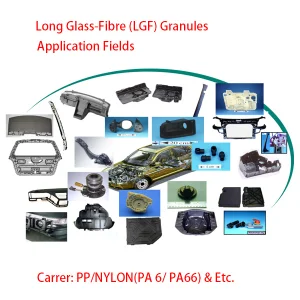
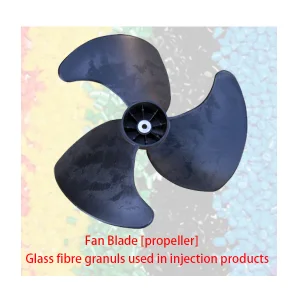
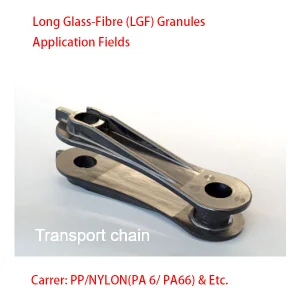
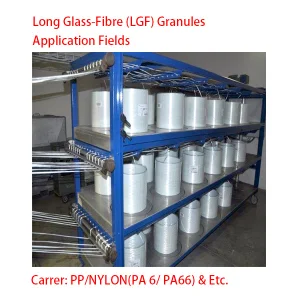
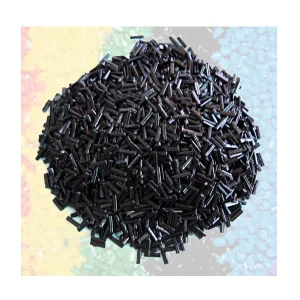
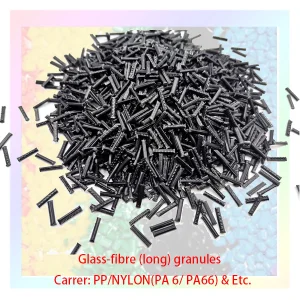
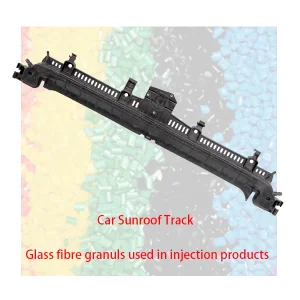
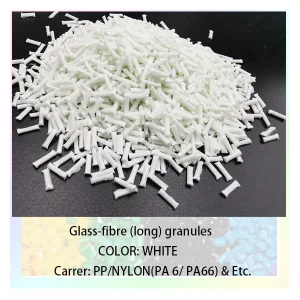
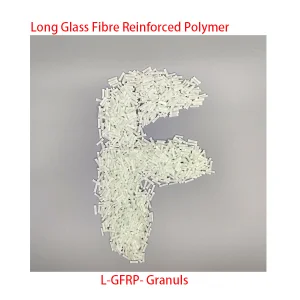
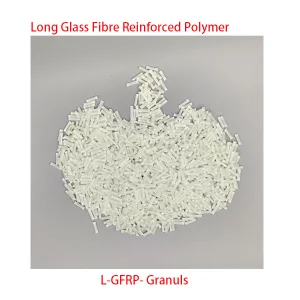
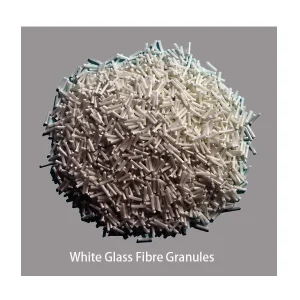
In the evolving landscape of New Zealand’s manufacturing and primary industries, the adoption of advanced materials like **Long Glass-Fibre Reinforced Granules (LGFRP)** is no longer an option but a strategic imperative. As NZ pushes toward sustainability and high-performance infrastructure, polymer science bridges the gap between conventional plastics and metallic components.
New Zealand’s unique economic profile—dominated by agriculture, dairy export, and increasingly, specialized manufacturing—demands materials that can withstand rigorous conditions. LGFRP finds direct utility in:
Globally, the automotive and electronics sectors are transitioning toward **Metal Replacement Technology**. The roadmap for LGFRP involves:
Long glass fibers create a skeletal structure within the polymer, preventing crack propagation—essential for parts under cyclic load.
Achieving metal-like strength at a fraction of the weight, improving energy efficiency in transport and equipment operation.
Excellent resistance to thermal expansion and warping, critical for high-precision injection molded components.
Inherent resistance to water, salt, and chemicals, ideal for New Zealand's coastal and rural operational environments.
A: The critical difference is the fiber length. In LGFRP, the fibers are roughly the length of the granule (10-12mm), which allows them to form a skeleton network after molding, providing significantly higher impact strength and creep resistance compared to short-fiber counterparts.
A: When formulated with specific UV stabilizers (commonly used in our PA6/PA66 grades), LGFRP offers exceptional durability against UV radiation, making it ideal for outdoor agricultural equipment compared to unreinforced plastics.
A: Depending on the specific application, we provide food-grade compliance documentation for certain polymer matrices. Please consult with our technical team for your specific regulatory needs.
 Best Composite