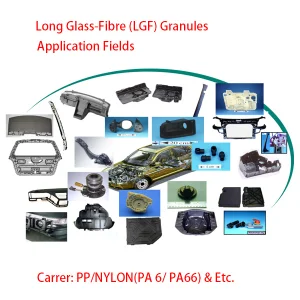
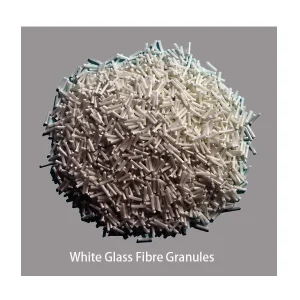
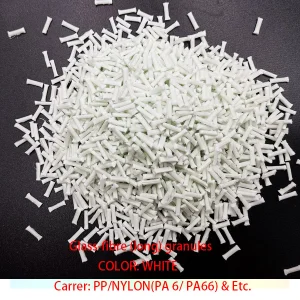
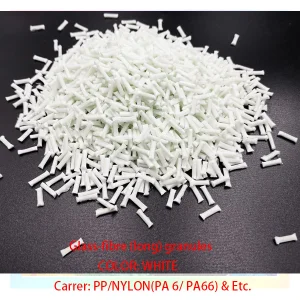
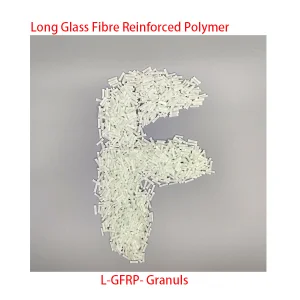
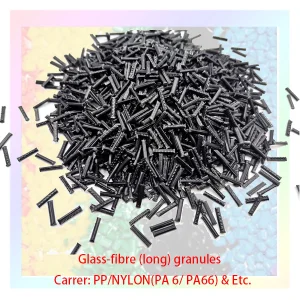
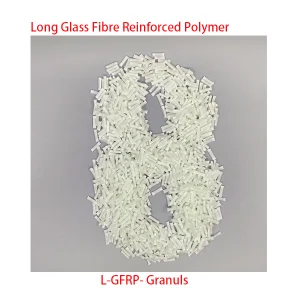
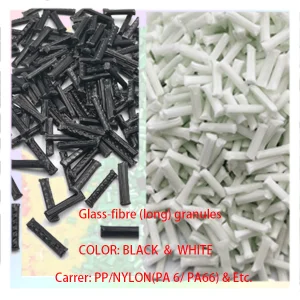
Canada presents a unique and demanding landscape for high-performance materials, particularly within the automotive, aerospace, and civil infrastructure sectors. As global industries pivot toward lightweight, high-durability solutions, Long Glass-Fibre Reinforced Granules (LGF) have emerged as a critical component in the Canadian supply chain.
With Ontario and Quebec serving as the heart of Canada’s automotive industry, the transition to Electric Vehicles (EVs) has spiked demand for weight reduction technologies. LGF composites offer superior strength-to-weight ratios compared to traditional metal components, effectively extending battery range without compromising safety. Our high-performance granules provide the thermal stability required for battery enclosures and chassis components that must withstand the extreme cold of Canadian winters.
Canada’s commitment to sustainable infrastructure involves utilizing materials that resist corrosion and structural fatigue. Our reinforced polymer granules are utilized in smart grid components, renewable energy housings, and modular construction elements, providing a service life that significantly outlasts untreated plastics or corrosive metals.
The global manufacturing paradigm is shifting towards circular economy models. Our R&D at Jurong Best Composite Materials Co., Ltd. is focused on closed-loop recyclability within the LGF matrix. By optimizing the fiber-matrix bonding, we reduce the degradation of mechanical properties during recycling, ensuring that industrial clients in Canada can meet stringent ESG (Environmental, Social, and Governance) targets.
The future of material science lies in "Smart Composite Granules"—polymers capable of sensing structural integrity or self-healing. We are currently scaling production lines to integrate nanomaterials into our LGF products, further enhancing fatigue life and heat resistance for heavy-duty industrial applications.
We understand that North American clients require strict adherence to international standards. Our manufacturing processes are fully compliant with ISO 9001 and IATF 16949 requirements, ensuring that all LGF granules exported to Canada meet local quality assurance and safety benchmarks. We provide comprehensive documentation support for customs clearance and regulatory technical filings.
A: LGF granules retain significantly longer fiber lengths after the injection molding process. This creates a skeletal structure within the plastic part, dramatically increasing impact resistance, creep resistance, and dimensional stability, which is vital for complex parts in harsh climates.
A: Yes. Our PPA and PA66-based LGF composites are engineered to maintain high ductility and toughness at temperatures as low as -40°C, preventing the brittleness typically associated with standard polymers.
A: Leveraging our strategic location near major ports and international airports, we provide optimized shipping routes to the Port of Vancouver and the Port of Montreal, ensuring reliable supply chain continuity for Canadian manufacturers.
 Best Composite