High-Performance Thermoplastic Solutions Empowering Benin’s Automotive, Infrastructure, and Industrial Transformation
Advanced GFRP grades engineered for Benin's heavy-duty industrial and agricultural molding systems.
An in-depth analysis of structural performance, localized environmental durability, and material engineering for Benin's growing industrial sector.
Benin, strategically located as a gateway to West Africa via the Port of Cotonou, is undergoing rapid structural industrial growth. With initiatives centered around the Glo-Djigbé Industrial Zone (GDIZ) and the modernization of national agricultural and transport infrastructure, the demand for high-strength, lightweight, and corrosion-resistant components has accelerated.
Historically, structural components relied heavily on metals like steel and cast aluminum, which present significant disadvantages in Benin’s tropical environment. The coastal areas, particularly around Cotonou, exhibit high relative humidity (often exceeding 80%) combined with high ambient salinity. This combination acts as a massive catalyst for atmospheric corrosion, deteriorating metallic structural assemblies in a fraction of their standard lifecycle.
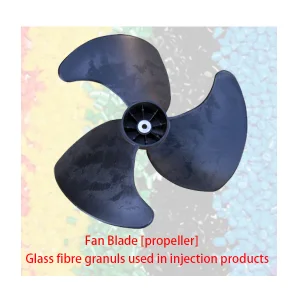
Consequently, industrial engineers in Benin are actively shifting toward Long Glass-Fibre Reinforced Granules (LGF-FRG). These advanced composite granules offer the mechanical strength of traditional metals while presenting total immunity to chemical corrosion, acid rain, and humid salt-spray degradation.
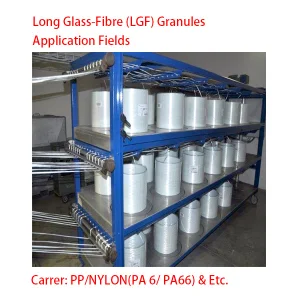
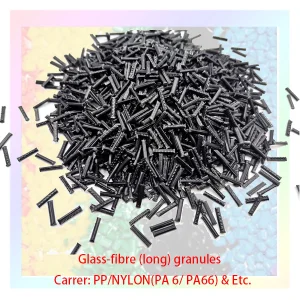
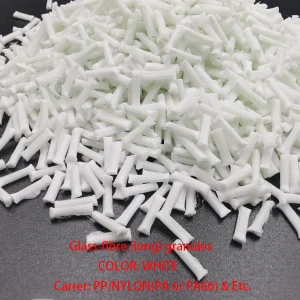
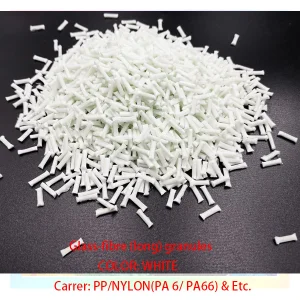
The critical performance differentiator of LGF granules lies in the retention of fiber length throughout the compounding and injection molding cycles. Traditional Short Glass Fiber (SGF) materials generally exhibit fiber lengths under 1.0 mm, which often snap under shear stresses. In contrast, our LGF granules maintain an internal fiber skeleton where the glass filaments run parallel to the granule length (typically 10mm to 25mm).
Upon molding, these long fibers interlock to form an internal three-dimensional web. This structural network yields:
Choosing the right thermoplastic matrix for specific structural requirements in Sub-Saharan environments.
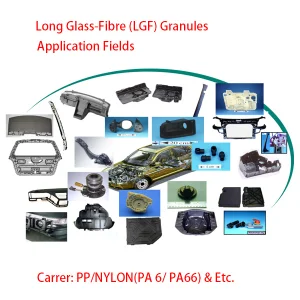
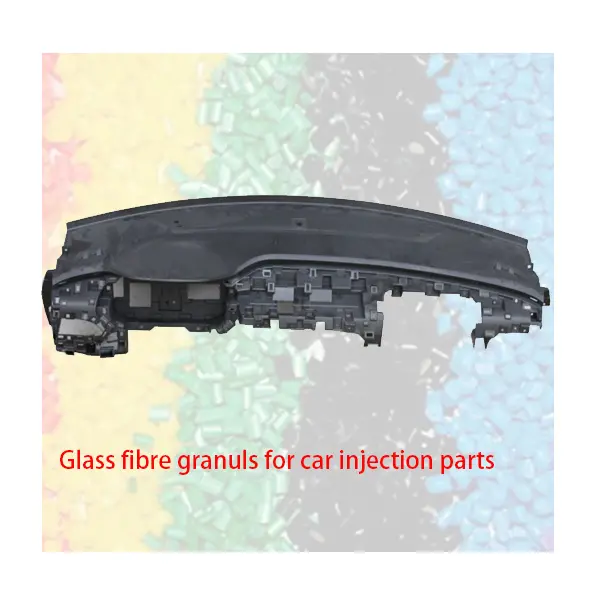
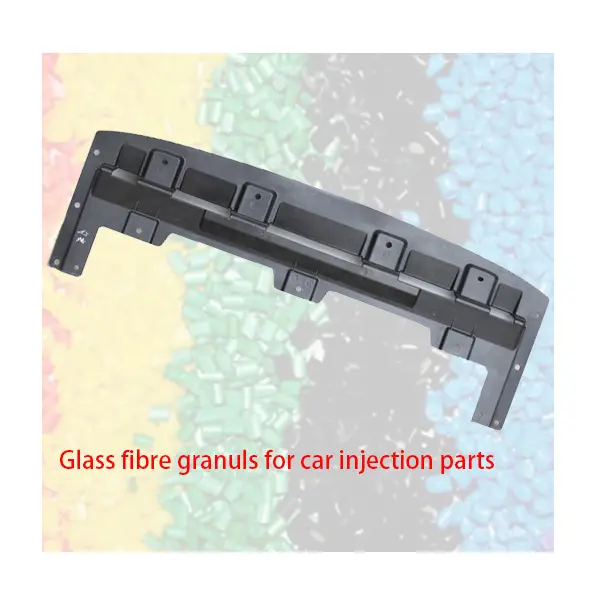
The premier cost-efficient structural workhorse. Features low density, exceptional hot-water resistance, and excellent chemical stability. Perfect for automotive interior/exterior structural components and domestic appliance chassis in Benin.
Engineered for high mechanical load, fatigue resistance, and high-temperature environments. Ideal for heavy-duty automotive engine covers, power tool housings, structural building anchors, and agricultural machinery parts.
For high-heat and chemically aggressive environments. These polymers maintain superior mechanical strength and low moisture absorption even under direct contact with automotive fluids, organic solvents, and intense UV exposure.
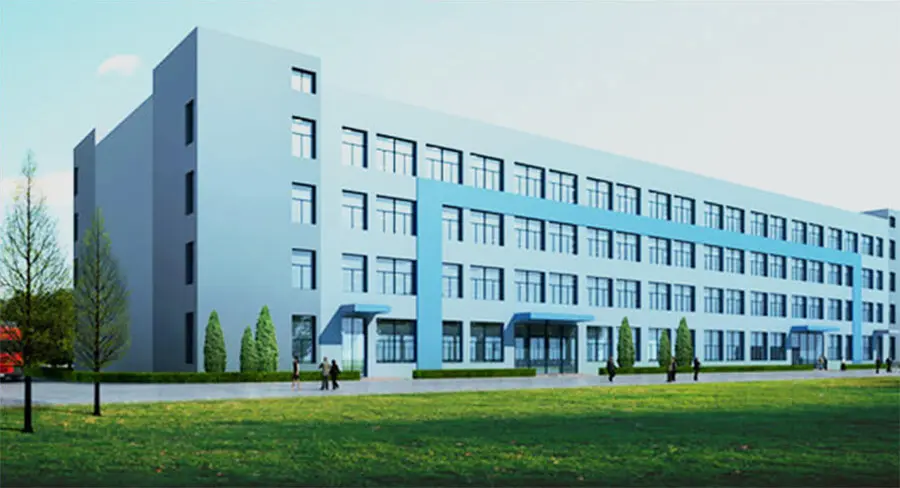
Jurong Best Composite Materials Co., Ltd. is located in the ancient town of Maoshan, which has a history of over a thousand years. The town is part of Jurong City, Zhenjiang, Jiangsu Province. It is situated on the lower reaches of the Yangtze River, adjacent to Nanjing, and is close to Nanjing Lukou International Airport. The Jianning-Taicang Expressway (from Nanjing to Taicang) passes through the area, and the Jurong exit of the Shanghai-Nanjing Expressway connects to Zhenjiang Port and Nanjing Port. Benefiting from the radiation of the Yangtze River Delta Economic Zone, the transportation is very convenient.
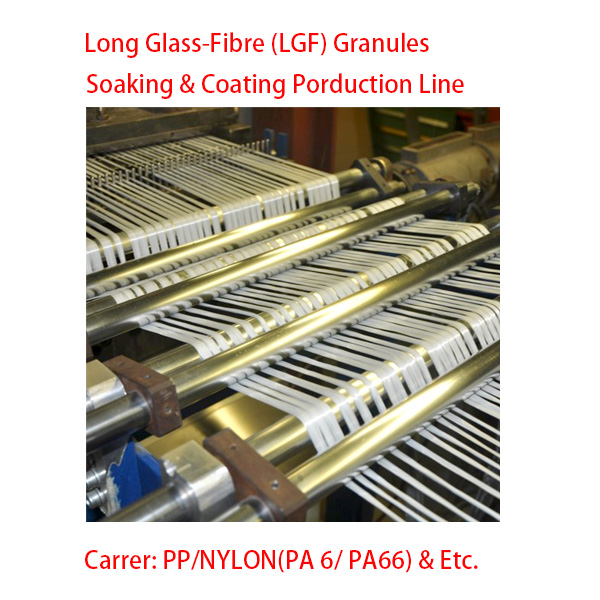
Our company specializes in high-performance thermoplastic composite materials. By utilizing advanced automated pultrusion lines, we yield highly consistent granule shapes, uniform glass fiber dispersion, and superior wetting qualities that guarantee top-tier mechanical properties for export clients globally.
Rigorous testing methods verifying glass fiber content, length distribution, and mechanical limits.
Fast processing and ocean freight dispatching from Shanghai & Nanjing Port directly to Benin (Port of Cotonou).
Years Production Expertise
Annual Capacity (Tons)
Export Destination Countries
Customization Match Rate
Seamless logistics from our Yangtze River delta manufacturing hub directly to the Port of Cotonou.
We understand the complex customs clearing protocols in West Africa. Our export department provides complete documentation support to ensure lightning-fast customs release at the Port of Cotonou, including:
Benin's climate presents localized challenges that standard plastic granules fail to withstand. We custom compound LGF polymers with specialized additive packages:
Discover our latest infrastructure expansion projects and direct customer quality audits.
The clients visited our factory today, and have a Professional and rigorous inspection for the PA6 and PA66 long GFRP (Glass-Fiber-Reinforced-Polymer)granules. Finally, they’re satisfied by our products’ quality and quality controlling process. Reported by Lu. 2019-11-15 & ...
VIEW MOREOur company has set a new machine line in the workshop and stat running today! Everything is good, output capacity has matched the request.
VIEW MOREExplore our full range of polybutylene terephthalate, polyamide, polyurethane, and polypropylene long glass fiber reinforced polymer solutions.
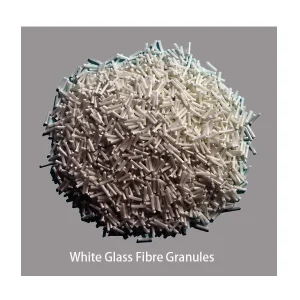
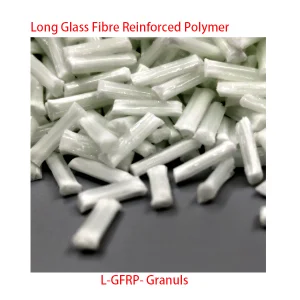
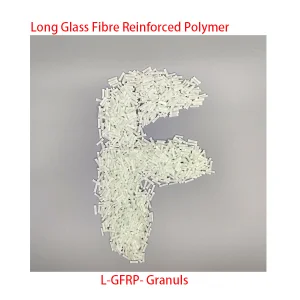
Technical answers to crucial questions about Long Glass-Fibre Granule applications in Benin's industrial sectors.
We offer standard load configurations ranging from 20wt% up to 60wt% glass fiber content. For general-purpose mechanical assemblies in humid climates, we typically recommend a 30% to 50% fiber loading ratio in LGF-PP or LGF-PA6 matrix, which delivers the optimal balance between tensile strength and flow-ability during injection molding.
Standard PA66 is prone to UV degradation over time. However, our granules intended for outdoor deployment in Benin are compounded with carbon black and hindered amine light stabilizers (HALS). This limits molecular chain cleavage, ensuring the polymer preserves over 90% of its mechanical tensile strength even after extensive exposure to intense UV radiation.
By utilizing Nanjing or Shanghai ports, the average ocean freight transit duration to the Port of Cotonou is between 35 and 45 days. We provide comprehensive tracking, prioritize bookings with Tier-1 carriers, and supply all paperwork (bill of lading, packing lists, quality certificates) well in advance to prevent port demurrage.
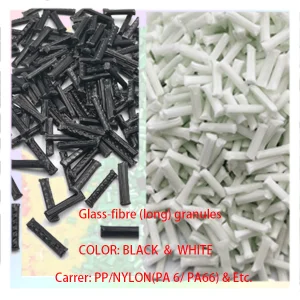
Yes. While the standard color is natural or black, we can manufacture custom colors according to RAL or Pantone systems. We use carrier-compatible color masterbatches to ensure that pigments do not degrade the interfacial bonding between the glass fibers and the polymer matrix.
Contact our structural composites technical department today to receive tailored product advice, physical sample granules, and a detailed price quote for Benin.
 Best Composite