Explore our certified high-performance long glass fiber reinforced polymer (GFRP/LFRT) matrix formulations engineered for superior impact resistance, creep mitigation, and dimensional stability.
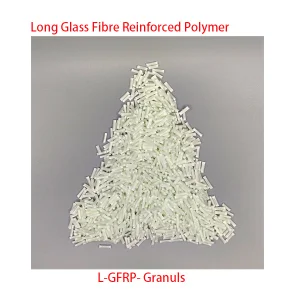
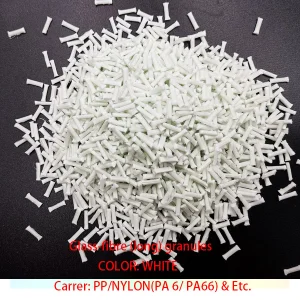
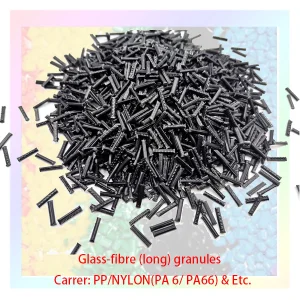
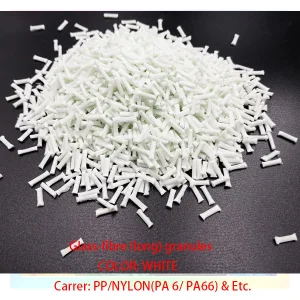
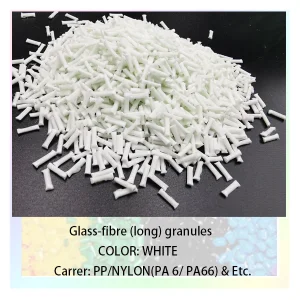
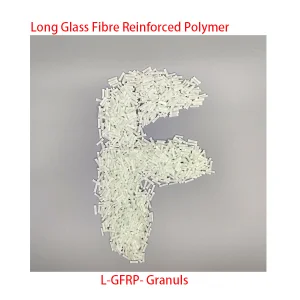
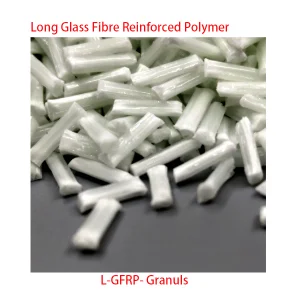
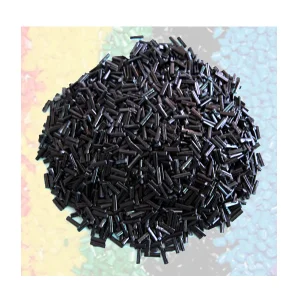
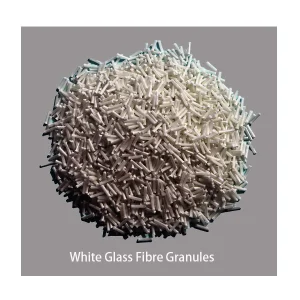
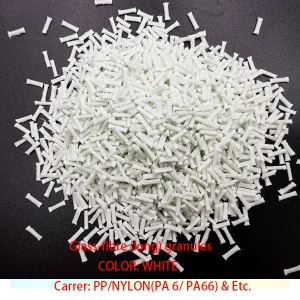
In the landscape of modern structural thermoplastics, Long Glass Fibre Reinforced Granules Terephthalate—specifically Polybutylene Terephthalate (PBT) and Polyethylene Terephthalate (PET) matrices enhanced with continuous melt-impregnated E-glass fibers—represent a critical milestone in lightweight, high-strength composite engineering. Unlike conventional Short Glass Fiber (SGF) compounds, where mechanical stress transfer is bottlenecked by truncated fiber lengths (<1mm), Long Fiber Reinforced Thermoplastics (LFRT/LFT) retain an internal skeletal fiber matrix within molded parts ranging from 6mm to 25mm.
The terephthalate backbone supplies exceptional chemical resistance, minimal moisture absorption, high heat deflection temperatures (HDT), and robust dielectric stability. When combined with long glass fibers through advanced pultrusion impregnation technology, the resulting composite delivers high specific strength, fatigue resistance, and isotropic shrinkage control that approaches die-cast metals like aluminum and magnesium while preserving the rapid, cost-effective processing capability of injection molding.
Our factory utilizes proprietary silane-based coupling agents specifically tailored for terephthalate polyesters. This enhances the shear stress transmission between the semi-crystalline PBT matrix and the fiber filament surface, eliminating premature fiber pull-out under dynamic shock loads.
During injection molding, long glass fibers form a three-dimensional entangled structural web. This internal structural skeleton absorbs, redistributes, and dissipates mechanical shock, elevating impact resistance up to three times compared to short-fiber variants.
Standard short fiber thermoplastics suffer from severe anisotropic warpage due to differential fiber orientation. LGF Terephthalate granules ensure balanced volumetric shrinkage, enabling tight-tolerance dimensional stability in complex geometric assemblies.
The evolution of long glass fiber reinforced terephthalate compounds is driven by stringent global decarbonization mandates, the rapid expansion of Electric Vehicle (EV) high-voltage architectures, and the rising demand for post-consumer recycled (PCR) resin integration without structural degradation.
Next-generation pultrusion die heads ensure 100% individual filament wetting while operating at ultra-high production speeds. By optimizing melt viscosity dynamics and shear rate distributions, our factory achieves zero fiber bundle dry spots, directly improving dynamic fatigue endurance by 28%.
Aligning with global ESG directives, our R&D roadmap incorporates chemically recycled rPET/rPBT and bio-derived 1,4-butanediol (BDO) monomers into LFRT formulations. These sustainable granules retain over 92% of virgin mechanical properties while reducing product carbon footprints (PCF) by up to 45%.
As EV battery packs shift to 800V+ architectures, electrical insulation materials require high Comparative Tracking Index (CTI ≥ 600V) combined with UL94 V-0 flammability ratings at 0.8mm thickness. Our LGF-PBT-HFFR series delivers non-migratory thermal protection without compromising fiber-matrix adhesion.
By introducing co-mingled carbon fiber strands and multi-walled carbon nanotubes (MWCNTs) into the glass fiber bundle, upcoming LGF-PBT variants achieve tailored electromagnetic interference (EMI) shielding, antistatic properties, and ultra-high flexural modulus (>22 GPa) for aerospace and high-precision robotics.
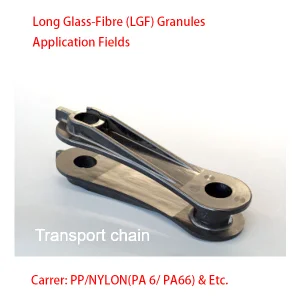
Due to its combination of high mechanical strength, chemical immunity, and electrical insulation, Long Glass Fibre Reinforced Granules Terephthalate is utilized across diverse industrial domains:
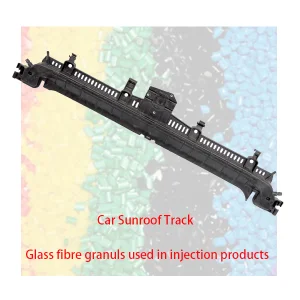
Used extensively in sunroof guide rails, EV battery module trays, front-end modules (FEM), brake pedal arms, wiper brackets, exterior door handle mechanisms, and high-voltage busbar housings requiring low warp and zero creep under engine-bay thermal cycles.
Essential for heavy-duty circuit breaker housings, industrial switchgears, smart meter enclosures, outdoor photovoltaic junction boxes, and solenoid valve bodies exposed to UV, moisture, and high mechanical shock loads.
Applied in high-stress washing machine outer tub supports, dishwasher pump housings, power tool structural casings, and kitchen appliance structural frames demanding long-term hydrolytic degradation resistance and low vibration noise.
To assist material selection engineers, the following table illustrates the performance profile of 40% Long Glass Fiber Reinforced PBT against short fiber and polyamide alternatives under standardized ISO test methods.
| Property Parameter | Test Method | LGF-PBT 40% | SGF-PBT 40% | LGF-PA66 40% (Dry) | Unreinforced PBT |
|---|---|---|---|---|---|
| Tensile Strength (MPa) | ISO 527 | 185 - 205 | 135 - 145 | 210 - 230 | 50 - 60 |
| Flexural Modulus (GPa) | ISO 178 | 13.5 - 15.0 | 11.0 - 12.0 | 14.0 - 15.5 | 2.4 - 2.8 |
| Notched Izod Impact (kJ/m²) | ISO 180 | 28 - 34 | 9 - 11 | 30 - 36 | 3.5 - 5.0 |
| Heat Deflection Temp @ 1.8MPa (°C) | ISO 75 | 210 | 205 | 250 | 60 |
| 24-hr Moisture Absorption (%) | ISO 62 | 0.07 | 0.08 | 1.10 (High Sensitivity) | 0.09 |
| Mold Shrinkage (Flow / Cross) (%) | ISO 294-4 | 0.15 / 0.30 (Isotropic) | 0.20 / 0.85 (High Warp) | 0.20 / 0.40 | 1.50 / 1.50 |
Jurong Best Composite Materials Co., Ltd. is located in the ancient town of Maoshan, which has a history of over a thousand years. The town is part of Jurong City, Zhenjiang, Jiangsu Province. It is situated on the lower reaches of the Yangtze River, adjacent to Nanjing, and is close to Nanjing Lukou International Airport. The Jianning-Taicang Expressway (from Nanjing to Taicang) passes through the area, and the Jurong exit of the Shanghai-Nanjing Expressway connects directly to Zhenjiang Port and Nanjing Port. Benefiting from the radiation of the Yangtze River Delta Economic Zone, transportation and global freight logistics are exceptionally convenient.
Equipped with fully automated high-speed pultrusion lines featuring online melt temperature sensors, precise gravimetric feeders, and automated pelletizing systems. Our advanced machine lines ensure batch-to-batch pellet length uniformity (std dev < 0.2mm) and zero glass fiber clustering.
Direct access to Zhenjiang Port and Nanjing Port enables fast ocean shipping to major global ports in Europe, North America, Southeast Asia, and the Middle East. Deep integration into the Yangtze River Delta manufacturing ecosystem ensures uninterrupted raw material procurement and optimized cost control.
Every production batch undergoes comprehensive mechanical testing, glass fiber content pyrolytic verification, moisture titration, and rheological flow testing. Overseas client audits consistently confirm zero-defect quality management across all PA, PP, PBT, and TPU composite lines.
International clients completed a professional and rigorous inspection of PA6 and PA66 long GFRP (Glass-Fiber-Reinforced-Polymer) granules. The inspection validated strict quality control standards and batch integrity. (Reported by Lu)
Our plant successfully commissioned an additional high-capacity GFRP pultrusion machine line in the main workshop, expanding manufacturing output capacity to fulfill elevated global market purchase orders.
To serve OEM injection molders and Tier-1 automotive suppliers worldwide, Jurong Best Composite Materials Co., Ltd. provides robust technical support alongside full international compliance documentation.
Fully compliant with European health, safety, and environmental protection standards for industrial composite raw materials.
Zero restricted SVHC hazardous substances, ensuring safe integration into consumer electronics and eco-sensitive export goods.
Certified Quality Management System controlling raw resin blending, fiber tensioning, pultrusion temperature, and packaging.
Formulations engineered to pass Underwriters Laboratories flammability standards for high-temperature electrical housing assemblies.
Comprehensive answers for mold design engineers, procurement directors, and material specialists regarding long glass fiber terephthalate granules.
Browse our secondary catalog of specialized LFRT composite granules including Polyethylene, PBT Terephthalate, PPA, and Polyamide 12 grades.
 Best Composite