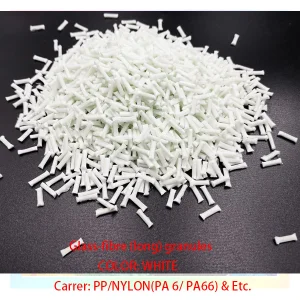
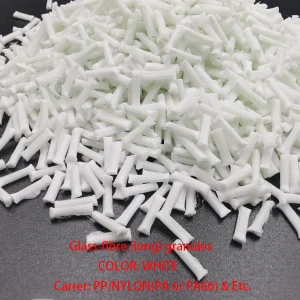
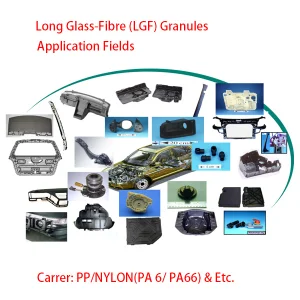
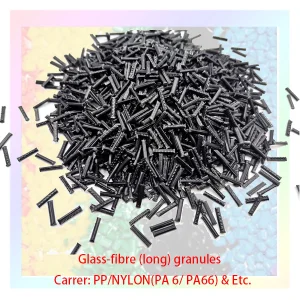
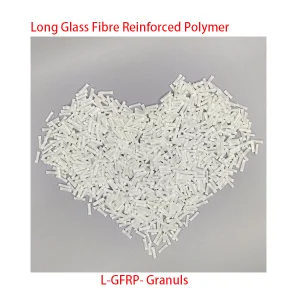
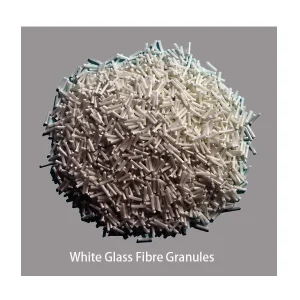
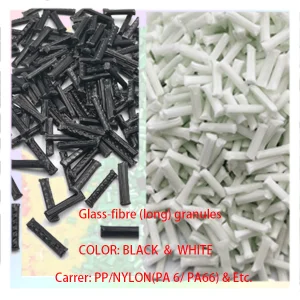
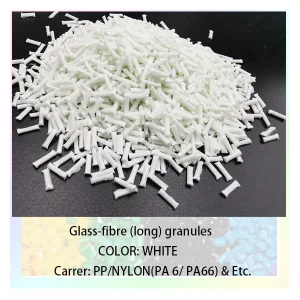
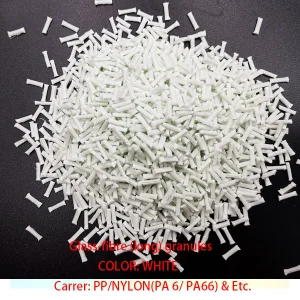
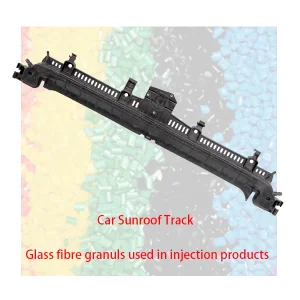
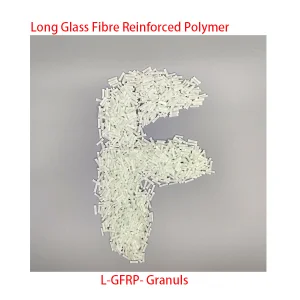
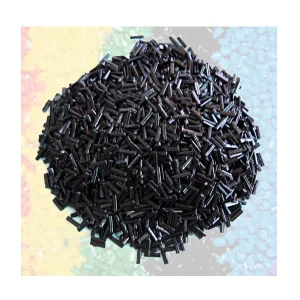
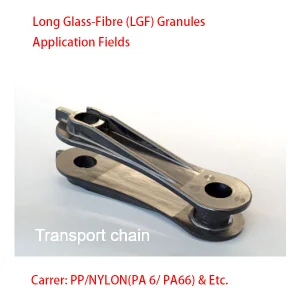
In the evolving landscape of advanced materials, the synthesis of Copolymer Polypropylene (PP) with 50% Glass Fiber reinforcement represents the pinnacle of cost-to-performance engineering. Unlike standard homopolymers, copolymer PP offers superior impact resistance and ductile properties, which, when reinforced with a 50% glass fiber loading, transforms into a structural powerhouse capable of replacing traditional metal components in automotive, aerospace, and electrical engineering.
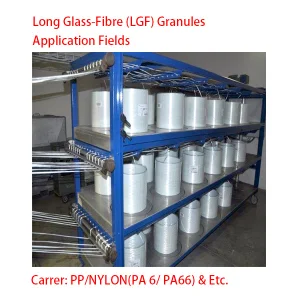
Achieving a 50% glass fiber load is a technical challenge. It requires precise optimization of the interface adhesion between the fiber and the matrix. By utilizing state-of-the-art coupling agents and twin-screw extrusion processes, our manufacturing protocols ensure that the glass fiber remains intact, providing an exceptional strength-to-weight ratio. This material is not merely plastic; it is an engineered composite designed for dimensional stability under high-stress environments.
Our solutions cater to industries requiring lightweight durability.
Operating out of the Yangtze River Delta Economic Zone, our facility benefits from world-class logistics, connecting seamlessly to Nanjing and Shanghai ports. This geographical advantage allows us to offer:
The future of reinforced polymers lies in circularity and functional integration. Our R&D department is currently focusing on:
50% loading significantly increases the flexural modulus and dimensional stability of the part. It is typically required for structural parts that need to withstand high continuous loads or high temperatures where standard 30% reinforced materials would undergo creep or deformation.
Yes, we provide full certification, including TDS, MSDS, and COA (Certificate of Analysis) for every batch, ensuring transparency and quality assurance for our global clients.
With our recent machine line expansions in the Jurong workshop, we have scaled our daily output to meet high-volume demands for both international export and domestic industrial applications.
 Best Composite