Tailored Composite Pellets Engineered to Replace Metal Parts & Optimize Operational Efficiencies
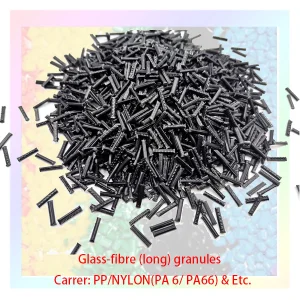
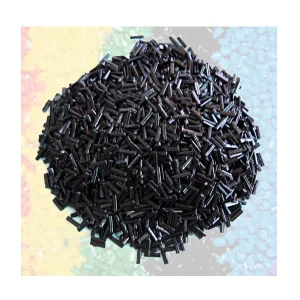
Technical Executive Summary: Long Glass Fiber Reinforced Polyethylene (LGF-PE) represents a paradigm shift in structural engineering plastics. Combining the superior chemical resistance, exceptional low-temperature toughness, and inherent moisture barrier properties of Polyethylene (PE) with the high tensile strength and stiffness of pultrusion-compounded continuous glass fibers, LGF-PE offers an unprecedented mechanical profile. This whitepaper analyzes the commercial dynamics, local application profiles, and procurement matrices of LGF-PE within the high-value Netherlands industrial market, comparing global logistics and highlighting the localized supply chain advantages of Chinese precision compounding facilities.
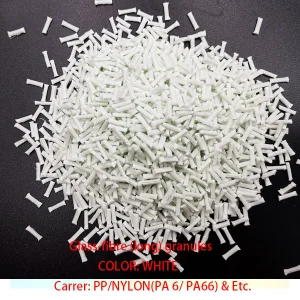
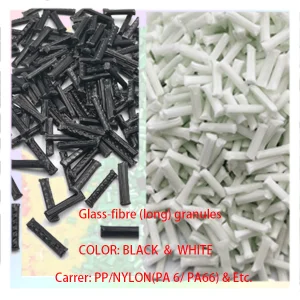
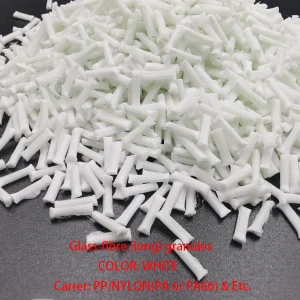
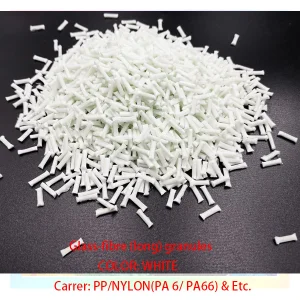
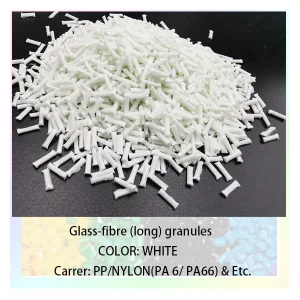
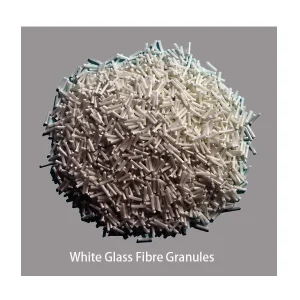
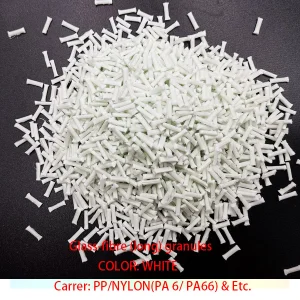
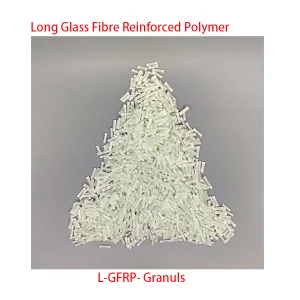
The critical differentiator between traditional Short Glass Fiber (SGF) materials and Long Glass Fiber (LGF) composites lies in the 3D structural network formed within the final molded component. In SGF systems, fibers typically measure between 0.5 to 1.5 mm, which falls below the critical fiber length necessary to achieve optimal load transfer across the matrix interface. Conversely, LGF-PE granules are synthesized via a specialized melt-pultrusion process. In this system, continuous glass fiber rovings are pulled through a custom-formulated impregnation die where they are meticulously coated with modified Polyethylene (PE) resin, then cooled and pelletized to a length of 10 to 12 mm.
During the injection molding process, these longer fibers interlock to form an internal skeleton that distributes mechanical stresses across the entire component geometry. This structural network enhances a series of key physical metrics:
Increases structural integrity while cutting mass by up to 50% compared to cast metals and steel alloys.
Retains impact toughness and flexural characteristics under sub-zero and elevated operational temperatures.
Chemically inert matrix provides unparalleled immunity to acids, alkalis, and salty marine environments.
The Netherlands is a highly strategic, innovation-led market centered on circular economy principles, clean tech, and advanced engineering. As the country pushes toward full carbon-neutrality in its manufacturing and logistics infrastructure, LGF-PE has emerged as a crucial enabler of this systemic transformation.
The Port of Rotterdam and Global Logistics Hubs: As Europe’s largest seaport, Rotterdam manages millions of metric tons of cargo. The local logistics industry utilizes highly automated, heavy-duty storage systems, cold-chain warehouses, and maritime transit units. Dutch warehouse developers demand plastic pallets, cargo containers, and automated guided vehicles (AGVs) that do not break under continuous heavy impact or become brittle in cold storage sub-zero environments. LGF-PE represents the ideal choice here, resisting impact damages that ruin standard PP and SGF compounds.
The Maritime and Coastal Infrastructure: Given its extensive shoreline and low-lying delta terrain, Dutch engineers lead the world in water management and marine infrastructure. Modern installations utilize LGF-PE for floating solar array structures, canal retention walls, aquaculture cages, and dynamic buoys. Traditional structural components suffer from wood decay or marine corrosion, whereas long glass fiber reinforced polyethylene resists salt-spray degradation and provides decades of maintenance-free performance.
Automotive Innovation Hubs (Brabant & Brainport Eindhoven): The Dutch automotive supply chain focus lies on light-weighting and electric vehicle (EV) infrastructure. By adopting LGF-PE, local automotive parts manufacturers achieve structural weight savings, lower vehicle emissions, and enhanced structural safety.
On a global scale, the engineering polymer sector is shifting away from heavy metal alloys (aluminum, steel, zinc) and expensive, hygroscopic resins like Polyamides (PA) toward highly modified Polyolefins. Traditionally, designers specified Glass-Fiber-Reinforced-Nylon (PA6/PA66) for structural assemblies due to its high tensile strength. However, Polyamides suffer from structural weakness due to moisture absorption—a crucial failure point in humid environments.
By utilizing optimized Maleic Anhydride Grafted Polyethylene (MAPE) coupling agents, engineers can now bridge the polarity gap between the hydrophobic PE matrix and hydrophilic glass fibers. The resulting LGF-PE composite achieves strength profiles overlapping with traditional polyamides while remaining entirely immune to water absorption. Globally, this shift is yielding dramatic cost savings, reduced raw material footprints, and enhanced reliability.
| Performance Characteristic | Pure HDPE Resin | Short Glass Fiber PE (30% SGF) | Jurong Best LGF-PE (30% LGF) | Polyamide 6 (30% SGF - Wet state) |
|---|---|---|---|---|
| Tensile Strength (MPa) | 22 - 30 | 55 - 65 | 95 - 110 | 70 - 85 |
| Flexural Modulus (GPa) | 1.0 - 1.4 | 3.8 - 4.5 | 6.8 - 7.5 | 4.5 - 5.5 |
| Notched Izod Impact (kJ/m²) | 4.0 - 6.5 | 9.0 - 12.0 | 22.0 - 28.0 | 12.0 - 15.0 |
| Moisture Absorption (24h, %) | <0.01 | <0.02 | <0.02 | 1.8 - 2.5 |
| Dimensional Shrinkage (%) | 1.5 - 2.0 | 0.4 - 0.6 | 0.15 - 0.25 | 0.5 - 0.8 |
To meet the technical specifications and price demands of the Dutch and global markets, Jurong Best Composite Materials Co., Ltd. offers a highly optimized supply chain based on our state-of-the-art Chinese manufacturing hub. Located in the ancient town of Maoshan, Jurong City, Jiangsu Province, our facility resides within the high-technology economic cluster of the Yangtze River Delta.
Geographical & Shipping Advantages: Our factory is strategically integrated near major transit systems: adjacent to Nanjing Lukou International Airport, the Jianning-Taicang Expressway, and direct access routes connecting to the global deepwater shipping terminals of Zhenjiang Port and Nanjing Port. This logistical footprint guarantees rapid container processing, minimal land transit costs, and reliable dispatch times to the Port of Rotterdam and other major global ports.
Manufacturing Innovation: Unlike standard compounding facilities, Jurong Best operates custom-engineered, multi-filament pultrusion manufacturing lines. Our proprietary extrusion control systems allow for precise, uniform fiber coating, preventing fiber clustering or dry strands. By integrating advanced smart sensors and computerized raw-material dosing, we minimize production variations, ensuring that every batch of LGF-PE delivered to our Dutch partners aligns perfectly with their internal IATF 16949 automotive standards.
AICC Expert Note: "The primary point of failure in LGF-PE injection molding is fiber length degradation inside the screw barrel. By using the high-dispersion, easy-flow compounding technology of Jurong Best, injection molders can run at lower backpressures and screw speeds, successfully retaining an average fiber length above 3mm inside the molded parts for maximum load bearing."
To demonstrate the versatile engineering capacity of Long Glass Fiber Reinforced Polyethylene within the Netherlands market, we outline key localized scenarios where LGF-PE outperforms conventional choices:
Automotive Structural Under-Shields & EV Battery Pack Frames: With the Dutch transition toward high-density electric vehicles, heavy steel under-shields and battery structural supports are being systematically replaced by 30% to 50% LGF-PE composites. These materials resist impact from road debris, protect batteries from deformation, and reduce overall vehicle mass to increase electric range.
Marine Aquacultural Engineering & Buoyancy Chambers: Dutch seafood and marine cultivation operators require long-term structural platforms exposed to waves, mechanical stress, and aggressive marine flora. Our specialized UV-stabilized LGF-PE provides a structural alternative to aluminum and wood, offering decades of service life without paint coatings or rust degradation.
Precision Horticultural Mechanical Arms: Smart greenhouses in the Westland region employ highly automated planting, monitoring, and harvesting robotics. These complex machines require lightweight structural arms and track runners that exhibit low deflection under high payloads. Injection-molded LGF-PE provides the structural precision and low inertia needed for rapid robotic operations.
For technical procurement managers and materials engineers sourcing LGF-PE granules from international exporters, standard polymer spec sheets (showing only basic density and melt index) are insufficient. A rigorous evaluation should include the following criteria:
Answering Technical Queries Regarding LGF-PE Processing, Logistics, and Application Design
Engineered Composite Granules with High Fiber Integration for Global Markets
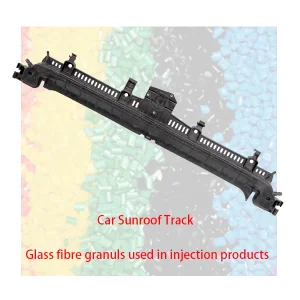
Enhance the strength, impact tolerance, and lifetime value of your products. Speak directly with our materials engineering department to request customized technical specifications and volume pricing options.
Send Inquiry Now Best Composite