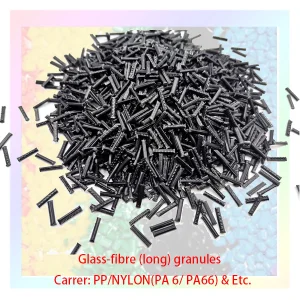
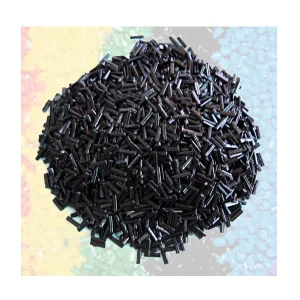
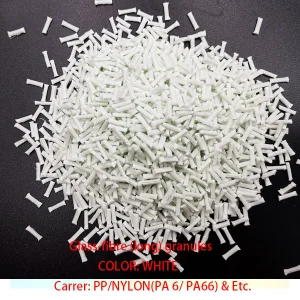
High-performance granules optimized for Austrian precision engineering standards.
In the heart of Europe’s industrial landscape, Austria stands as a beacon of high-tech manufacturing, automotive excellence, and renewable energy innovation. As the demand for lightweight yet high-strength materials accelerates, Long Glass Fibre Granules-Polyethylene (PE) have emerged as a critical component for Austrian manufacturers seeking to balance mechanical performance with cost-efficiency.
Austria's economy is characterized by "Hidden Champions"—SMEs that are world leaders in niche markets. From specialized automotive suppliers in Styria to winter sports equipment manufacturers in Tyrol, the shift toward Long Fiber Thermoplastics (LFT) is driven by the need for superior impact resistance and dimensional stability under extreme temperatures.
The global LFT market is projected to grow significantly as industries move away from heavy metals toward composite materials. PE-based long glass fiber composites are gaining traction due to their excellent chemical resistance and moisture-neutral properties compared to Polyamides (Nylon).
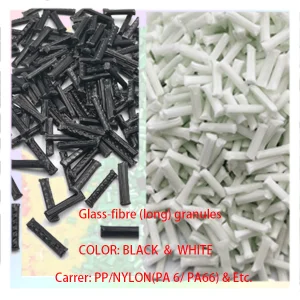
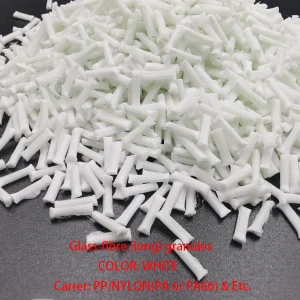
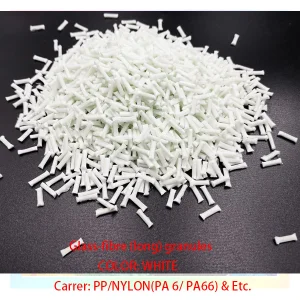
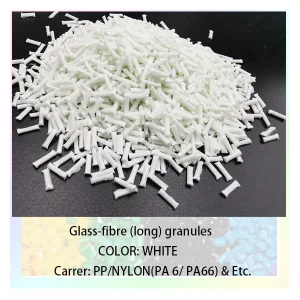
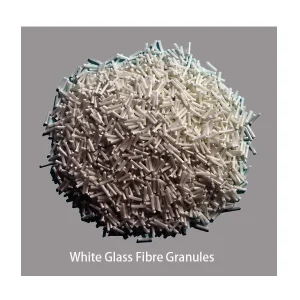
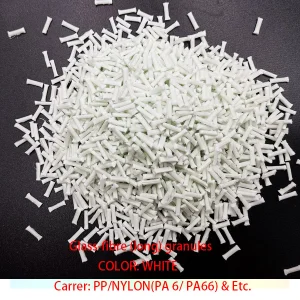
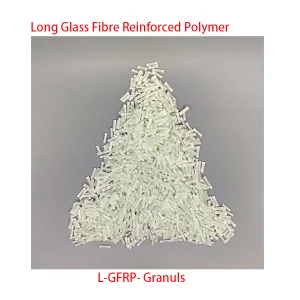
The "Information Gain" in modern polymer science lies in understanding the aspect ratio. Unlike short glass fibers (SGF) which are typically 0.5–1.0mm, our Long Glass Fibre Granules maintain a fiber length equal to the pellet length (typically 10mm to 25mm). This creates an internal skeletal network when injection molded, providing:
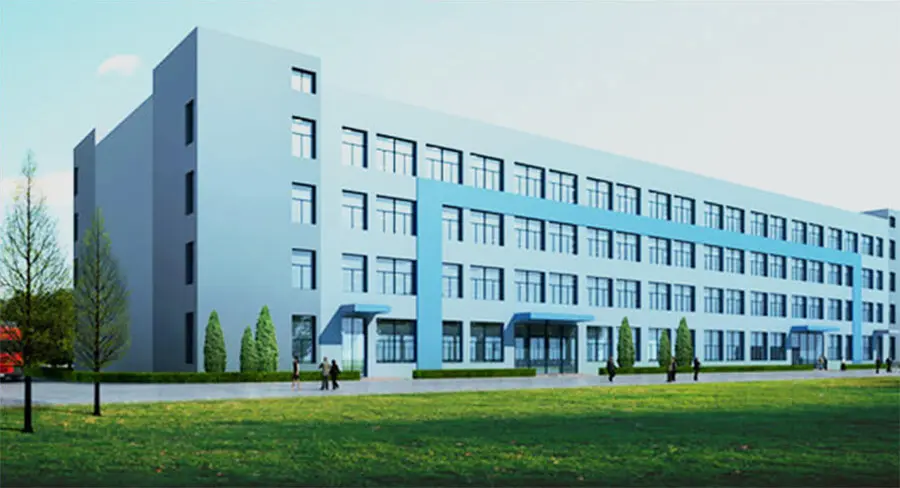
Jurong Best Composite Materials Co., Ltd. is strategically located in Maoshan, Jurong City, Jiangsu Province. Our location offers a unique logistical advantage for Austrian partners. Being adjacent to Nanjing and Lukou International Airport, and within reach of the Shanghai-Nanjing Expressway, we ensure that our high-performance LGF-PE granules reach European hubs like Vienna or Linz with optimized transit times.
Our facility leverages the massive scale of the Yangtze River Delta Economic Zone. This allows us to procure raw materials at competitive rates and utilize state-of-the-art pultrusion lines that ensure consistent fiber wetting—a critical factor for PE, which is naturally non-polar and difficult to bond with glass.
Ski & Winter Sports: PE's low-temperature toughness makes it perfect for ski bindings and snow-making equipment.
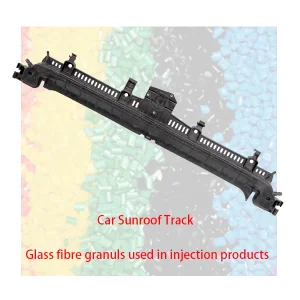
Automotive: Under-the-hood components and structural modules for Austrian-based OEMs.
Industrial Machinery: Wear-resistant guides and structural brackets for the automation sector.
As we look toward 2030, the industry is shifting toward "Circular Composites." In Austria, where environmental regulations are stringent, our R&D is focusing on recyclable PE matrices that can be reclaimed at the end of a vehicle's life cycle. Furthermore, the integration of AI-driven quality control in our production lines ensures that every batch of granules meets the rigorous "Austrian Quality" expectation.
International procurement teams now prioritize EEAT (Experience, Expertise, Authoritativeness, and Trustworthiness). We provide comprehensive technical data sheets (TDS), safety data sheets (SDS), and CE certifications. Our recent expansion includes a new GFRP machine line to meet the surging demand from European industrial distributors.
Unlike traditional compounding, our pultrusion process pulls continuous glass rovings through a specialized molten PE resin bath. This ensures that each individual filament is fully coated, maximizing the interfacial shear strength. For the Austrian market, this means parts that don't fail under the vibrational stresses common in Alpine cable car systems or heavy-duty agricultural machinery.
Diversified composite solutions including PPS, TPU, and PPA for high-temperature and specialized environments.
A: While LGF-PP is excellent for general automotive use, LGF-PE offers superior chemical resistance and, more importantly, maintains higher ductileness at sub-zero temperatures, which is vital for Austrian alpine applications.
A: We use a proprietary pultrusion die design that subjects the fibers to controlled tension and temperature, ensuring the PE resin penetrates the fiber bundles completely, eliminating voids that cause structural failure.
A: Yes. However, for the Austrian market's precision parts, we recommend using low-shear screws and larger gates to prevent fiber breakage during the molding process, thus preserving the "long fiber" advantage.
A: Leveraging our proximity to Nanjing and Shanghai ports, sea freight typically takes 30-35 days, while air freight for samples can arrive in Vienna within 5-7 business days.
Contact our technical engineering team for a customized quote and material sample for your Austrian project.
Send Inquiry Now Best Composite