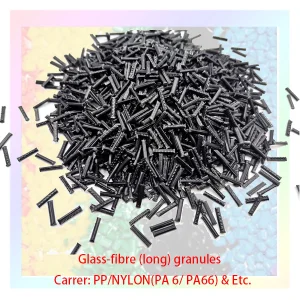
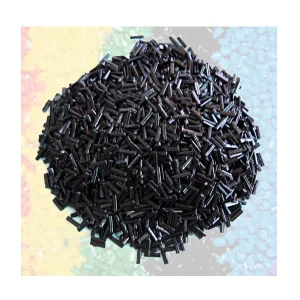
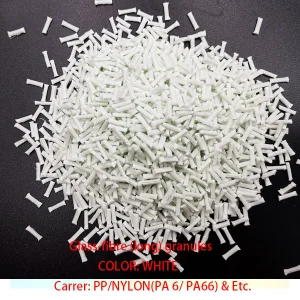
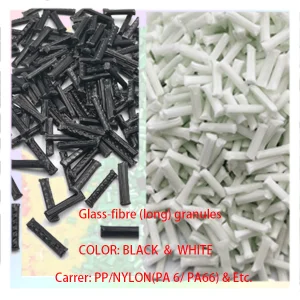
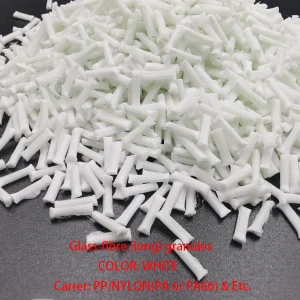
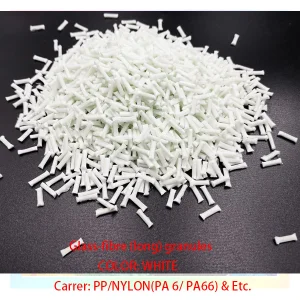
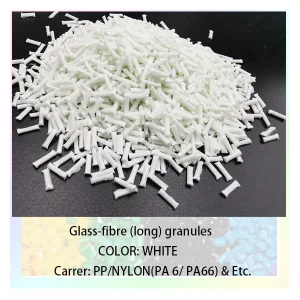
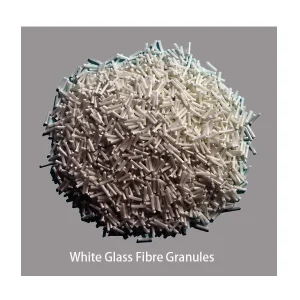
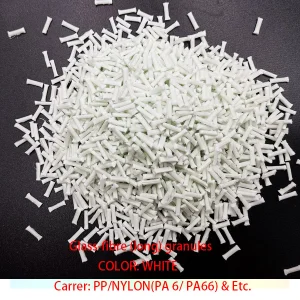
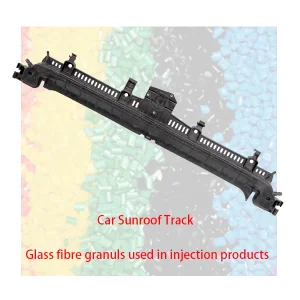
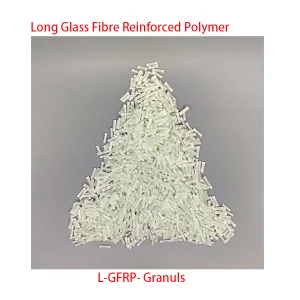
As Uzbekistan accelerates its "New Uzbekistan" industrial development strategy, the manufacturing landscape is shifting from traditional textile-heavy output to sophisticated automotive, electrical, and infrastructure sectors. The integration of Long Glass Fibre Reinforced Polyethylene (PE) is becoming a pivotal requirement for factories in Tashkent, Samarkand, and beyond.
Unlike short fiber reinforcement, Long Glass Fibre (LGF) creates a complex structural skeleton within the thermoplastic matrix. This results in superior mechanical properties: improved impact strength, thermal resistance, and dimensional stability. For the local automotive component industry, this means parts can be produced with higher durability, serving as a direct, lower-cost alternative to metal components.
Our manufacturing facilities leverage the "Industry 4.0" framework. By utilizing automated injection molding precision and rigorous quality controls, we ensure that the LGF content is perfectly dispersed in the PE/PP matrix. This reduces wastage and enhances the product life cycle—essential factors for Uzbekistan importers looking to minimize total cost of ownership (TCO).
Polyethylene is ubiquitous, but standard PE often lacks the structural rigor needed for modern engineering. Our LGF-PE grades bridge this gap. We are currently mapping the technical requirements for Uzbekistan’s electrical appliance manufacturers who require materials that survive harsh temperature fluctuations—a common environmental factor in Central Asia.
We provide full documentation and compliance support for regional standards. Each batch of granules undergoes rigorous testing (Tensile Strength, Charpy Impact, Heat Deflection Temperature) to ensure the material performs exactly as expected in the diverse climatic conditions of the Silk Road economic belt.
 Best Composite