Engineered for high load-bearing capacity, severe temperature fluctuations, and superior chemical resistance in the Great Lakes industrial corridor.
The Chicago and broader Great Lakes industrial markets represent the powerhouse of North American heavy manufacturing, logistics, automotive component engineering, and industrial packaging. With Chicago acting as a critical nexus for class-I railroads, expansive distribution centers, and high-precision injection molding facilities, the demand for materials that balance cost-efficiency with extreme mechanical performance has reached unprecedented levels.
Historically, manufacturers relied on short glass fiber (SGF) reinforced resins or standard engineering polymers to meet structural requirements. However, extreme Midwest seasonal temperature shifts (from humid, scorching summers to sub-zero, freezing winters) expose traditional polymers to premature structural fatigue, warping, and catastrophic impact failures. This is where Long Glass Fibre Reinforced Polyethylene (LGF-PE) represents a game-changing technical paradigm shift.
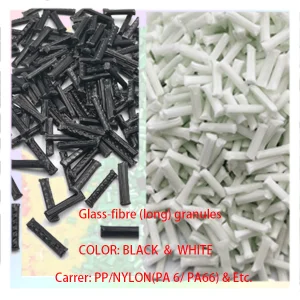
By leveraging an advanced pultrusion manufacturing process that ensures the glass fibers run continuously throughout the entire length of the pellet, LGF-PE offers an exceptional three-dimensional skeletal fiber network upon molding. This gives local manufacturers access to high-impact resistance, unparalleled dimensional stability, and exceptional creep resistance, ensuring long-term structural integrity in even the most unforgiving industrial environments.
For procurement professionals and polymer scientists looking to extract the highest possible "Information Gain" during material selection, understanding the macro-structural differences between Short Glass Fiber (SGF) and Long Glass Fiber (LGF) is critical.
Conventional compounding uses twin-screw extrusion to chop glass roving into short fragments (typically 0.2 to 0.4 mm) and disperse them within a molten Polyethylene matrix. During this shearing process, the aspect ratio (length-to-diameter ratio) of the fibers is severely compromised. When the final component faces mechanical stress, these short fibers act as localized stress concentrators rather than structural reinforcement agents.
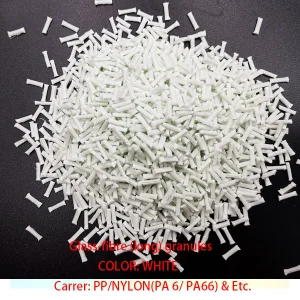
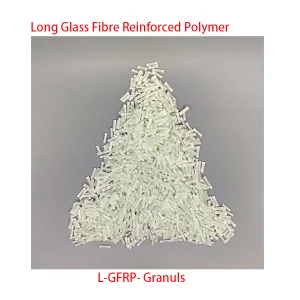
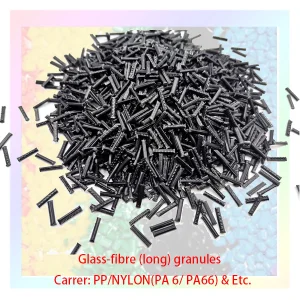
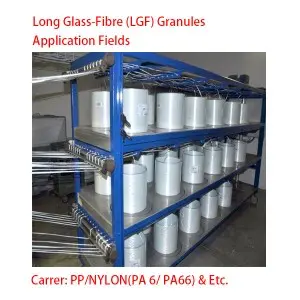
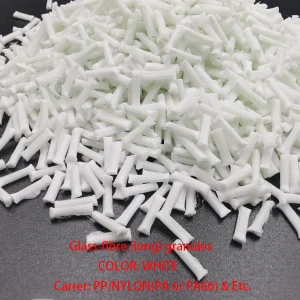
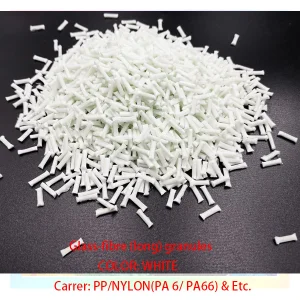
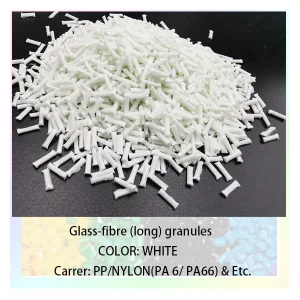
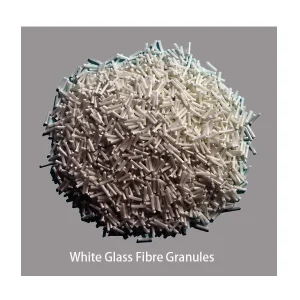
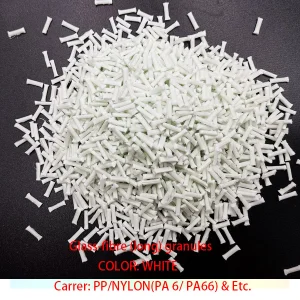
Our proprietary pultrusion technical route is fundamentally different. Continuous glass fiber bundles are fed into a specialized impregnation die where they are meticulously wetted with a highly fluidized, viscosity-modified Polyethylene resin. The consolidated strands are cooled and cut precisely into 10–12 mm pellets. Within every single granule, the fibers align perfectly in parallel, matching the length of the pellet itself. During the injection molding process, these long fibers form an intertwined three-dimensional structural skeleton that absorbs and dissipates mechanical energy efficiently across the entire molded part.
Global manufacturers operating across multiple facilities demand reliable supply chain frameworks, consistent batch-to-batch polymer rheology, and uncompromised regulatory alignment. Our production infrastructure has been designed from the ground up to support these global operational criteria.
With massive manufacturing assets strategically situated in the dynamic Yangtze River Delta Economic Zone, our logistical capabilities are world-class. Supported by nearby deepwater container facilities at the Port of Shanghai and Port of Ningbo, as well as direct regional access to Nanjing and Zhenjiang inland ports, we handle complex, high-volume orders with exceptional punctuality. For Midwest distributors and OEMs, we offer seamlessly integrated door-to-door delivery frameworks directly through Chicago distribution channels, eliminating international shipping delays and offering competitive structural pricing.
Combining legacy pultrusion expertise, advanced production lines, and unparalleled logistics to serve global industrial markets.
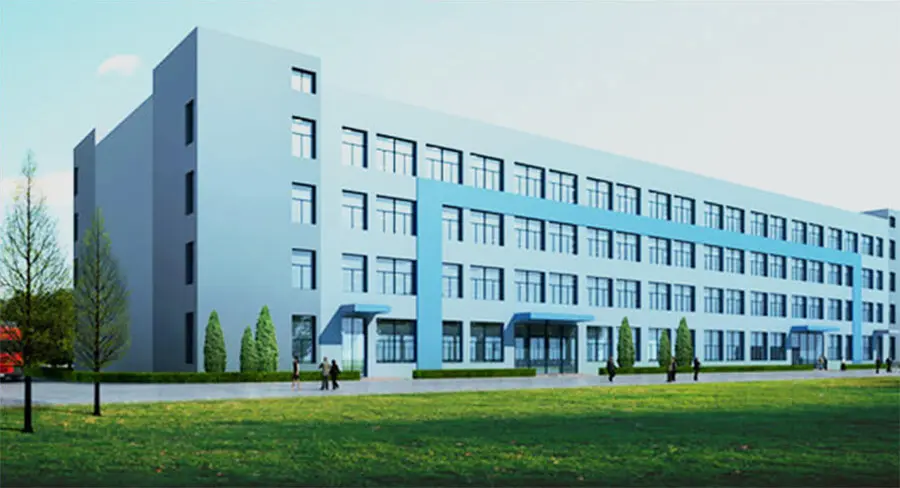
Jurong Best Composite Materials Co., Ltd. is situated in the historic town of Maoshan, a region with a rich history of over a thousand years located within Jurong City, Zhenjiang, Jiangsu Province. Our location on the lower reaches of the Yangtze River provides unmatched geographic advantages. We are positioned adjacent to Nanjing and close to the Nanjing Lukou International Airport.
The Jianning-Taicang Expressway (connecting Nanjing directly to Taicang) passes through our immediate area, and the nearby Jurong exit of the Shanghai-Nanjing Expressway offers seamless access to Zhenjiang Port and Nanjing Port. Benefiting from the extensive industrial resources of the Yangtze River Delta Economic Zone, we offer highly efficient domestic logistics and fast global shipping channels.
Our facility designs and manufactures high-performance Long Glass Fiber Reinforced Polymer (GFRP) granules. The structural integrity of our GFRP granules supports the manufacturing of specialized, heavy-duty applications, including structural automotive components, commercial washing machine parts, precise kitchen electrical appliances, and complex mechanical linkages.
Our workshop successfully commissioned a new state-of-the-art GFRP pultrusion machine line. The line instantly achieved target output, matching global demand requirements and boosting our supply resilience for markets like Chicago.
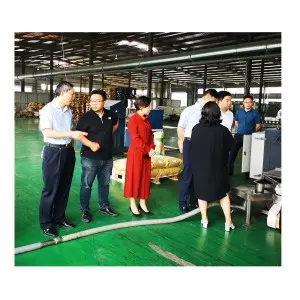
International clients visited our production facilities for an in-depth audit of our PA6 and PA66 long GFRP manufacturing processes. The audit concluded with exceptional marks for our comprehensive quality management and testing protocols (Reported by Lu).
Discover how our customized Long Glass Fiber reinforced composites drive performance, longevity, and sustainability across diverse industrial sectors.
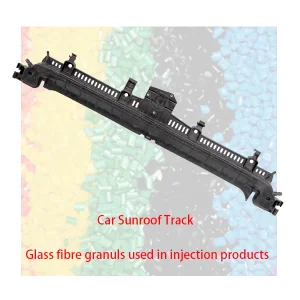
Replacing heavy steel and die-cast aluminum in structural automotive parts, bumper beams, door modules, front-end modules, and truck bed components. Provides extreme impact resistance and optimal structural load-bearing performance under heavy vibrations.
Custom heavy-duty warehouse pallets, durable storage crates, and shipping containers built for the busy Chicago transport hubs. LGF-PE ensures these elements don't warp, fracture, or creep under massive static loads during long-term storage.
Perfect for wastewater treatment, municipal pump housings, valve bodies, and outdoor utility enclosures exposed to severe weather, high pressure, and chemically aggressive environments throughout the Great Lakes region.
Entering the North American market requires careful attention to regulatory standards, material safety certifications, and consistent quality metrics. At Jurong Best Composite Materials Co., Ltd., we prioritize full alignment with global standards to ensure smooth project integration and peace of mind for our buyers.
Our long glass fiber reinforced polymer compounds are fully certified to comply with RoHS and REACH standards. We operate strictly under an ISO 9001:2015 certified quality management system, maintaining rigorous oversight from raw material selection through pultrusion extrusion to final product packaging. Every shipment comes complete with a comprehensive Certificate of Analysis (COA), outlining essential parameters such as glass fiber content, melt flow index, density, and mechanical properties. This streamlines incoming quality control processes for our Midwestern customers.
For US-based OEMs and injection molders, we coordinate with leading testing organizations to provide documentation supporting UL 94 flammability ratings, ASTM mechanical standards, and automotive specific testing profiles. This rigorous documentation ensures smooth product development lifecycles and rapid commercialization.
| Standard | Parameter Tested | LGF-PE Performance Range |
|---|---|---|
| ASTM D638 | Tensile Strength | 110 - 145 MPa |
| ASTM D790 | Flexural Modulus | 6,000 - 8,500 MPa |
| ASTM D256 | Notched Izod Impact | 22 - 35 kJ/m² |
| UL 94 | Flammability Rate | HB up to V-0 (customized) |
Addressing the exact questions, mechanical limits, and processing concerns voiced by procurement teams and structural design specialists.
Polyethylene (PE) offers a unique balance of chemical resistance, low moisture absorption, excellent electrical insulation, and cost-effectiveness. When reinforced with Long Glass Fibers, it overcomes its natural limitations in tensile strength and structural stiffness. Compared to Polyamide (PA/Nylon), LGF-PE does not absorb moisture, meaning its structural properties remain entirely stable in humid or wet environments. Compared to PP, LGF-PE offers superior ductile performance and impact strength at extremely low sub-zero temperatures, which is a major advantage for Midwestern outdoor applications.
To preserve the long fiber network in the final molded part, processing shear must be minimized. We recommend:
LGF-PE is highly recyclable. Unlike thermoset carbon fiber composites, LGF-PE utilizes a thermoplastic olefin matrix, allowing it to be melted down and repurposed at the end of its product lifecycle. Because Polyethylene has a lower processing temperature than PA6 or other engineering resins, it consumes significantly less energy during component manufacturing, directly reducing carbon footprint metrics for OEM supply chains.
Our standard production lead time is 7 to 14 days from official purchase order confirmation. Transit times to the Port of Chicago vary between 20 to 30 days depending on the selected ocean carrier and route. Our standard minimum order quantity (MOQ) is 5 metric tons, though sample quantities for regional molding trials are readily available upon request. We also partner with regional distributors to facilitate local warehousing and support just-in-time delivery models.
Explore our complete catalog of certified polymer solutions, manufactured to international engineering standards and fully customizable for your local market.
Whether you are designing structural components, optimizing cycle times, or looking to reduce procurement costs for LGF-PE, our team of materials engineers is standing by to provide complete technical documentation and custom commercial pricing.
 Best Composite