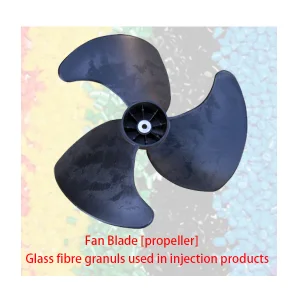
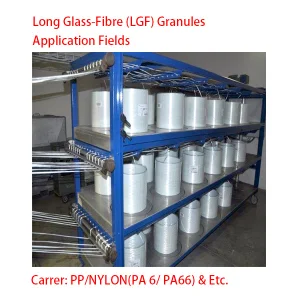
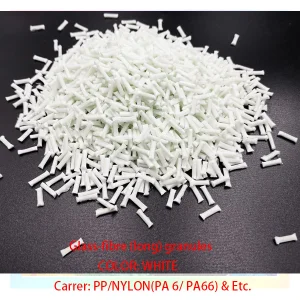
Engineered to structural performance specifications, utilizing pultrusion technology to maximize fiber length retention and mechanical capabilities.
Jurong Best Composite Materials Co., Ltd. is located in the ancient town of Maoshan, which has a history of over a thousand years. The town is part of Jurong City, Zhenjiang, Jiangsu Province. It is situated on the lower reaches of the Yangtze River, adjacent to Nanjing, and is close to Nanjing Lukou International Airport. The Jianning-Taicang Expressway (from Nanjing to Taicang) passes through the area, and the Jurong exit of the Shanghai-Nanjing Expressway connects to Zhenjiang Port and Nanjing Port. Benefiting from the radiation of the Yangtze River Delta Economic Zone, our shipping logistics run seamlessly globally.
Our commitment to rigorous quality control processes guarantees that each batch of Long Glass-Fiber Reinforced Polymer (LGFRP) granules meets standardized requirements for engineering, automotive, defense, and industrial assembly applications.
Get a Factory Quote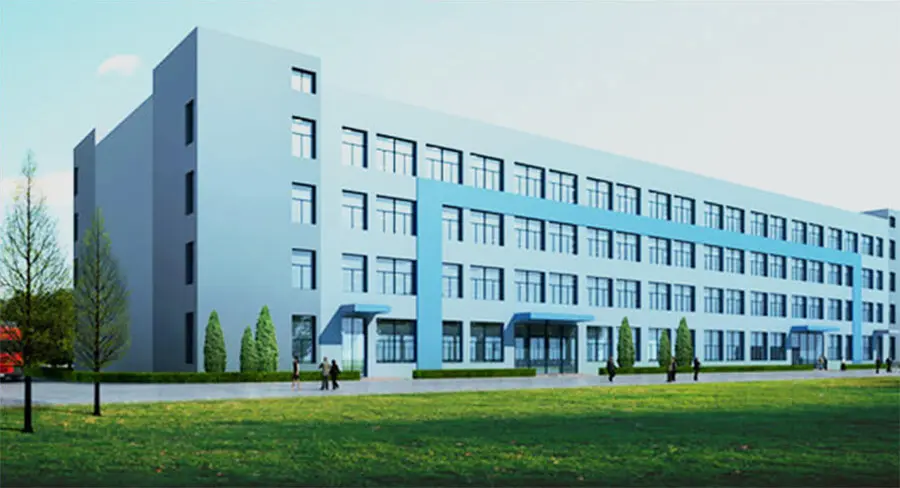
Analytical Study on the Industrial Transition, Cost Optimization, and Performance Roadmaps in East African and Global Markets
Gitarama, historically centered in the Muhanga District of Rwanda, acts as a primary geographical and logistical node connecting Central Africa's growing supply chain corridors. As part of Rwanda's domestic economic transformation, Muhanga and the surrounding Southern Province are establishing strategic light-to-medium industrial clusters. Key developments focus on electrical infrastructure components, municipal plumbing, transport utility accessories, agricultural processing tools, and localized automotive assembly parts. Historically reliant on cast metal or heavy imported steel, local manufacturers are shifting toward polymer matrices reinforced with Long Glass-Fibre (LGF) to circumvent high transport costs, heavy component weight, and mechanical degradation due to high humidity and thermal exposure.
Integrating LGF polymer systems addresses key mechanical pain points in the sub-Saharan climate. Standard short-glass-fiber composites and unreinforced plastics tend to creep, delaminate, and fail prematurely under structural loads. This is particularly problematic in outdoor electrical distribution boxes, agricultural water pumps, and local transport vehicle mountings. Long Glass-Fibre Reinforced Polypropylene (PP-LGF) and Polyamide (PA-LGF) offer high creep resistance, structural stability under elevated solar irradiation, and chemical corrosion resistance against acid soils and fertilizers. This makes them ideal for localized manufacturing networks throughout the Gitarama trade hub.
The performance of fiber-reinforced thermoplastics depends on the critical fiber length in the molded component. The pultrusion manufacturing process ensures that the glass fibers are continuously impregnated and aligned parallel inside the pellet, matching its length (typically 10mm to 12mm). In contrast, conventional Short Glass-Fiber (SGF) compounding routes shear the glass fibers during extrusion, reducing them to typical lengths of 0.2mm to 0.4mm.
| Property Matrix | Short Glass-Fibre (SGF PP-GF30) | Long Glass-Fibre (LGF PP-GF30) | Short Glass-Fibre (SGF PA66-GF50) | Long Glass-Fibre (LGF PA66-GF50) |
|---|---|---|---|---|
| Tensile Strength (MPa) | 75 - 85 | 110 - 125 | 210 - 230 | 260 - 285 |
| Flexural Modulus (GPa) | 5.5 - 6.2 | 6.8 - 7.5 | 14.0 - 15.5 | 16.5 - 18.5 |
| Charpy Notched Impact (kJ/m²) | 6.5 - 8.0 | 18.0 - 24.0 | 11.0 - 13.5 | 24.0 - 29.0 |
| Dimensional Stability (Shrinkage) | Moderate (Anisotropic) | Very Low (Isotropic) | Moderate (Anisotropic) | Ultra-Low (Isotropic) |
| Creep Resistance | Low under continuous load | High (Interlocking Skeleton) | Moderate at high temp | Excellent up to 150°C |
During injection molding, these longer fibers form an internal, interconnected skeletal network. Pyrolysis tests on molded components show that while SGF components crumble into isolated dust, LGF components retain their structural form. This skeleton distributes mechanical stresses, absorbs high-energy impacts, and reduces structural deformation under continuous load.
Industrial procurement departments globally require high quality consistency and optimized pricing. When souring glass-fiber reinforced granules, procurement officers focus on three major metrics: fiber length distribution, raw material matrix purity, and total landed cost. In regions like East Africa, including the Gitarama market, import dependencies make container loading optimization and thermal stability in transit critical factors.
Working with LGF polymer systems requires adjusting processing parameters to prevent fiber breakage during molding. Excessive screw speed, high backpressure, and restrictive gate sizes will shear the fibers, turning LGF properties back to those of SGF.
The choice of polymer matrix determines the chemical, thermal, and cost parameters of the finished component. Jurong Best Composite Materials Co., Ltd. offers a range of carrier resins to suit different application fields:
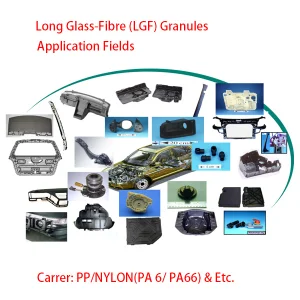
The most cost-effective structural solution. Widely used in washing machine parts, automotive front-end modules, and light industrial shrouds. Offers good chemical resistance and low density.
For high thermal environments and high structural load conditions. Excellent mechanical performance, oil resistance, and dynamic fatigue life. Commonly used in automotive engine covers and structural brackets.
Designed for extreme environments. PPS-LGF offers continuous service temperatures above 220°C and resistance to chemicals. TPU-LGF provides high impact toughness and wear resistance.
Pricing for LGF granules is determined by raw resin costs, glass-fiber content (typically ranging from 30% to 60%), and batch size. Due to logistical routing to the Gitarama hub via East African shipping ports, bulk orders help lower freight costs per ton.
| Polymer Base | Fiber Loading (%) | Est. Price Range (USD/Ton) | Primary Industrial Application in Gitarama |
|---|---|---|---|
| PP-LGF | 30% - 40% | $1,750 - $2,100 | Water filtration tanks, agricultural equipment, fan blades |
| PP-LGF | 50% - 60% | $1,950 - $2,350 | Structural battery trays, solar panel mountings, utility structural frames |
| PA6-LGF | 30% - 50% | $2,400 - $2,900 | Heavy-duty electrical switchgear, railway tie plates, construction dowels |
| PA66-LGF | 30% - 50% | $2,850 - $3,400 | Automotive engine housings, heavy machinery structural brackets, gear assemblies |
| PPA-LGF / PPS-LGF | 40% - 50% | $4,800 - $6,500 | Chemical pumps, high-heat industrial fluid valves, electronics connectors |
| TPU-LGF | 30% - 50% | $3,200 - $4,100 | High-wear gears, industrial wheels, wear-resistant oil field equipment |
Note: Pricing fluctuates based on global petrochemical feedstocks and shipping logistics. Contact our sales office for a firm CIF Gitarama quote.
Get in touch with our engineering team to design custom fiber-loading formulations, review physical property testing reports, and receive competitive pricing for the Gitarama market.
Select from our certified range of pultruded compounds developed for demanding engineering applications.
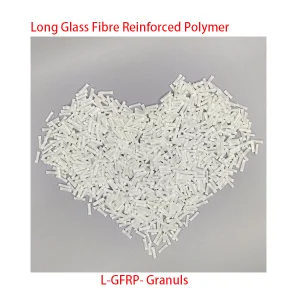
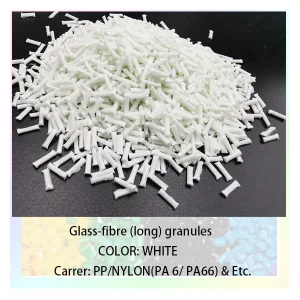
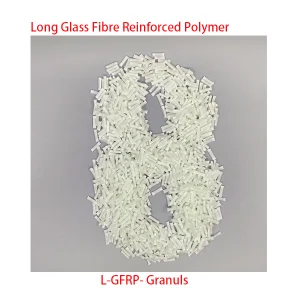
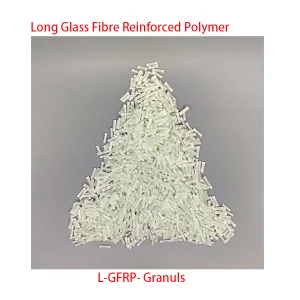
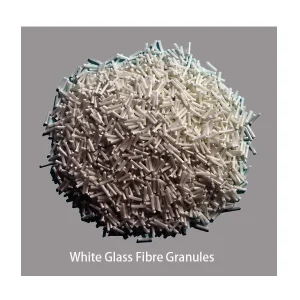
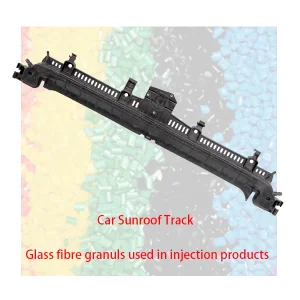
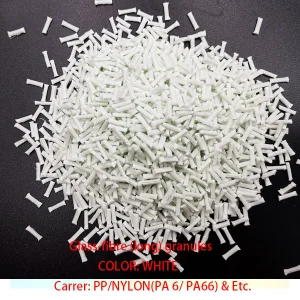
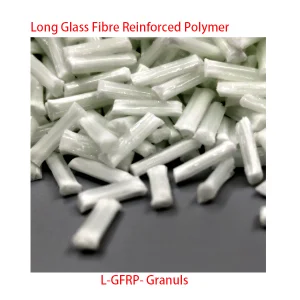
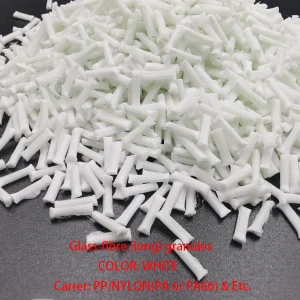
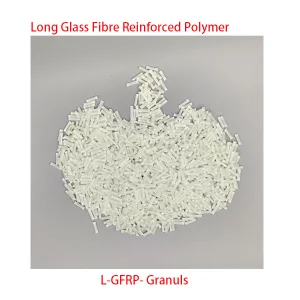
We formulate customized polymer grades tailored to your specifications.
Contact EngineersTechnical and procurement answers about Long Glass-Fiber Reinforced Polymer applications, shipping logistics, and molding processes.
LGF granules contain continuous glass fibers that match the exact length of the granule (10-12mm). During injection molding, these long fibers form an internal 3D structural skeleton. This network distributes load and mechanical stresses more effectively than SGF (where fibers are typically 0.2-0.4mm). As a result, LGF yields up to 3 times the impact strength, superior dimensional stability, lower shrinkage, and significantly higher creep resistance.
Our granules are packed in high-density moisture-barrier bags (25kg standard, or 1000kg bulk octabins) to protect hygroscopic carriers like PA6 and PA66. We route shipments through ocean freight to Mombasa (Kenya) or Dar es Salaam (Tanzania), followed by land transport along the central corridor directly to industrial hubs in Kigali, Muhanga, and Gitarama. We provide complete certificate of analysis (COA) records and export documentation for customs clearance.
Yes, LGF components can be ground and reprocessed. However, regrinding and remolding shear the glass fibers, reducing their average length. Adding regrind material will shift the mechanical properties closer to standard short glass-fiber levels. Typically, we recommend blending regrind at a maximum ratio of 10% to 15% for structural parts, and validating the mechanical performance of the finished components.
For applications exposing parts to continuous temperatures above 150°C and aggressive industrial chemicals, we recommend Polyphenylene Sulfide (PPS-LGF) or Polyphthalamide (PPA-LGF) matrices. PPS-LGF maintains structural integrity up to 220°C, does not absorb water, and is resistant to most solvents, acids, and fuels. This makes it an ideal option for chemical pump components and automotive engine parts.
Increasing the glass fiber content from 30% to 50% increases the density of the compound slightly (glass density is roughly 2.5 g/cm³ compared to 0.9 g/cm³ for PP or 1.14 g/cm³ for PA6). This change also raises the mechanical modulus and raw material cost per kilogram. However, because the part's structural strength is higher, design engineers can thin the wall sections, reducing the overall weight and raw material volume needed for the finished component.
 Best Composite