Premium structural composites designed for rigorous mechanical requirements in automotive, electrical, and industrial manufacturing hubs in Mbarara and greater Uganda.
As the primary economic, commercial, and industrial hub of Southwestern Uganda, Mbarara City is undergoing an unprecedented structural transition. Positioned strategically along the Northern Corridor connecting Kampala to Rwanda, Burundi, and the Democratic Republic of Congo, Mbarara is no longer merely an agrarian assembly point; it has matured into a rapidly developing manufacturing ecosystem. Driven by the expansion of the Mbarara Industrial and Business Park (MIBP) at Kyamugorani and private-sector capital investments across agro-processing, heavy machinery maintenance, fluid handling, and electrical power grid distribution, local manufacturing enterprises are actively seeking high-performance replacement materials for traditional metals.
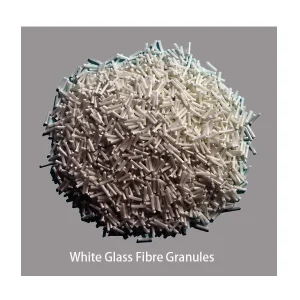
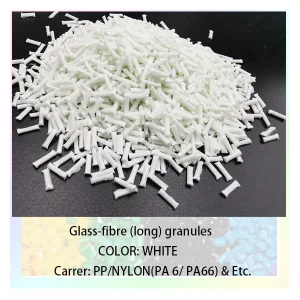
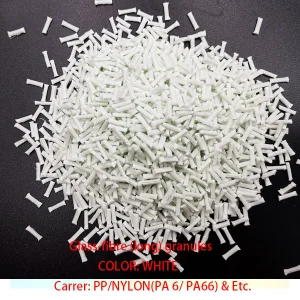
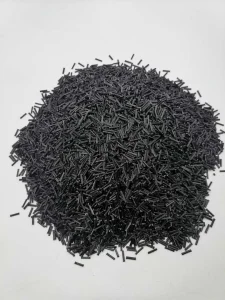
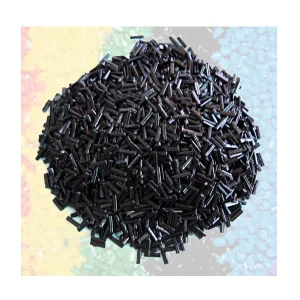
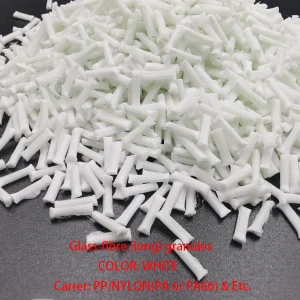
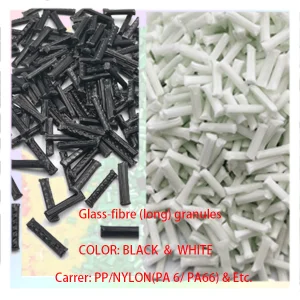
In humid tropical environments where chemical exposure, UV degradation, mechanical vibration, and moisture absorption continuously degrade conventional metals and short-fiber plastics, Long Glass-Fibre Reinforced Polybutylene Terephthalate (L-GFR-PBT) has emerged as the definitive material solution. Local manufacturing facilities across Mbarara require engineering polymers capable of maintaining dimensional tolerance, electrical insulation, and high tensile strength under extreme operating conditions. As a leading manufacturer and direct global exporter, our facility bridges the technical gap by delivering advanced pelletized LGF-PBT compounds crafted specifically for tropicalized, high-load industrial applications across East Africa.
Information Gain Insight: Unlike standard Short Glass Fiber (SGF) compounds (where fiber lengths average under 0.8mm), our Long Glass Fiber (LGF) melt-pultrusion technology maintains an internal skeletal fiber length exceeding 3.0mm to 12.0mm. This creates a 3D structural internal skeletal matrix inside molded components, yielding up to a 300% increase in impact resistance and outstanding creep performance under continuous mechanical pressure in East African field conditions.
High-rigidity components for dairy processing plants, grain sorters, and conveyor subsystems operating in washdown environments throughout Mbarara’s food & beverage corridor.
Arc-resistant, flame-retardant switchgear components, junction boxes, and terminal blocks for regional power distribution networks across Southwestern Uganda.
Hydrolysis-resistant impellers, pump housings, and pressure valves exposed to untreated water, chemicals, and elevated ambient temperatures.
Polybutylene Terephthalate (PBT) is an semi-crystalline engineering thermoplastic renowned for its exceptional dielectric strength, chemical resistance to organic solvents, and low moisture absorption rate compared to Polyamides (Nylon). However, unreinforced or short-fiber reinforced PBT often experiences brittle failure under high dynamic stress or severe impact loading. By integrating long glass fibers through a proprietary continuous pultrusion impregnation process, our factory achieves a compound that fundamentally changes polymer behavior.
During injection molding of our LGF-PBT pellets, the extended fiber lengths remain entangled throughout the melt flow. Upon solidification, these fibers form a interconnected internal web. When an external force or shock impacts the finished component, stress is transferred across the polymer matrix via shear stress, dispersing energy throughout the 3D fiber network. This prevents rapid crack propagation—a failure mode common in short-fiber compounds.
One major obstacle faced by engineers in East Africa when utilizing Polyamides (PA6/PA66) is their hygroscopic nature; Nylons absorb atmospheric moisture, resulting in plasticization, dimensional swelling, and loss of mechanical stiffness. PBT natively exhibits near-zero moisture absorption. When enhanced with continuous long glass fibers, dimensional drift under heat and humidity is virtually eliminated. This makes L-GFR-PBT the ultimate choice for high-precision components operating in Mbarara's variable atmospheric conditions.
Empowering manufacturers in Mbarara and globally with high-tonnage composite resin compounding and strict international quality standards.
Jurong Best Composite Materials Co., Ltd. is located in the ancient town of Maoshan, which has a history of over a thousand years. The town is part of Jurong City, Zhenjiang, Jiangsu Province. It is situated on the lower reaches of the Yangtze River, adjacent to Nanjing, and is close to Nanjing Lukou International Airport. The Jianning-Taicang Expressway (from Nanjing to Taicang) passes through the area, and the Jurong exit of the Shanghai-Nanjing Expressway connects to Zhenjiang Port and Nanjing Port. Benefiting from the radiation of the Yangtze River Delta Economic Zone, the transportation is remarkably convenient.
Our geographic position in China's industrial heartland allows us to integrate raw material sourcing—direct from world-class PBT resin synthesis plants and continuous glass fiber strands manufacturers—ensuring unparalleled batch-to-batch consistency and competitive factory-direct pricing. For our client partners in Mbarara and East Africa, this operational efficiency translates directly to reduced lead times, continuous material availability, and optimized ocean freight routes directly to the Port of Mombasa, supported by seamless onward transit via the Northern Corridor to Kampala and Mbarara.
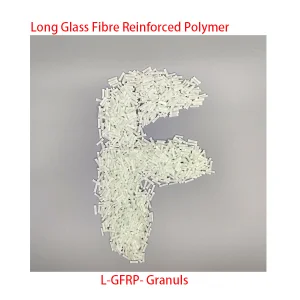
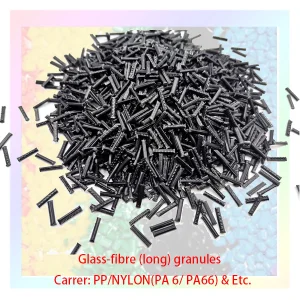
Clients visited our manufacturing facility to perform a professional and rigorous quality inspection for our PA6, PA66, and PBT long GFRP (Glass-Fiber-Reinforced-Polymer) granules. The inspection verified fiber length integrity, thermal deflection tolerance, and batch homogeneity, resulting in complete client approval.
READ FULL AUDIT REPORT →Our plant successfully commissioned a state-of-the-art pultrusion manufacturing line designed to double output capacity for continuous long glass fiber reinforced polymer pellets, significantly reducing international export delivery times for East African buyers.
EXPLORE FACTORY CAPACITY →Tailored polymer formulations replacing metal components to reduce weight, lower manufacturing costs, and boost operational longevity.
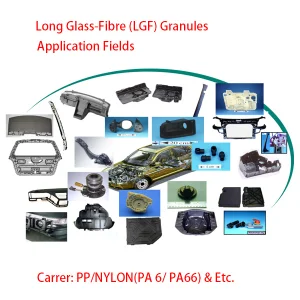
Mbarara is a core logistics node for heavy transit trucks. Our L-GFR-PBT compounds are utilized for under-hood electrical connectors, sensor housings, brake valve bodies, and gear shift modules requiring high thermal resistance up to 220°C and resistance to oil and hydraulic fluids.
From tea processing facilities in Bushenyi to dairy processing networks across Mbarara, L-GFR-PBT replaces heavy aluminum and brass parts in seed metering devices, spraying pump manifolds, and structural brackets that demand high fatigue strength without corrosion.
Uganda's rural electrification initiatives depend on robust grid infrastructure. LGF-PBT provides CTI (Comparative Tracking Index) ratings up to 600V, UL94 V-0 flame retardancy, and weatherability for outdoor circuit breakers, meter boxes, and high-voltage insulator housings in tropical humidity.
As global environmental regulations intensify and regional manufacturing across Africa shifts toward sustainable practices, our R&D center is actively pioneering next-generation continuous long-fiber composites. Our engineering roadmap emphasizes three major technological pillars:
We are integrating bio-derived monomers into our PBT synthesis to reduce reliance on petroleum feedstocks. Furthermore, our closed-loop recycling processes ensure that post-industrial long fiber scrap can be reprocessed without severe mechanical degradation, aligned with circular economy goals.
To meet extreme structural requirements in high-end automotive and industrial drone components, we are engineering hybrid LGF/LCF (Long Carbon Fiber) PBT matrix compounds. This hybrid approach yields hyper-stiff structural materials with reduced component mass and enhanced EMI shielding capabilities.
By implementing real-time laser monitoring during continuous pultrusion pelletizing, our factory maintains exact fiber dispersion, eliminating resin-rich pockets or dry fiber bundles. Every shipment destined for Mbarara comes with comprehensive batch certificates detailing fiber length distribution and mechanical test metrics.
Navigating international material standards and customs regulations requires an experienced exporter. Jurong Best Composite Materials Co., Ltd. provides end-to-end technical documentation and compliance support tailored for importers and manufacturers operating in Uganda and across the East African Community (EAC).
Our materials comply fully with Uganda National Bureau of Standards (UNBS) requirements, accompanied by Certificates of Analysis (CoA), RoHS, REACH, and ISO 9001 quality compliance dossiers for smooth customs clearance.
Injection processing of long glass fiber requires optimized gate placement, larger runner dimensions, and low-screw shear parameters to preserve fiber length. Our mold engineering advisory provides processing guidelines directly to your technicians in Mbarara.
We formulate custom PBT grades, including halogen-free flame-retardant (UL94 V-0), UV-stabilized outdoor grades, and specialized color-matched compounds tailored to your production specifications.
Detailed answers regarding material selection, injection processing, logistics, and supply chain serving Mbarara.
Explore our full line of reinforced composite resins exported worldwide for heavy industrial and structural applications.
Looking for technical datasheet samples, custom color compounding, or bulk pricing for your manufacturing plant in Southwestern Uganda? Request a direct quotation within 24 hours.
Send Inquiry Now Best Composite