Select premium grades designed to withstand challenging thermal and physical environments in Sub-Saharan logistics and electrical networks.
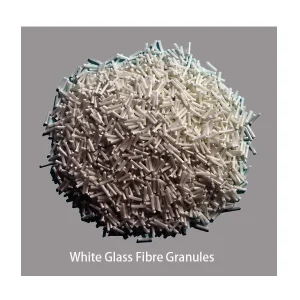
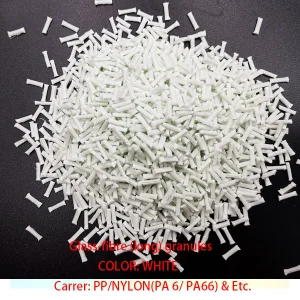
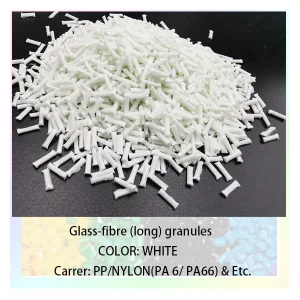
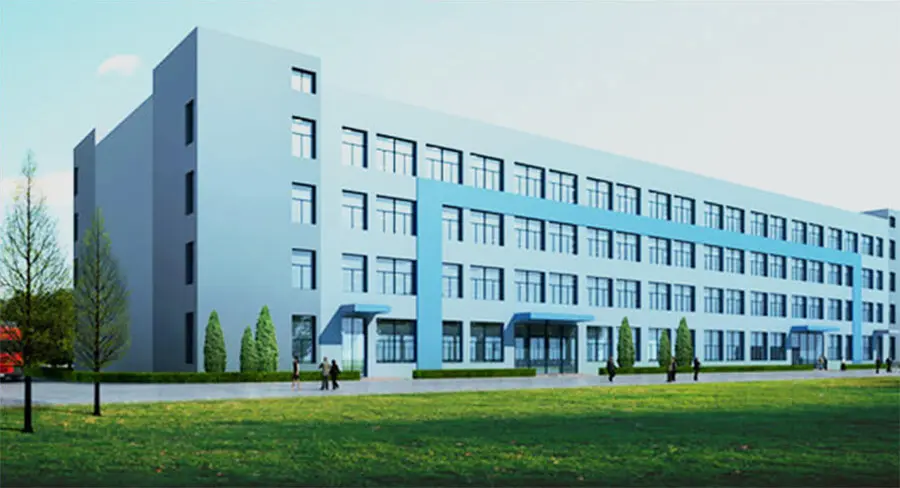
Jurong Best Composite Materials Co., Ltd. is located in the ancient town of Maoshan, which has a history of over a thousand years. The town is part of Jurong City, Zhenjiang, Jiangsu Province. It is situated on the lower reaches of the Yangtze River, adjacent to Nanjing, and is close to Nanjing Lukou International Airport.
The Jianning-Taicang Expressway (from Nanjing to Taicang) passes through the area, and the Jurong exit of the Shanghai-Nanjing Expressway connects to Zhenjiang Port and Nanjing Port. Benefiting from the radiation of the Yangtze River Delta Economic Zone, the transportation is very convenient, enabling highly efficient logistics pipelines to major Global shipping lanes, including direct container routes to Dar es Salaam and Mombasa ports serving Rwanda and the East African Community.
Connect with our Technical DirectorsAligning advanced materials engineering with Vision 2050 and the modernization of East Africa's manufacturing corridors.
As Rwanda cements its position as a central technology and logistics hub in East Africa, sectors such as smart electronics assembly, electrical infrastructure distribution, and clean agriculture are modernizing rapidly. The Kigali Special Economic Zone (KSEZ) is welcoming localized industrial assemblies that require rugged materials capable of replacing heavy metals without losing structural performance under humid and warm equatorial climates.
Our Long Glass-Fibre Reinforced PBT (LFR-PBT) answers the call for this industrial shift. PBT possesses a naturally low water-absorption rate compared to Polyamide (PA) grades, meaning it retains its structural geometry and high electrical insulation capabilities in wet environments—crucial for outdoor power boxes, rural water pump grids, and modern solar tracking system components being rolled out across the Western and Southern provinces of Rwanda.
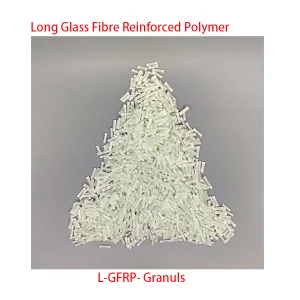
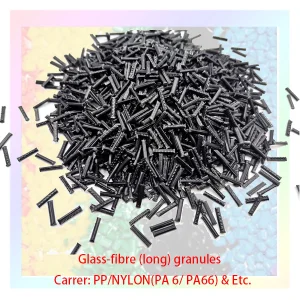
By extending glass fibers to structural lengths of 10-12mm within the PBT polymer matrix, the material gains exceptional impact resistance, fatigue limits, and creep resistance, keeping safety critical parts functional for decades.
Extreme creep resistance in variable African environments. Prevents part warping in humid electrical housings.
Long continuous glass fiber skeletons absorb dynamic energy far better than short-fiber equivalents.
Naturally chemically inert to automotive fluids, alkaline soils, and customized fertilizer runoff.
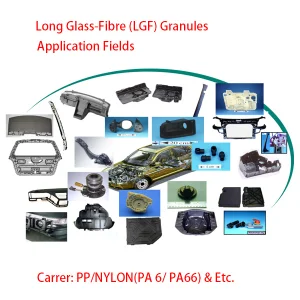
Why Long Glass-Fibre Reinforced PBT outperforms traditional metals and standard injection polymers.
| Property Class | Unreinforced PBT | Short-Glass PBT (30% GF) | Long-Glass PBT (50% LGF) | Typical Application Sector |
|---|---|---|---|---|
| Tensile Strength (MPa) | 55 | 130 | 185 | Automotive Structural Rails |
| Charpy Notched Impact (kJ/m²) | 4.5 | 9.0 | 24.0 | Heavy Duty Pump Impellers |
| Flexural Modulus (GPa) | 2.5 | 8.5 | 14.5 | Electronics & Smart Meter Frames |
| Water Absorption (24h, 23°C) | 0.08% | 0.06% | 0.05% | Outdoor Grid Distribution Boxes |
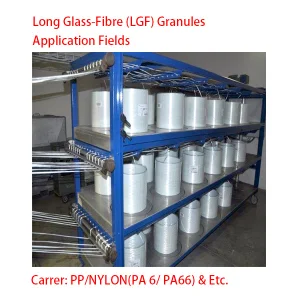
PBT (Polybutylene Terephthalate) belongs to the polyester family. Its crystalline nature permits fast cooling cycles during injection molding. When paired with continuous pultrusion processes that bundle raw fiberglass to create 12mm length pellets, the final molded component features a self-supporting interior skeleton. As the polymer shell cools, this fiber framework locks in geometry, preventing shrinkage and thermal bowing.
Transparent production processes and operational milestones verified by external stakeholders.
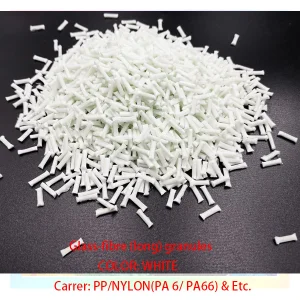
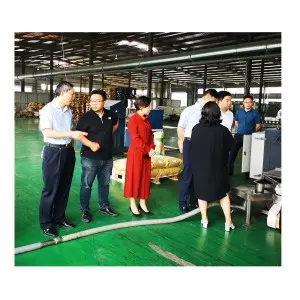
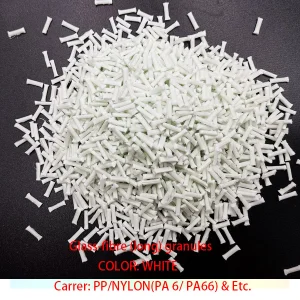
Our clients visited the production facility to run rigorous evaluations of our PA6 and PA66 long GFRP (Glass-Fiber-Reinforced-Polymer) granules. The inspection validated our fiber sorting and extrusion uniformity, confirming zero voids.
To meet the expanding international requirements, a new processing line was successfully installed and brought to target output speed, raising daily output capacity.
Delivering consistent bulk polymer shipments from our eastern seaport terminals directly to Kigali.
For buyers in Kigali, Huye, or Gisenyi, navigating the supply chain for bulk plastics import requires deep coordination. At Jurong Best Composite Materials, we coordinate containerized sea freight to East African gateways:
All shipments include verified certificates of analysis (CoA), material safety data sheets (MSDS), and custom packaging designed to resist moisture and high temperatures during marine transit. We support multiple payment arrangements and coordinate closely with local Rwandan clearing agencies to smooth customs processes.
Key technical queries resolved by our material development engineers.
Explore our expanded collection of glass-fiber reinforced composites for diverse manufacturing demands.
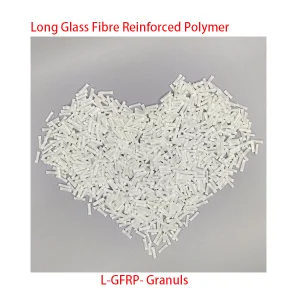
Get in touch with Jurong Best Composite Materials engineering team for physical samples, mold simulation sheets, and CIF Kigali bulk quotes.
 Best Composite